Table of Contents >> Show >> Hide
- Why Washing Machines Start Smelling (Even Though They “Wash”)
- Before You Start: Safety + “Don’t Gas Yourself” Rules
- What You’ll Need
- The 20-Minute “Make It Less Gross” Quick Clean
- Deep Clean, Step-by-Step: Works for Most Washers
- Step 1: Empty the Washer (Yes, Including That Lone Sock)
- Step 2: Run a Dedicated Clean Cycle (Best Option)
- Step 3: Clean the Detergent Drawer (The Sticky Candy Jar of Laundry)
- Step 4: Front-Load Washer Only: Clean the Rubber Gasket
- Step 5: Clean the Pump Filter (If Your Washer Has One)
- Step 6: Wipe Down the Drum + Door After the Cycle
- Top-Load vs. Front-Load: What’s Different?
- How Often Should You Clean Your Washing Machine?
- Habits That Keep Laundry Fresh (Without Extra Work)
- Troubleshooting: If the Washer Still Smells After Cleaning
- Conclusion: A Cleaner Washer = Cleaner-Smelling Clothes
- Experiences From the Laundry Trenches (500+ Words of Real-Life Lessons)
Your washing machine has exactly one job: make things clean. And yetevery so oftenit decides to smell like a swampy gym bag that lost a fight with a wet dog.
If your “clean” towels come out with a funky vibe, don’t panic. It doesn’t mean your washer is broken. It usually means it’s dirty.
(Yes, the irony is strong with this appliance.)
The good news: cleaning a washing machine is not complicated. The better news: once you do it the right way, your laundry will smell fresh more consistently,
your detergent will work better, and you’ll stop wondering why your shirts smell “fine-ish” only until they warm up on your body.
Why Washing Machines Start Smelling (Even Though They “Wash”)
Washing machines are basically warm, damp caves with occasional bubbles. That combo is a party invitation for residue and odor. The usual culprits include:
- Detergent buildup from overdosing or using the wrong type (especially in high-efficiency machines).
- Fabric softener residue that coats surfaces and traps funk like a scented glue.
- Moisture trapped in door seals, dispensers, and the bottom of the tub.
- Hard water minerals that create film and give gunk something to cling to.
- Wet laundry sitting too long after the cycleyour washer isn’t a hamper, it’s a sauna.
Before You Start: Safety + “Don’t Gas Yourself” Rules
- Never mix bleach with vinegar (or anything acidic). That can create toxic chlorine gas. No shortcuts here.
- Check your owner’s manual if you plan to use bleachsome models and finishes have specific restrictions.
- Unplug the washer if you’re opening service panels or cleaning a pump filter. Water + electricity is a romance nobody wants.
- Ventilate the laundry room, especially if using bleach.
What You’ll Need
Pick the method that matches your washer and your comfort level. You don’t need everything on this list.
- Microfiber cloths or old towels
- An old toothbrush or small scrub brush
- Dish soap + warm water (for drawers, seals, and grime)
- Option A: A washing machine cleaner tablet (easy and low-drama)
- Option B: Liquid chlorine bleach (effective, but follow model guidance)
- Optional: Baking soda (helpful for deodorizing and mild abrasion)
- Optional: White distilled vinegar (use sparingly; avoid frequent use on rubber parts)
- A shallow pan and extra towels (for pump-filter cleaninghello, surprise water)
The 20-Minute “Make It Less Gross” Quick Clean
If you’re short on time and the smell is mild, do this today. It’s not a deep clean, but it stops the funk from gaining confidence.
- Wipe the door/lid area and the top rim where detergent splashes live.
- Clean the dispenser area (quick swipe now; deep clean later).
- Wipe the drum and any visible residue.
- Leave the door/lid open to dry after every load for the next week.
Deep Clean, Step-by-Step: Works for Most Washers
Plan for about 45–90 minutes of hands-on time (mostly “waiting while the cycle runs” timeyour favorite hobby).
Do this monthly if your washer is prone to odor, or every 1–3 months if it stays fresh.
Step 1: Empty the Washer (Yes, Including That Lone Sock)
Make sure the tub is completely empty. Deep-clean cycles are designed to clean the machine itself, not the machine plus your jeans.
Step 2: Run a Dedicated Clean Cycle (Best Option)
Many modern washers have a “Clean Washer,” “Tub Clean,” “Self Clean,” or similar cycle.
Use it. It typically uses higher water volume, more aggressive agitation, and hotter temps to reach the places normal cycles miss.
Choose your cleaner:
-
Cleaner tablet method: Place the tablet directly in the tub (not in the dispenser), then run the clean cycle.
This is the easiest, low-mess approach. -
Bleach method: If your machine allows it, add bleach as directed (commonly measured by the dispenser’s “max” line or manual guidance),
then run the clean cycle on the hottest option.
If your washer doesn’t have a cleaning cycle, run the hottest, longest cycle with the highest water level available.
The goal is heat + time + cleaner + thorough rinsing.
Step 3: Clean the Detergent Drawer (The Sticky Candy Jar of Laundry)
Dispenser drawers collect detergent goo, softener sludge, and mystery crust. Pull it out (most slide and lift), then:
- Soak it in warm, soapy water for 10–15 minutes.
- Scrub corners, siphon tubes, and inserts with a toothbrush.
- Wipe the drawer cavity inside the washer (the part people forget).
- Dry and reinstall.
Step 4: Front-Load Washer Only: Clean the Rubber Gasket
The door seal (gasket) is where socks go to die… and where moisture, lint, hair, and detergent film hide.
Pull back the folds and wipe thoroughly.
- For light grime: warm water + a drop of dish soap, then dry.
- For visible mildew: scrub gently, rinse well, and dry completely.
- Pro habit: wipe the gasket after laundry day and keep the door ajar so it can dry.
Step 5: Clean the Pump Filter (If Your Washer Has One)
Some front-load washers have a small access door near the bottom front where a pump filter catches lint, coins, and whatever else your pockets donated.
A clogged filter can cause odor and drainage issues.
- Unplug the washer.
- Place towels and a shallow pan under the access door.
- Open the panel, drain slowly (expect some water), and remove the filter.
- Rinse debris off the filter, wipe the housing, then reinstall snugly.
Not all top-load washers have an owner-accessible filter. If you can’t find one in your manual, don’t go on a treasure hunt with a screwdriver.
Step 6: Wipe Down the Drum + Door After the Cycle
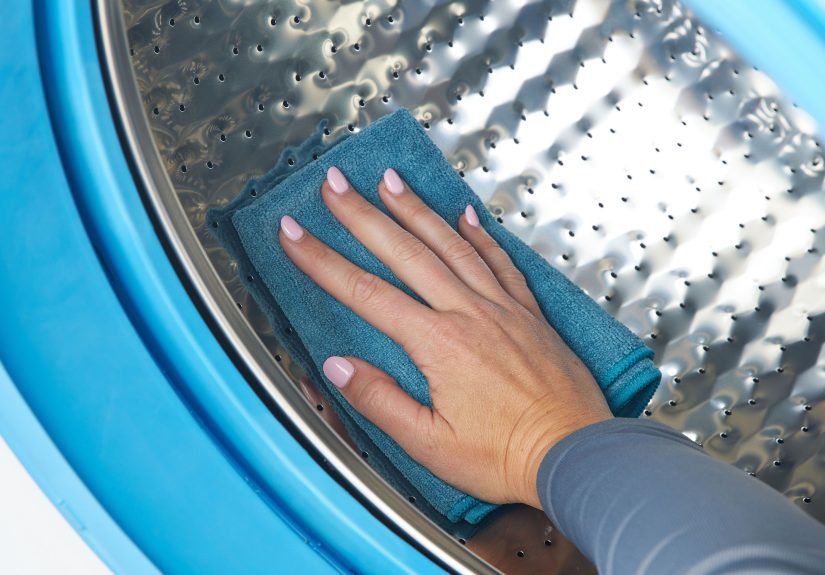
When the clean cycle ends, wipe the drum, door glass (if front-load), lid underside (if top-load), and any remaining moisture.
This is the step that turns “cleaned it” into “stays clean.”
Top-Load vs. Front-Load: What’s Different?
Front-Load Washers: Moisture Control Is Everything
- Always leave the door slightly open between loads so the gasket can dry.
- Use HE detergent and measure carefullytoo much causes residue and odor.
- Wipe the gasket regularly, especially after washing towels, pet bedding, and athletic wear.
Top-Load Washers: Don’t Forget the Rim and Agitator Area
- Wipe under the lid and around the top rim where splashes dry into crusty “art.”
- If your agitator has a removable cap, check for lint and buildup underneath.
- Leave the lid open after use to let the tub dry out.
How Often Should You Clean Your Washing Machine?
The “right” schedule depends on how you use your washer. Here’s a practical cheat sheet:
- Monthly: Run a clean cycle (especially for front-loaders or if you do lots of cold washes).
- Every 1–2 months: Clean the detergent drawer and wipe the gasket (front-load).
- Every 2–3 months: Check and clean the pump filter (if applicable).
- Weekly-ish: Quick wipe of the door area and leave the washer open to dry.
Habits That Keep Laundry Fresh (Without Extra Work)
1) Measure Detergent Like It’s Expensive Perfume
Overdosing detergent is a top cause of buildup. Modern washers use less water, so “a little extra for good luck” backfires.
Follow the detergent label and your washer manual, and adjust down if you notice excess suds or film.
2) Go Easy on Fabric Softener
Fabric softener can leave waxy buildup in the tub and dispenser. If odor is a recurring problem, reduce usage or use alternatives designed to rinse cleaner.
3) Don’t Let Wet Clothes Sit
If you forget laundry in the washer, it will start smellingfast. Set a phone timer. Bribe yourself with a cookie. Do what you must.
4) Mix in Hot Washes Sometimes
Cold-water washing is great, but doing only cold cycles can encourage residue buildup. Run a hot load occasionally (towels are perfect candidates).
5) Let the Washer Breathe
Keep the door/lid open between loads when possible. Dry beats mildew every time.
Troubleshooting: If the Washer Still Smells After Cleaning
- Smell returns quickly: You may be overdosing detergent, using too much softener, or keeping the door closed between loads.
- Smell is “sewage-like”: Could be a drainage issue, standpipe problem, or clogged filterworth checking your drain setup.
- Visible black spots in gasket folds: Clean gently, dry thoroughly, and keep the door ajar; persistent mold may require professional help.
- Water not draining well: Check the pump filter (if your model has one) and listen for slow draining or unusual noises.
Conclusion: A Cleaner Washer = Cleaner-Smelling Clothes
Cleaning a washing machine isn’t glamorous. But neither is re-washing “clean” laundry because it smells like damp basement.
Run the clean cycle regularly, wipe the gasket and dispenser, keep moisture under control, and use the right amount of detergent.
Do that, and your washer will stop trying to sabotage your fresh-smelling laundry goals.
Experiences From the Laundry Trenches (500+ Words of Real-Life Lessons)
I once met a person (okay, it was me in spirit) who couldn’t figure out why every T-shirt smelled fine out of the dryer… and then turned into “mystery funk”
the moment it warmed up on a human body. You know that smell: not quite dirty, not quite cleanlike your shirt spent the afternoon thinking about exercise.
The first instinct is to blame the detergent. The second instinct is to buy the “sport” version of the detergent. The third instinct is to declare laundry a scam.
The real culprit, more often than you’d think, is a washer that’s quietly hosting a residue festival.
Here’s how it usually plays out. You’re trying to be energy-efficient, so you wash in cold water (good!). You have an HE washer, so it uses less water (also good!).
But then you pour detergent like you’re frosting a cake (less good!). Because there’s less water, the extra detergent doesn’t rinse away. It sticks around,
catches lint, traps body oils, and slowly turns into a thin, invisible film. That film doesn’t scream for attentionuntil one day your towels come out smelling like
they’ve been stored in a gym locker that’s “going through something.”
My favorite example is “pet laundry.” Pet blankets, washable dog beds, and anything touched by a creature who thinks mud is a personality trait can leave behind
a cocktail of hair, dander, and oils. If you wash those items and then immediately do a load of nice kitchen towels, the towels can pick up the leftover vibe.
It’s not that your washer is trying to be rudeit’s just that grime is clingy. After one particularly heroic load of pet bedding, a quick wipe of the door seal
(front-loaders, I’m looking at you) plus a monthly clean cycle makes a ridiculous difference.
Then there’s the “I forgot the laundry” situation. Everyone has done it. You start a load, life happens, and the clothes sit wet for eight hours.
The washer becomes a warm, damp incubator, and the odor is immediate. People often run the same clothes again with extra detergent. That can help temporarily,
but it can also add to the buildup problem long-term. A better move is: rewash the clothes (sure), but also run a clean cycle soon after and leave the door open.
Otherwise, you’re basically inviting the smell to set up a recurring subscription.
Hard water adds another layer of chaos. In hard-water areas, minerals can combine with detergent and create a film that feels like “clean,” but behaves like glue.
The machine might look fine, yet odors keep returning because residue is hiding in places you don’t seelike inside the dispenser housing or around the tub’s edges.
That’s why the boring steps (clean the drawer, wipe the rim, check the filter) matter as much as the dramatic ones (running a hot cycle and feeling productive).
The biggest “aha” moment people report is this: once the washer is clean, you can often use less detergent and get better results.
Clothes rinse cleaner, towels fluff up more naturally, and the laundry room stops smelling like a damp sock negotiation.
The routine that actually sticks is simple: once a month, run the washer’s cleaning cycle with a cleaner tablet (or the method your model allows),
spend five minutes wiping the gasket or rim, and keep the door open between loads. That’s it. No witchcraft. No fifteen-step TikTok potion.
Just basic maintenance that keeps your machine from becoming the source of the problem it was purchased to solve.