Table of Contents >> Show >> Hide
- Why Checking Your Credit Card Balance Matters
- The Easiest Ways to Check Your Credit Card Balance
- Current Balance vs. Statement Balance: The Part That Confuses Almost Everyone
- How to Check Your Balance Step by Step
- What to Do If the Numbers Look Weird
- How Often Should You Check Your Credit Card Balance?
- Smart Safety Tips When Checking Your Balance
- Common Mistakes to Avoid
- Everyday Experiences With Checking Your Credit Card Balance
- Conclusion
Checking your credit card balance sounds like one of those grown-up tasks that should be simple, like folding a fitted sheet or understanding your health insurance portal. In reality, it is simple once you know which number you are looking at and where to find it. The tricky part is that your card account can show several numbers at once: current balance, statement balance, minimum payment, available credit, pending charges, and the occasional mystery line item that makes you squint at your screen like a detective in a financial crime drama.
The good news is that learning how to check your credit card balance is fast, useful, and surprisingly powerful. It helps you avoid overspending, plan payments, spot fraud, protect your credit score, and keep your blood pressure from rising every time you tap your card at a grocery store. Once you understand what you are seeing, checking your balance becomes less “panic scroll” and more “smart money habit.”
Why Checking Your Credit Card Balance Matters
Your credit card balance is the amount you currently owe on the account. That number changes as purchases post, payments clear, refunds arrive, fees appear, or interest gets added. If you do not check it regularly, you can drift into a few annoying situations: spending more than you meant to, missing your payment due date, getting too close to your credit limit, or failing to notice a charge that absolutely was not made by you at 2:14 a.m. in a city you have never visited.
Checking your balance regularly helps you:
- Track how much you owe right now
- See how much credit you still have available
- Confirm your next payment due date and amount due
- Catch unauthorized or suspicious charges early
- Manage your credit utilization more effectively
- Stay in control of your monthly budget
In other words, this is not just a numbers game. It is basic financial awareness, with fewer spreadsheets and more tapping on your phone.
The Easiest Ways to Check Your Credit Card Balance
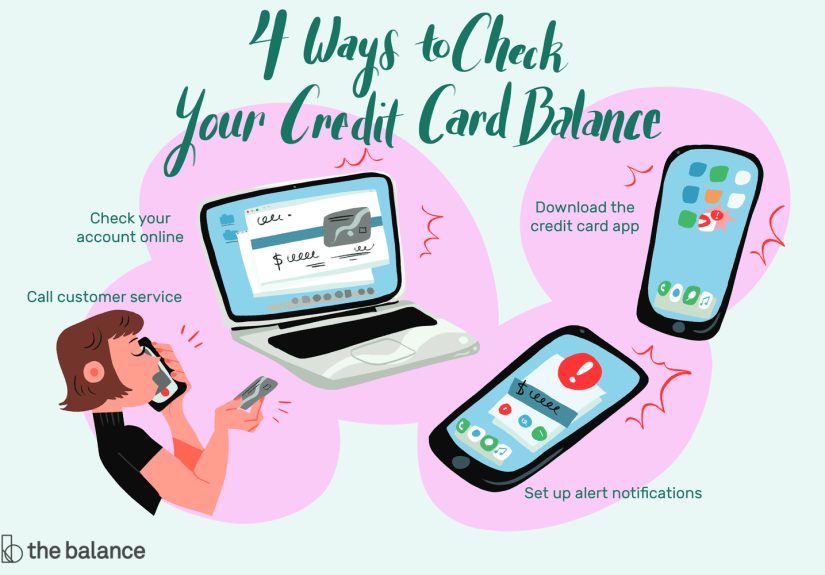
1. Use Your Card Issuer’s Mobile App
For most people, the mobile app is the fastest and easiest method. Open the app, sign in, and your balance is usually right there on the home screen or account summary page. You can also see recent transactions, payment due dates, available credit, statement history, rewards, and alerts.
This method is popular for a reason: it is fast, available 24/7, and gives you a near real-time view of your account. If you are standing in a store wondering whether buying one more “essential” candle is wise, the app is your brutally honest friend.
Many issuers also let you set up push notifications or text alerts for purchases, payment reminders, low available credit, and statement readiness. That means your balance is not just something you check occasionally; it becomes something your account can help you monitor automatically.
2. Log In Through the Issuer’s Website
If you prefer a bigger screen, use your credit card issuer’s website. After signing in, you can usually see your current balance, available credit, minimum payment, due date, recent transactions, and monthly statements. This is also a good place to review older activity, download statements, or make a payment.
The online portal is especially useful if you want to compare transactions, review several months of spending, or double-check details that are easier to read on a laptop than on a five-inch screen while your coffee gets cold.
3. Check Your Monthly Statement
Your monthly statement, whether paper or electronic, also shows your balance. But here is the important catch: your statement does not always show what you owe this exact second. It shows what you owed when the billing cycle closed. That makes it extremely useful for billing and payment decisions, but not always the best snapshot of your account this minute.
Your statement also typically includes:
- Statement balance
- Minimum payment due
- Payment due date
- Interest charges and fees
- Recent transactions from the closed billing cycle
- Available credit information
If you like seeing the full story in one place, your statement is excellent. If you want the live score, use the app or website instead.
4. Call the Number on the Back of Your Card
Yes, phones still exist, and yes, they still do useful things. If you do not want to log in online, call the customer service number on the back of your card. Most issuers offer an automated system that lets you hear your current balance, payment due information, and recent activity after verifying your identity.
This option is handy if you are locked out of your account, have limited internet access, or just prefer hearing the information instead of staring at another screen. It is not flashy, but it works.
5. Use Alerts or Balance Tools
Some issuers offer shortcuts such as balance widgets, account snapshots, voice assistants, or text-based tools. In certain cases, you can view your account summary without a full login, as long as you have already enabled that feature and accepted the related security settings.
These tools are convenient, but convenience should not outrun caution. Use only official issuer tools, and do not enable quick-view features on a device you do not secure properly.
Current Balance vs. Statement Balance: The Part That Confuses Almost Everyone
If you only remember one section of this article, make it this one.
Current Balance
Your current balance is what you owe right now based on posted transactions. It can rise and fall throughout the month as purchases, payments, refunds, fees, and interest hit your account. This is usually the number displayed most prominently in your app or online account.
Statement Balance
Your statement balance is the amount you owed at the end of the last billing cycle. Think of it as a snapshot. Once the billing cycle closes, that number becomes fixed for the statement, even though your account may keep changing afterward.
Minimum Payment
Your minimum payment is the smallest amount you must pay by the due date to keep the account in good standing. Paying only the minimum can keep you current, but it usually means the rest of the balance continues to accrue interest if you are carrying a balance.
Available Credit
Available credit is how much of your credit limit remains unused. If your credit limit is $5,000 and your current balance is $1,500, your available credit is generally about $3,500, subject to pending transactions and account updates.
If your goal is to avoid interest on new purchases, the safest target is usually paying the full statement balance by the due date. If you pay the full current balance instead, you are covering the statement balance plus newer posted charges. That is not wrong; it is simply more than the minimum required for that billing cycle.
How to Check Your Balance Step by Step
Using the Mobile App
- Download your issuer’s official app from the Apple App Store or Google Play.
- Sign in using your username and password.
- Complete any two-factor authentication steps if prompted.
- Select your credit card account.
- Look for the current balance, available credit, payment due date, and recent transactions.
Using the Website
- Visit your card issuer’s official website.
- Log in to your online account.
- Open the credit card dashboard or account summary.
- Review your current balance, statement balance, minimum payment, and activity.
Using Your Statement
- Open the latest paper or electronic statement.
- Find the account summary section.
- Locate the statement balance, minimum payment due, and due date.
- Review the transaction list for anything unfamiliar.
Using the Phone
- Call the number on the back of your card.
- Verify your identity.
- Use the automated system or speak to a representative.
- Ask for your current balance, statement balance, available credit, and payment due date.
What to Do If the Numbers Look Weird
Sometimes your balance looks wrong, but the explanation is boring rather than dramatic. Common reasons include:
Pending Transactions
Not every purchase posts instantly. A charge can be pending for a while before it fully lands in your current balance. That is why your available credit and current balance may not perfectly line up with the spending you remember.
Recent Payments
You may have made a payment that is scheduled, processing, or recently posted. Depending on timing, your current balance might not reflect it yet, even though the payment is on its way.
Refunds and Credits
If you returned an item, the merchant refund may take several days to post. Until it does, your balance may stay annoyingly high. Patience is not fun, but sometimes it is required.
Your Credit Report Shows a Different Balance
Your credit report balance may not match your current balance because lenders often report account information periodically rather than continuously. So if you paid your card yesterday, your credit report may still show the earlier amount for a while.
How Often Should You Check Your Credit Card Balance?
There is no single perfect schedule, but here is a practical rule of thumb:
- Check weekly if you use the card often
- Check after large purchases
- Check before the due date
- Check after making a payment
- Check when your statement becomes available
- Check immediately if something feels off
If your card is one of your main spending tools, checking every few days is not overkill. It is maintenance, like glancing at your gas gauge before a road trip instead of hoping the universe handles it.
Smart Safety Tips When Checking Your Balance
Balance-checking is convenient, but security matters. The same tools that make account access easy also make it important to protect your login information.
- Use only the official issuer app or website
- Create strong, unique passwords
- Enable two-factor authentication when available
- Do not check sensitive account info on public Wi-Fi unless you trust the connection
- Lock your phone with a PIN, fingerprint, or face recognition
- Review statements and transaction history for unauthorized charges
- Contact the issuer right away if you see suspicious activity
If you notice a charge you do not recognize, report it promptly. Waiting and hoping it will “sort itself out” is not a strategy. That is a horror movie plot.
Common Mistakes to Avoid
Confusing Current Balance With Amount Due
Your current balance may be higher than the amount due on your latest statement because it includes newer posted purchases. Great for awareness, not always the minimum you must pay for the cycle.
Ignoring Available Credit
Checking only the balance without paying attention to available credit can leave you closer to your limit than you realize.
Looking Too Infrequently
If you check your balance once a month and use the card daily, you are basically giving yourself financial jump scares.
Relying on Memory Instead of Transactions
Most people are terrible at mentally tracking every charge. Your account history is the truth. Your memory is just a very confident intern.
Everyday Experiences With Checking Your Credit Card Balance
One reason this habit matters is that it shows up in everyday life more often than people expect. For example, many cardholders check their balance right before a big grocery run, a travel booking, or a monthly bill cycle. Not because they are in trouble, but because they want to know how much room they have left and whether the purchase will push their utilization higher than they want. That two-minute check can change a spending decision from “sure, why not?” to “actually, I will wait until after payday.”
Another common experience is discovering that the balance feels higher than expected, only to realize the issue is timing. A person may make a payment on Monday, check the balance Monday night, and feel mildly betrayed when the number has not dropped yet. Then the payment posts a day or two later, and everything makes sense again. This happens a lot, especially with newer card users who expect the account to update instantly every single time.
Travel creates another classic balance-checking moment. Someone books a hotel, sees a larger-than-expected amount, and panics for five dramatic minutes before learning that a temporary hold or posted travel charge changed the account summary. Checking the recent transactions usually clears things up. It may not lower stress immediately, but it does stop the imagination from inventing financial disaster where there is really just standard payment processing.
Many people also have the experience of catching a small suspicious charge by checking their balance and activity regularly. It might be something tiny, like a streaming trial they forgot to cancel or a purchase they definitely did not make. Because they looked early, they were able to contact the issuer, dispute the charge if necessary, and prevent a minor issue from turning into a major one. That is one of the best arguments for regular balance checks: problems are cheaper and easier to fix when they are still small.
There is also the very normal experience of using the statement to understand spending patterns. A person may know they “used the card a lot this month,” but the statement reveals where the money really went: dining, rideshare trips, subscriptions, late-night impulse shopping, and that one home item that somehow turned into four home items. Looking at the balance alongside the transaction list can be surprisingly clarifying. Sometimes the lesson is “I am doing fine.” Sometimes the lesson is “Apparently I financed my own convenience.” Both are useful.
Over time, people who check their balances consistently usually become more confident card users. They are less likely to miss due dates, less likely to be surprised by their statement, and more likely to notice when something is off. The habit becomes less about fear and more about awareness. You stop treating your credit card account like a mystery box and start treating it like what it is: a financial tool that works best when you actually look at it.
Conclusion
If you want the simplest answer to “How do I check my credit card balance?” here it is: use your issuer’s app or website for the fastest current information, use your monthly statement to review the last billing cycle, and use the phone number on the back of your card if you need help the old-school way. Then make sure you know which number you are looking at. Current balance tells you what you owe now. Statement balance tells you what was due at the close of the last billing cycle. Minimum payment tells you the floor, not the ideal. Available credit tells you how much room you have left.
Once you understand those numbers, checking your credit card balance becomes quick, useful, and oddly satisfying. Not thrilling, exactly. This is still personal finance, not a theme park. But it is one of the easiest habits you can build to stay on top of your money, protect your account, and make smarter decisions without waiting for your statement to surprise you.