Table of Contents >> Show >> Hide
- Why Healthy Fat Swaps Matter
- Your Downloadable Guide at a Glance
- The Best Food Swaps to Eat More Healthy Fats
- 1. Swap Butter for Olive Oil or Canola Oil
- 2. Swap Mayo for Mashed Avocado or Hummus
- 3. Swap Creamy Dressings for Olive Oil Vinaigrettes
- 4. Swap Processed Meats for Fatty Fish
- 5. Swap Cheese-Heavy Snacks for Nuts and Seeds
- 6. Swap Buttered Toast for Nut Butter Toast
- 7. Swap Pastries for Yogurt Bowls with Seeds and Nuts
- 8. Swap Sour Cream Toppings for Avocado
- 9. Swap Coconut-Oil Obsession for More Balanced Oils
- 10. Swap “Low-Fat” Snack Foods for Whole-Food Fat Sources
- How to Shop for Healthy Fats Without Overthinking It
- Portion Size Still Matters
- A Simple 7-Day Healthy Fat Upgrade Plan
- What Real-Life Experience With These Swaps Often Looks Like
- Conclusion
Healthy fat has had a weird public relations journey. One decade it was treated like a dietary villain, the next decade it showed up wearing an avocado costume and calling itself a wellness icon. The truth lives somewhere in the middle: your body needs fat, but the type of fat matters.
If you want to eat more healthy fats without turning every meal into a science fair project, this guide is for you. The easiest strategy is not “eat more fat” in the abstract. It is to make smarter swaps that replace foods higher in saturated fat with foods that offer more unsaturated fats, including monounsaturated and polyunsaturated fats. In plain English: think olive oil instead of butter, salmon instead of sausage, nuts instead of a pastry, and avocado instead of a mayo avalanche.
These changes can support heart health, help you feel fuller after meals, and make your overall eating pattern more balanced. They can also help you dodge the trap of “low-fat” foods that secretly compensate with added sugar, refined starch, or enough disappointment to ruin a perfectly good lunch.
Below, you’ll find a practical, save-it-to-your-phone, print-it-for-the-fridge style guide to food swaps that help you eat more healthy fats in real life.
Why Healthy Fat Swaps Matter
Not all fats do the same job in the body. Unsaturated fats, especially those found in foods like olive oil, nuts, seeds, avocados, and fatty fish, are generally considered the healthier choice. Saturated fats, which are more common in butter, fatty cuts of meat, full-fat dairy, and certain tropical oils, are best kept in check. Trans fats should be avoided whenever possible.
Healthy fats do more than make food taste less like cardboard. They help your body absorb fat-soluble vitamins, support cell function, and play a role in hormone production. They can also make meals more satisfying, which is useful when you are trying not to roam the kitchen 47 minutes after dinner looking for “just one little snack” that turns into a sleeve of crackers.
There is another key point: replacing saturated fat with refined carbohydrates is not much of a victory lap. Swapping butter for a sugary fat-free snack does not magically make your eating pattern healthier. The goal is to replace less helpful fats with better fats from nutrient-dense foods.
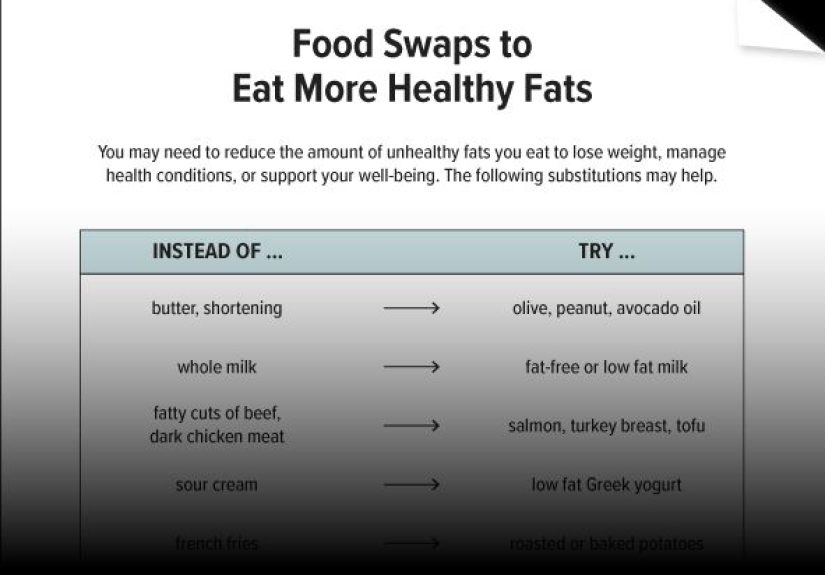
Your Downloadable Guide at a Glance
Use these swaps as a flexible cheat sheet, not a strict set of food commandments. Pick two or three that fit your routine first. Small wins count, especially the ones you’ll actually repeat.
Quick-Swap Table
| Instead of | Try | Why It Helps |
|---|---|---|
| Butter for sautéing | Olive oil or canola oil | More unsaturated fat, less saturated fat |
| Mayo-heavy sandwiches | Mashed avocado or hummus | Creamy texture with better fats and more fiber |
| Sausage or bacon breakfast | Eggs with avocado, nuts, or smoked salmon | Less saturated fat, more nutrient-dense fat choices |
| Creamy bottled dressing | Olive oil vinaigrette | Simple way to add healthy fats to vegetables |
| Cheesy snack crackers | Walnuts, pistachios, or almonds | Healthy fats plus crunch and satiety |
| Pastry or donut breakfast | Greek yogurt with chia, flax, and nuts | Better fat quality and more protein |
| Fatty deli meat wrap | Turkey, tuna, or grilled chicken with avocado | Balanced protein and healthier fat profile |
| Ground beef every taco night | Beans, lentils, or salmon tacos with slaw | Plant or fish fats can shift the meal in a healthier direction |
| Ice cream as a default dessert | Greek yogurt with nut butter and berries | Still creamy, often less saturated fat |
| Butter on toast | Natural peanut butter or almond butter | More unsaturated fat and extra staying power |
The Best Food Swaps to Eat More Healthy Fats
1. Swap Butter for Olive Oil or Canola Oil
This is one of the easiest upgrades you can make. Use olive oil for sautéing vegetables, drizzling over grain bowls, or whisking into salad dressing. Use canola oil when you want a more neutral flavor, especially in baking or pan-cooking. Both are rich in unsaturated fats and can help replace saturated fat from butter.
That does not mean butter has to be banished like a disgraced reality show contestant. It means it should stop being your automatic default for everything from toast to skillet dinners.
2. Swap Mayo for Mashed Avocado or Hummus
Sandwiches and wraps are sneaky places where saturated fat and excess calories can pile up. Mashed avocado gives you the creamy texture people chase with mayonnaise, but with more heart-friendly fat and a bonus of fiber. Hummus works well too, especially in veggie wraps, turkey sandwiches, or as a dip for crudités that deserve a little respect.
3. Swap Creamy Dressings for Olive Oil Vinaigrettes
Salads should not be punishment. They should also not be leafy vehicles for a cup of ranch. A vinaigrette made with olive oil, vinegar, lemon juice, mustard, and herbs adds flavor and healthy fat without leaning so hard on saturated fat. It is also a smart way to make vegetables more satisfying, which helps when you want the salad to be lunch and not a pre-lunch suggestion.
4. Swap Processed Meats for Fatty Fish
If breakfast or dinner often includes bacon, sausage, pepperoni, or heavily marbled meat, try rotating in fatty fish instead. Salmon, sardines, trout, tuna, herring, and mackerel offer omega-3 fats that most people could use more of. Fish does not have to show up in a gourmet masterpiece, either. A salmon bowl, tuna salad with olive oil, or sardines on toast can get the job done.
This swap is less about perfection and more about frequency. Even replacing a few meat-based meals each week can shift your overall fat quality in a better direction.
5. Swap Cheese-Heavy Snacks for Nuts and Seeds
Cheese has a place in a balanced diet, but when every snack becomes cheese cubes, cheese crackers, or cheese-covered something, saturated fat can start running the meeting. Nuts and seeds bring crunch, convenience, and healthy fats to the table. Almonds, walnuts, pistachios, pecans, pumpkin seeds, sunflower seeds, chia, and flax are all useful options.
They also pair well with fruit, oatmeal, yogurt, and salads. Translation: they are not just a “trail mix at the airport” food.
6. Swap Buttered Toast for Nut Butter Toast
Toast is a tiny decision that repeats a lot. That makes it powerful. Replace butter with peanut butter, almond butter, or sunflower seed butter. Add sliced banana, berries, cinnamon, or chia seeds if you want more flavor and texture. This single change can help you eat more unsaturated fat at breakfast without feeling like you joined an extreme wellness retreat.
7. Swap Pastries for Yogurt Bowls with Seeds and Nuts
A muffin and coffee can feel efficient, but it often leaves you hungry fast. A bowl of Greek yogurt topped with walnuts, chia seeds, ground flaxseed, and fruit offers protein and a better fat profile. The result is a breakfast or snack that tends to stick with you longer. Your energy gets a steadier ride, and your stomach is less likely to file a complaint by 10:30 a.m.
8. Swap Sour Cream Toppings for Avocado
On tacos, baked potatoes, grain bowls, chili, or scrambled eggs, avocado can step in where sour cream usually lives. You still get richness, but with more monounsaturated fat and less saturated fat. A squeeze of lime and pinch of salt help it feel less like a compromise and more like a good idea.
9. Swap Coconut-Oil Obsession for More Balanced Oils
Coconut oil has a shiny reputation in some corners of the internet, but it is still high in saturated fat. That does not mean it is forbidden forever. It just means it should not automatically wear the “health halo” crown. For everyday cooking, oils such as olive, canola, soybean, peanut, and avocado oil are often a more balanced choice when your goal is to eat more healthy fats.
10. Swap “Low-Fat” Snack Foods for Whole-Food Fat Sources
Many low-fat packaged foods sound wholesome but are built on refined starches, added sugar, or a texture best described as “edible packing peanuts.” Instead, try snacks like apple slices with peanut butter, plain yogurt with walnuts, whole-grain crackers with hummus, or edamame with sesame seeds. These options make room for healthy fats without pretending flavor is a luxury item.
How to Shop for Healthy Fats Without Overthinking It
At the grocery store, read the Nutrition Facts label and ingredient list. Look at saturated fat first, especially on packaged foods you buy often. As a general rule, lower is better when you are comparing similar items. If you want a fast label shortcut, 5% Daily Value or less is considered low, while 20% Daily Value or more is considered high. That little detail can save you from accidentally buying a “healthy” snack that is basically dessert in activewear.
Next, check the ingredients. If you see partially hydrogenated oils, put the item back like it just insulted your family. Also remember that “fat-free” does not automatically mean healthier. Sometimes it simply means the product found another way to become disappointing.
Portion Size Still Matters
Healthy fats are healthy, not magical. Oils, nuts, seeds, nut butters, and avocados are nutrient-dense, but they are also calorie-dense. A sensible portion is usually enough to do the job. A drizzle of olive oil, a spoonful of nut butter, a quarter to half an avocado, or a small handful of nuts can go a long way.
The goal is not to drown your salad in olive oil and call it preventive care. The goal is to use healthy fats strategically, consistently, and in portions that fit your needs.
A Simple 7-Day Healthy Fat Upgrade Plan
Day 1
Use olive oil instead of butter when cooking dinner.
Day 2
Add avocado to a sandwich or grain bowl.
Day 3
Swap a pastry snack for nuts and fruit.
Day 4
Make an olive oil vinaigrette for lunch salad.
Day 5
Replace one red meat meal with salmon, tuna, or sardines.
Day 6
Top yogurt or oatmeal with chia, flax, or walnuts.
Day 7
Compare labels on two packaged foods and choose the one lower in saturated fat.
What Real-Life Experience With These Swaps Often Looks Like
Here is the part nobody tells you when they hand you a clean little list of healthy food swaps: the experience is usually messier, funnier, and more human than the article version. You do not wake up one morning as the kind of person who drizzles olive oil with quiet confidence and casually keeps sardines in the pantry like a Mediterranean grandmother. Usually, you start by trying one thing and hoping it does not taste sad.
For many people, the first surprise is that the meals feel more satisfying, not less. Breakfast is a good example. A pastry or buttered toast can taste great for about seven minutes, but a breakfast with Greek yogurt, walnuts, chia, or avocado tends to hang around longer. You are less likely to be prowling for snacks before lunch, and that alone can make the whole day feel easier.
Lunch is often where people notice the biggest shift in energy. A sandwich layered with processed meat, cheese, and mayo may feel heavy, while one built with turkey, hummus, avocado, and crunchy vegetables feels more balanced. It is not that the second sandwich is trying to become your life coach. It is just doing a better job of combining flavor, texture, and fullness without leaning so hard on saturated fat.
Dinner can take a little experimentation. Some families are deeply loyal to butter, creamy sauces, and familiar meat-heavy meals. So the experience of making swaps is not always dramatic; it is often subtle. You start cooking vegetables in olive oil. You make tacos with black beans and avocado one week, salmon the next. You keep a stronger-flavored cheese around and use less of it. Nobody at the table files a formal protest, and eventually those choices become normal instead of “healthy.” That is usually when habits actually stick.
Snacking changes too. People often discover that nuts, seeds, and nut butter are more useful than expected. They travel well, require no preparation, and can rescue the afternoon from the vending-machine spiral. The experience is not glamorous, but it is practical. An apple with peanut butter has saved many a workday from becoming a late-afternoon cookie festival.
There is also a learning curve. At first, label reading can feel like decoding a legal document written by a committee of tiny nutrition goblins. After a week or two, though, you start spotting saturated fat numbers faster. You recognize which pantry staples help and which ones only look healthy from six feet away. You also get better at portioning. A spoonful of nut butter feels reasonable. Half the jar while standing at the counter feels like a plot twist.
Probably the most encouraging experience is realizing that healthy fat swaps do not require a “diet personality.” You do not need matching meal-prep containers, a heroic amount of self-control, or a suspicious devotion to plain rice cakes. You just need repeatable choices that make your meals taste good and work better for your body. That is what makes these swaps worth keeping: they are not about chasing perfection. They are about building an eating pattern that feels realistic on busy weekdays, grocery runs, restaurant meals, and the occasional chaotic Tuesday when dinner is one decision away from becoming cereal.
Conclusion
If you want to eat more healthy fats, the smartest move is usually not adding random spoonfuls of oil to your day and hoping wellness happens. It is making practical food swaps that improve your fat quality over time. Think olive oil instead of butter, avocado instead of excess mayo or sour cream, nuts instead of processed snack foods, and fish more often in place of processed or fatty meats.
These swaps are simple, flexible, and realistic enough for normal life. Start with the ones you can repeat. Save this guide, print it, or keep it on your phone for grocery trips. A few better choices made often will beat a perfect plan you never follow.
Note: This article is for educational purposes only and is not a substitute for personalized medical advice. If you have a medical condition, digestive disorder, high triglycerides, or questions about your ideal fat intake, talk with your doctor or a registered dietitian.