Table of Contents >> Show >> Hide
- What Are Firestone Firehawk All-Season Tires, Exactly?
- Why the Firehawk AS V2 Gets Attention
- Specs, Warranty, and the Stuff Tire Nerds Love
- Who Should Buy Firestone Firehawk All-Season Tires?
- Who Might Want Something Else?
- Firestone Firehawk All-Season Tires vs. Touring All-Season Tires
- Pros and Cons at a Glance
- Real-World Driving Experiences With Firestone Firehawk All-Season Tires
- Final Verdict
If your idea of a good tire is one that can handle a sunny back-road run on Saturday and a miserable Monday-morning rainstorm without acting like a drama queen, Firestone Firehawk all-season tires deserve a serious look. The name most shoppers are really talking about today is the Firestone Firehawk AS V2, the current all-season performance model in the Firehawk family. It is built for drivers who want more steering feel and more confidence than a basic commuter tire can usually deliver, but who also do not want to swap to summer tires every time the weather app gets moody.
That balance is the whole point. A lot of all-season tires promise to “do everything.” Then they do everything with the enthusiasm of a sleepy sloth. The Firehawk approach is different. These tires lean toward sporty handling first, then work hard to stay civilized enough for daily driving. That means responsive turn-in, dependable wet-road behavior, and enough comfort to keep your fillings where they belong. They are not a magic carpet, and they are not a substitute for a true winter tire in harsh snowbelt conditions, but they fill a very useful middle ground for drivers who want year-round versatility without giving up fun.
What Are Firestone Firehawk All-Season Tires, Exactly?
The Firehawk line has long been Firestone’s performance-minded branch, and the current all-season star is the Firehawk AS V2. In simple terms, this is an ultra-high-performance all-season tire. That category matters. It tells you the tire is not aimed at drivers who care only about quiet cruising and maximum tread life. Instead, it is aimed at people who still want their sedan, coupe, sporty crossover, or muscle car to feel alive when they turn the wheel.
Firestone positions the Firehawk AS V2 as a tire for sporty grip, responsive handling, wet-road confidence, and light-snow capability. That makes it a strong match for vehicles that have some attitude baked into their DNA: think sporty trims of everyday sedans, all-wheel-drive daily drivers, and performance cars that need something practical enough for four-season use. In other words, this is the tire for the driver who says, “Yes, I commute, but I would still like the commute to contain at least one enjoyable corner.”
Why the Firehawk AS V2 Gets Attention
1. It Is Tuned for Drivers Who Actually Notice Steering Feel
One of the biggest reasons shoppers land on the Firestone Firehawk AS V2 is its personality. This tire is designed to feel more alert than a typical touring all-season. On the road, that often translates to sharper response when changing lanes, better confidence in sweeping turns, and a more connected feel at highway speeds. If you have ever driven on tires that made your car feel like it was sending steering commands by postal mail, you will understand why that matters.
That sporty flavor is also what separates the Firehawk from softer, comfort-first options. It is not trying to be a couch cushion with a sidewall. It is trying to make everyday driving feel a little more precise. For many drivers, that makes the car feel newer, more planted, and less vague, especially if the outgoing tires were old or biased heavily toward basic transportation duty.
2. Wet Performance Is a Major Selling Point
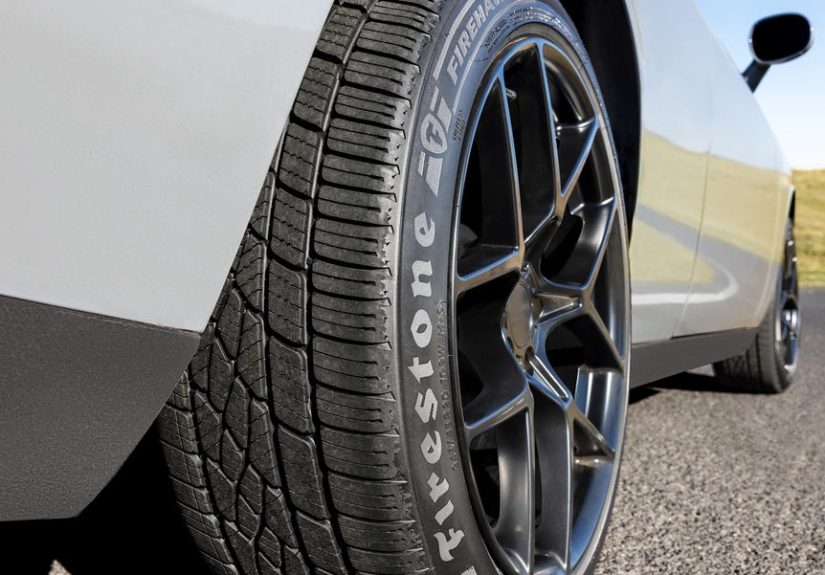
Firestone leans hard into the Firehawk AS V2’s wet-weather capability, and for good reason. The tread design is inspired by Firestone’s INDYCAR rain-tire development, and the tire uses features such as interlocking lugs, outboard tread blocks, and circumferential grooves to help with wet handling and hydroplaning resistance. That sounds technical because, well, it is technical, but the real-world takeaway is simple: the tire is meant to stay composed when the road turns shiny and slippery.
This is one of the most useful strengths for a daily-driven performance all-season tire. Plenty of drivers rarely see meaningful snow, but almost everyone eventually gets stuck in a rainstorm that turns the interstate into a rolling anxiety test. A tire that feels secure in those conditions is not just nice to have; it is the whole ballgame. Strong wet-road manners are one of the most practical reasons people choose the Firehawk AS V2 over a cheaper alternative.
3. Light-Snow Ability Makes It More Practical Than a Summer Tire
The Firehawk AS V2 also uses 3D full-depth sipes to help with traction in light snow through the life of the tire. That is an important phrase: light snow. This is not a winter specialist, and it should not be treated like one. If you regularly deal with deep snow, ice-packed roads, or temperatures that stay brutally low for months, a true winter tire is still the smarter tool.
But for drivers in milder climates or places with occasional snowfall, the Firehawk AS V2 offers a practical compromise. You get more cold-weather flexibility than a summer tire, without giving up the dry and wet performance character that attracted you to the Firehawk name in the first place. For a lot of U.S. drivers, that makes it a realistic one-set solution.
4. Comfort and Noise Stay Reasonably Civilized
Performance tires sometimes act like they are being paid by the vibration. The Firehawk AS V2, thankfully, tries to be more grown-up than that. It is still a performance-leaning all-season tire, so you should not expect whisper-quiet luxury-car isolation on broken pavement. But compared with what many people fear from a sporty tire, the ride is generally more livable than punishing.
That balance matters for daily driving. A tire that corners well but makes every grocery run feel like a low-budget rally stage is eventually going to wear out your patience. Firestone’s approach here is smarter: keep the tire responsive, but do not make it exhausting. That makes the Firehawk AS V2 appealing for drivers who want something athletic without turning every commute into a chiropractor subscription.
Specs, Warranty, and the Stuff Tire Nerds Love
One reason the Firestone Firehawk AS V2 feels competitive in its segment is that it backs up its marketing with sensible on-paper credentials. It carries a 50,000-mile limited treadwear warranty, which is respectable for an ultra-high-performance all-season tire. That warranty will not magically double your tread life if your favorite hobby is aggressive cornering, but it does signal that Firestone is not pretending this tire has the lifespan of a mayfly.
Popular retail listings also commonly show UTQG grades of 500 A A on Firehawk AS V2 fitments, along with speed ratings that vary by size, including V and W in many applications. Translation: this tire is built with performance in mind, but it is still meant to survive daily life. As always, exact specs depend on the size you choose, so shoppers should verify load index, speed rating, and sizing before buying. Tires are not one-size-fits-all, no matter how enthusiastically someone in a forum claims otherwise.
Who Should Buy Firestone Firehawk All-Season Tires?
The ideal buyer is someone who wants a tire that feels sharper than a standard all-season but remains practical for year-round use. If you drive a Camaro, Challenger, Mustang, Civic Sport, Altima, Lexus IS, or a sporty crossover and you care about steering precision, the Firehawk AS V2 makes sense. It is especially attractive for drivers who live in climates with rain, changing temperatures, and only occasional snow.
It also works well for drivers who are tired of choosing between boring practicality and expensive performance. The Firehawk AS V2 tends to sit in a sweet spot where you get meaningful performance character without jumping straight into premium-price territory. That value angle is part of its appeal. It is not a bargain-bin tire pretending to be sporty, and it is not always priced like it thinks it has its own pit crew.
Who Might Want Something Else?
If your top priority is plush comfort, maximum tread life, and near-silent highway cruising, a touring all-season tire may suit you better. The Firehawk AS V2 can be comfortable enough for daily use, but its mission is still performance. It has a little edge to it, and that is exactly why some buyers like it.
If your winters are truly severe, look at an all-weather tire or a dedicated winter tire instead. And if you drive purely for warm-weather grip and do not need year-round flexibility, a summer tire such as the Firehawk INDY 500 V2 will deliver a different level of dry-road focus. That is the classic tire-shopping truth: the best tire is not the one with the coolest name; it is the one that matches your climate, your car, and your driving habits.
Firestone Firehawk All-Season Tires vs. Touring All-Season Tires
The easiest way to understand the Firehawk AS V2 is to compare it with a typical touring all-season tire. A touring tire usually prioritizes comfort, noise control, and long wear. A Firehawk all-season tire, by contrast, leans into handling, road feel, and wet-weather confidence. Touring tires are the friend who wants to brunch and be home by three. Firehawk tires are the friend who says, “Let’s take the scenic route,” and somehow that route involves curves.
Neither approach is automatically better. It depends on what you want your car to feel like. If you enjoy driving and notice how your car responds when you brake, turn, and accelerate, the Firehawk AS V2 has a better chance of making you smile. If you mostly want peace, quiet, and long tread life above everything else, you may be happier with a softer touring model.
Pros and Cons at a Glance
Pros
Strong wet-road confidence, sporty steering feel, respectable ride comfort for the category, light-snow capability, and a useful 50,000-mile limited warranty. It also brings good value for drivers who want performance character without paying top-shelf money.
Cons
It is not a true winter tire, some drivers may want sharper ultimate responsiveness than it delivers, and long-term noise or treadwear impressions can vary depending on vehicle, alignment, rotation habits, and driving style. In plain English: treat the tire well, and it usually behaves better. Abuse it like a movie stunt car, and it will not write you a thank-you note.
Real-World Driving Experiences With Firestone Firehawk All-Season Tires
One of the most interesting things about the Firestone Firehawk AS V2 is how often driver feedback follows the same pattern. People usually notice the tire’s wet-road confidence early. That makes sense. Rain reveals a tire’s personality in a hurry. Owners often describe feeling more secure during lane changes, better planted on highway ramps, and less nervous when standing water starts to gather. For everyday drivers, that kind of confidence is not just a “nice extra.” It is the difference between white-knuckle driving and simply getting home without inventing new curse words.
Another recurring experience is that the tire often wakes up a car that had started to feel numb. Drivers moving from aging OEM all-seasons or budget replacements frequently mention that the steering feels tighter and the car responds with less delay. The transformation is especially noticeable on sporty sedans and coupes, where the chassis may have always had potential, but the old tires were basically telling it to calm down and think about taxes. Put on a set of Firehawks, and suddenly the car feels like it remembered it has hobbies.
Owners also tend to describe the Firehawk AS V2 as a good compromise tire. It is not ultra-soft and plush like a comfort-biased touring tire, but it usually avoids the harshness people fear from performance rubber. That means daily driving tends to stay pleasant. Around town, impacts are generally controlled rather than crashy. On the highway, the tire can feel stable and composed, which matters a lot if you spend hours commuting or taking road trips. For drivers who want their car to feel sporty without punishing passengers, that middle-ground personality is a big win.
There are, of course, some mixed experiences too, because tire reviews are never a fairy tale where everyone claps in identical harmony. Some drivers report that noise can increase as the miles pile on, especially on rough pavement or on vehicles that are already prone to road noise. Others note that tread life depends heavily on rotation discipline and alignment. That is not exactly shocking. Performance-leaning all-season tires rarely live their best lives when they are underinflated, misaligned, or asked to survive endless burnouts and pothole auditions.
In colder weather, the typical experience seems practical rather than magical. Drivers in areas with occasional snow often find the Firehawk AS V2 competent enough to get through light winter conditions, especially when roads are plowed and temperatures are not extreme. But the praise usually comes with a quiet understanding: this is a light-snow tire, not a blizzard superhero. Owners who respect that limitation tend to be happier than those expecting it to perform like a dedicated winter setup.
The value story also shows up again and again in how people talk about these tires. Many buyers seem pleasantly surprised that the Firehawk AS V2 feels more premium than its price point might suggest. That does not mean it beats every rival in every category. It means it often feels like money well spent. And in the tire world, where some purchases inspire all the joy of paying a parking ticket, that is saying something.
Final Verdict
The Firestone Firehawk AS V2 is a smart choice for drivers who want an all-season performance tire with real personality. It does not try to be everything for everyone. Instead, it focuses on the things that matter most to performance-minded daily drivers: wet-road security, responsive handling, useful light-snow capability, and livable comfort. That combination makes it one of the more appealing options for drivers who want their tires to do more than simply exist between oil changes.
For shoppers who want year-round usability without dulling their car’s reflexes, Firestone Firehawk all-season tires make a compelling case. They are not the answer for deep-winter specialists or luxury-first drivers, but for the large middle group who want fun, confidence, and value in one package, they hit a very practical sweet spot. In tire terms, that is a compliment. In normal human terms, it means your car may finally stop feeling like it is wearing sensible shoes to a track day.