Table of Contents >> Show >> Hide
- Table of Contents
- Why Falafel Salad Works
- Ingredients You’ll Need
- How to Make Great Falafel (3 Cooking Methods)
- How to Build the Perfect Salad
- Falafel Salad Recipe (Printable-Style)
- Variations & Add-Ons
- Troubleshooting & Pro Tips
- Make-Ahead, Storage, and Meal Prep
- FAQ
- Extra: Real-World Falafel Salad Experiences (500+ Words)
If you’ve ever looked at a salad and thought, “This is healthy… and also emotionally unavailable,” this is the fix.
A falafel salad is the rare meal that checks every box: crispy, herby, crunchy, creamy, tangy, fillingand still
technically counts as “a salad,” which means you can feel virtuous while you drizzle tahini like you’re painting a masterpiece.
This guide walks you through a from-scratch falafel salad recipe (with options to fry, bake, or air-fry),
a bright lemon-tahini dressing, and the best salad builds for maximum flavor and texture. You’ll also get
troubleshooting tips, meal-prep strategies, and variations so you can keep this on repeat without getting bored.
Why Falafel Salad Works
Falafel is basically the charisma of the chickpea world: bold herbs, warm spices, and a crispy exterior with a tender middle.
When you pair it with fresh vegetables and a creamy-tangy dressing, you get contrast in every bite:
hot + cold, crispy + juicy, savory + bright.
It’s also naturally flexible. Want it hearty? Add grains like quinoa or couscous. Want it lighter? Go heavy on greens and cucumbers.
Feeding a crowd? Make a “falafel salad bar” and let everyone customize. (This also prevents the Great “No Tomatoes, Please” Debate of 2026.)
Ingredients You’ll Need
For the falafel (best texture: dried chickpeas)
- Dried chickpeas (not cooked): soaked until plump
- Fresh herbs: parsley, cilantro (optional dill or mint for extra freshness)
- Alliums: onion or shallot + garlic
- Spices: cumin, coriander; optional pinch of cayenne or red pepper flakes
- Salt + pepper
- Baking powder (optional but helpful for a lighter interior)
- Binder (only if needed): 1–2 tbsp chickpea flour or all-purpose flour
Quick note on chickpeas: Many cooks swear by soaked dried chickpeas for classic falafel texture and binding.
Some shortcut recipes use canned chickpeas plus binders (egg, breadcrumbs, flour). That can work, but it tends to be softer and less “falafel-shop” crisp.
If you want the most traditional vibe, start with dried.
For the salad (crunch + freshness + brightness)
- Greens: romaine, spring mix, arugula, or chopped kale
- Cucumber (Persian/English for fewer seeds)
- Tomatoes (cherry/grape for less watery mess)
- Red onion (thinly sliced) or quick-pickled onions
- Crunch extras: radish, bell pepper, shredded carrots
- Briny extras: olives, pickles, pepperoncini
- Optional creamy/salty: feta or a dairy-free “feta-style” alternative
For lemon-tahini dressing (the reason you’ll “accidentally” eat more salad)
- Tahini
- Fresh lemon juice
- Garlic (microplaned or finely grated)
- Warm water (to thin and smooth)
- Olive oil (optional, but adds silkiness)
- Salt + optional cumin, black pepper, or a touch of maple syrup/honey
How to Make Great Falafel (3 Cooking Methods)
Step 1: Soak the chickpeas (don’t skip this)
Put dried chickpeas in a large bowl and cover with plenty of cool water (they expand a lotlike your weekend plans).
Soak overnight (12–24 hours). Drain well and pat dry.
Tip: If your chickpeas are older (they’ve been hanging out in the pantry since… an era), soaking closer to 24 hours helps.
Some cooks add a small pinch of baking soda to the soaking water to soften them faster.
Step 2: Blend into a coarse “herby crumble”
Add soaked chickpeas, herbs, onion, garlic, spices, salt, and pepper to a food processor. Pulse until the mixture looks like
coarse sand or couscousnot hummus. If it turns into a smooth paste, the falafel can get dense.
Step 3: Rest the mixture
Chill the mixture in the fridge at least 30–60 minutes. This helps it hold together and improves texture.
Step 4: Shape and cook
Shape into small balls or thick patties (about 1½ inches wide). Smaller pieces often cook more evenly and get crispier.
Option A: Pan-fry (crispiest, most classic)
Heat a shallow layer of oil in a skillet over medium to medium-high heat. Fry falafel in batches until deeply golden on both sides.
Drain on a rack or paper towels and season with a pinch of salt while hot.
Option B: Air-fry (crisp with less oil)
Lightly oil the basket and the falafel. Air-fry at 375–400°F until browned and crisp, flipping halfway through.
(Exact time varies by size and machinestart checking around 10 minutes.)
Option C: Bake (hands-off, great for big batches)
Brush or spray falafel with oil. Bake at 400–425°F on a lined sheet pan, flipping once, until golden and firm.
If you want more browning, finish with a short broil (watch closely).
How to Build the Perfect Salad
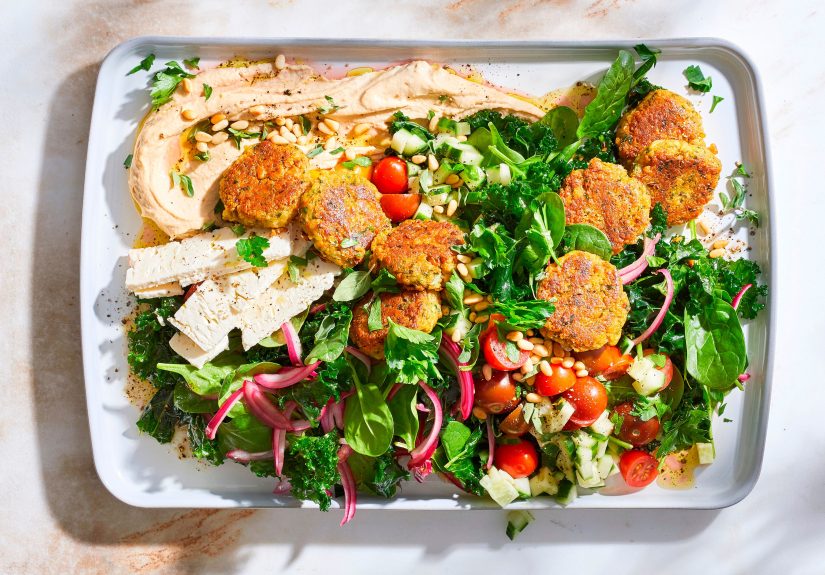
A great falafel salad isn’t just greens with a falafel cameo. Think of it as a “chopped salad meets mezze platter” situation.
Use this simple formula:
- Base: crisp greens (romaine is a classic) or a chopped veggie base
- Juice: tomatoes + cucumber for freshness
- Crunch: radish, peppers, toasted pita chips, or seeds
- Brine: olives, pickles, pickled onions
- Cream: lemon-tahini dressing (plus feta or hummus if you want)
- Warm hero: fresh falafel right on top
Texture tip: If you’re meal-prepping, keep the falafel, greens, and dressing separate until serving.
That way your salad stays crunchy instead of turning into “sad desk-lunch soup.”
Falafel Salad Recipe (Printable-Style)
Yield
Serves 4 as a main dish (or 6 as a hearty side)
Time
- Soak time: 12–24 hours
- Active time: ~25–35 minutes
- Cook time: 10–20 minutes (depending on method)
Ingredients
Falafel
- 1 1/2 cups dried chickpeas (soaked 12–24 hours, drained well)
- 1 small onion or 2 shallots, roughly chopped
- 3–5 garlic cloves
- 1 packed cup fresh parsley
- 1/2 packed cup fresh cilantro (optional: add a little dill or mint)
- 1 1/2 tsp ground cumin
- 1 tsp ground coriander
- 1/4 tsp cayenne or red pepper flakes (optional)
- 1 tsp kosher salt (plus more to finish)
- 1/2 tsp black pepper
- 1 tsp baking powder (optional)
- 1–2 tbsp chickpea flour (only if mixture won’t hold together)
- Oil for frying / brushing / spraying (depending on method)
Salad
- 6 cups chopped romaine (or mixed greens)
- 1 large cucumber, chopped
- 1–2 cups cherry tomatoes, halved
- 1/4 red onion, thinly sliced
- 4–6 radishes, thinly sliced (optional but great crunch)
- 1/3 cup olives (optional)
- 1/3 cup crumbled feta (optional)
- Optional add-ins: cooked quinoa, chickpeas, roasted peppers, pita chips
Lemon-Tahini Dressing
- 1/3 cup tahini
- 1/4 cup fresh lemon juice (about 1–2 lemons)
- 1 small garlic clove, finely grated
- 3–6 tbsp warm water (to thin)
- 1–2 tbsp olive oil (optional)
- 1/2 tsp kosher salt (plus to taste)
- Optional: pinch cumin, black pepper, or 1 tsp honey/maple syrup
Instructions
- Soak chickpeas: Cover dried chickpeas with plenty of water and soak 12–24 hours. Drain and pat very dry.
-
Make falafel mixture: Add chickpeas, onion, garlic, herbs, spices, salt, pepper, and baking powder (if using) to a food processor.
Pulse until coarse and crumblystop before it becomes smooth. - Chill: Transfer mixture to a bowl, cover, and refrigerate 30–60 minutes.
- Shape: Form into 12–16 small balls or patties. If the mixture won’t hold, mix in 1 tbsp chickpea flour and try again.
-
Cook (choose one):
- Pan-fry: Fry in a shallow layer of oil over medium/medium-high until golden on both sides. Drain and salt lightly.
- Air-fry: Oil basket and falafel. Air-fry at 375–400°F, flipping halfway, until browned and crisp.
- Bake: Place on a lined sheet, brush/spray with oil, bake at 400–425°F, flipping once, until golden.
-
Make dressing: Whisk tahini, lemon juice, garlic, and salt. It may thicken at firstthis is normal.
Add warm water gradually until smooth and pourable. Add olive oil if desired and adjust seasoning. - Build salad: In a large bowl, toss greens, cucumber, tomatoes, onion, and any extras. Add dressing and toss lightly.
-
Serve: Top with warm falafel. Finish with extra herbs, feta (optional), and an extra drizzle of dressing.
Serve with pita, hummus, or a lemon wedge for “I’m at a café” energy.
Variations & Add-Ons
Make it a grain bowl
Add quinoa, farro, bulgur, couscous, or rice to turn this into a falafel salad bowl. It’s extra satisfying and travels well.
Go “fattoush-style”
Toss in toasted pita chips and extra sumac if you have it. This adds crunch and a lemony-tart pop that plays beautifully with tahini.
Add a creamy sidekick
Not to start drama, but you can add a spoonful of hummus or a dollop of tzatziki (or a dairy-free yogurt sauce) alongside tahini for a layered sauce moment.
Make it spicy
Add harissa, chopped jalapeño, a pinch of cayenne in the falafel mix, or a little hot sauce into the dressing.
Protein boost (still plant-forward)
Top with roasted chickpeas, hemp seeds, or pumpkin seeds. If you eat meat, grilled chicken or lamb kofta can join the party, too.
Troubleshooting & Pro Tips
Why is my falafel falling apart?
- Too wet: Pat chickpeas dry after soaking. Excess water can sabotage binding.
- Too smooth: Over-processing can create a paste that cooks dense and may crack.
- Needs rest: Chill the mixture to help it hold together.
- Needs a tiny binder: Add 1 tbsp chickpea flour (or all-purpose flour) if necessary.
Why is my falafel dense?
- Over-processed mixture (too smooth)
- Too much flour/binder
- Oil not hot enough (for frying), which can make falafel absorb oil and feel heavy
How do I keep the salad from getting soggy?
- Use cherry tomatoes or seed juicy tomatoes before chopping.
- Keep dressing separate until serving (especially for meal prep).
- Store falafel separately so it stays crisp.
Make-Ahead, Storage, and Meal Prep
Falafel salad is meal-prep friendly if you store components smartly:
- Falafel mixture: Can be made ahead and chilled for up to a day before cooking.
- Cooked falafel: Store airtight in the fridge (best within a few days). Re-crisp in an air fryer or oven.
- Dressing: Keeps well refrigerated. It thickensjust whisk in warm water to loosen.
- Salad base: Chop veggies and greens, store dry with a paper towel to absorb moisture.
Freezer tip: Many home cooks freeze shaped, uncooked falafel pieces on a tray, then transfer to a bag.
Cook from frozen (add a bit of time). It’s like having future-you send a thank-you note to present-you.
FAQ
Can I use canned chickpeas?
You can, but expect a different result: softer texture and often a need for more binders. If you want classic falafel texture and easier shaping,
soaked dried chickpeas are the gold standard.
Is falafel salad healthy?
It can be a very balanced meal: chickpeas provide plant protein and fiber, veggies add volume and micronutrients, and tahini brings healthy fats.
Cooking method mattersair-frying or baking uses less oil than deep frying, but all methods can fit depending on your goals and portions.
What dressing goes best with falafel salad?
Lemon-tahini is a classic. Other great options include garlic yogurt sauce, a simple lemon-olive oil vinaigrette, or a tahini-herb dressing with parsley and mint.
What can I serve with it?
Warm pita, hummus, baba ghanoush, lentil soup, or a simple side of roasted vegetables all pair well. If you’re feeding a crowd, add a platter of olives and pickles.
Suddenly it’s a whole vibe.
Extra: Real-World Falafel Salad Experiences (500+ Words)
Falafel salad has a funny way of becoming your “default impressive meal”the one you make when you want something that feels fresh and nourishing,
but also like actual food (not a punishment disguised as lunch). Here are some common real-life moments and lessons that tend to come up when people
start making it regularly.
1) The first time you make it, you’ll underestimate how much chickpeas expand.
Dried chickpeas are the ultimate glow-up story. You put them in a bowl, add water, and come back later like,
“Who invited all these extra chickpeas?” This matters because if your bowl is too smallor your water line is too lowyou can end up with uneven soaking.
The fix is simple: use a big bowl, plenty of water, and give them room to become their best selves.
2) You’ll learn that falafel texture is more “crumbly” than “creamy.”
A lot of people instinctively process the mixture until it looks smooth like hummus, because that’s what chickpeas do in a blender.
But falafel is different. The mixture should look like coarse meal with visible flecks of herbs. That “not-too-smooth” texture is what helps falafel cook up
fluffy inside rather than dense. If you do over-process, you can sometimes save it by chilling well and using a tiny bit of flourbut the biggest win is
pulsing patiently and stopping early.
3) Sauce becomes the main character.
A good lemon-tahini dressing is one of those things that makes you wonder why you ever bought bottled dressing.
The classic experience is watching the tahini seize up when lemon juice hits it, then magically transform into a smooth, creamy sauce with warm water.
It feels like kitchen science, except delicious. Over time, people often adjust their “house dressing” to match their mood:
extra garlic for boldness, a pinch of cumin for warmth, a touch of honey for balance, or chopped herbs for brightness.
4) The crunch factor becomes a personal mission.
Once you’ve had falafel on a crunchy chopped salad, you start chasing texture like it’s your job.
You might add radishes for snap, pita chips for shatter, toasted sesame seeds for nuttiness, or pickled onions for that tangy bite that wakes everything up.
A very common “aha” moment is realizing that briny elements (olives, pickles, pepperoncini) make the whole bowl taste more complete.
It’s the difference between “nice salad” and “wait, can we have this again tomorrow?”
5) Meal-prep strategy evolves quickly.
The first time you pack falafel salad for later, you may commit the classic mistake: dressing everything in advance,
sealing it up, and opening it later to find the greens have gone soft. The upgrade is storing components separately:
greens and vegetables in one container, dressing in a little jar, and falafel in its own container. Then you assemble when you’re ready.
If you want peak crispiness, reheating falafel in an air fryer or oven for a few minutes brings it right back.
6) It becomes a social-food MVP.
Falafel salad works for potlucks and gatherings because it’s easy to scale and customizable.
People who avoid dairy can skip feta, gluten-free folks can skip pita chips, and everyone can choose their favorite toppings.
A “falafel salad bar” is especially popular because it turns dinner into a low-stress choose-your-own-adventure.
And if you’re trying to feed a mix of preferences, this is one of the rare meals that doesn’t feel like a compromise.
In short: the experience of making falafel salad repeatedly is less about memorizing a strict recipe and more about learning a rhythm
soak, pulse, chill, crisp, chop, drizzle, crunch. Once you’ve got that rhythm, the dish becomes endlessly flexible,
reliably satisfying, and genuinely fun to eat. Which is exactly what a salad should be.