Table of Contents >> Show >> Hide
- What Exactly Is Ed Annink’s Droog Hare Mat?
- Why the Hare Mat Fits Droog So Perfectly
- From Pictogram to Porch: Why Gerd Arntz Matters Here
- Material Matters: Coir Is Doing More Work Than You Think
- Why the Shape Works So Well
- How the Hare Mat Looks in Real Interiors
- The Bigger Appeal: Conceptual Design You Can Actually Use
- Styling and Care Tips for a Hare Mat
- The Experience of Living With Ed Annink’s Droog Hare Mat
- Final Thoughts
Some home accessories are born to blend in. They sit quietly by the door, collect dirt, and ask for nothing more than a weekly shake outside and maybe a little gratitude. Ed Annink’s Droog Hare Mat is not that kind of accessory. This thing hops straight past “useful household item” and lands in the much more entertaining territory of design object, conversation starter, and low-key philosophical prank.
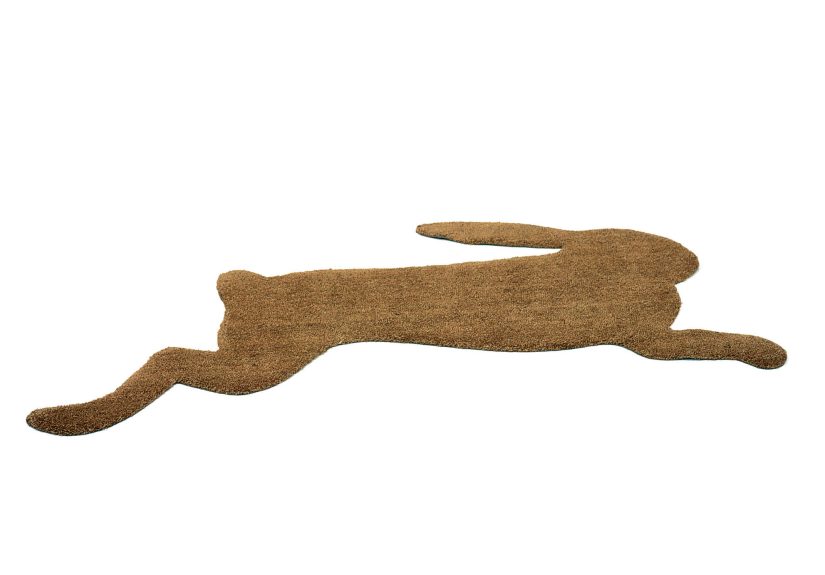
At first glance, it is a doormat shaped like a running hare. Cute, right? Well, yes, but not in the sugary, woodland-crib-bedding sense of cute. The Hare Mat is clever in a sharper way. It takes the clean, simplified logic of a modern pictogram and turns it into something you wipe your boots on. That move alone tells you almost everything you need to know about Droog, the Dutch design company that made a global name for itself by treating ordinary objects as opportunities for wit, critique, and delight.
In a market full of forgettable welcome mats shouting “Hello Sunshine” or threatening burglars with bad puns, Ed Annink’s Droog Hare Mat still feels weirdly fresh. It is graphic without being loud, playful without being childish, and practical without pretending practicality is the whole story. That balance is what makes it memorable. The mat does its job, sure. But it also makes you think about symbols, materials, movement, and the strange joy of seeing something everyday turned just slightly sideways.
What Exactly Is Ed Annink’s Droog Hare Mat?
The basic facts are refreshingly straightforward. Designed by Ed Annink for Droog in 2002, the Hare Mat is a large mat made primarily from coir with a PVC-backed construction. It measures roughly 191 by 94 centimeters, which means it is much bigger than the average humble little rectangle parked outside a front door. In other words, this hare does not tiptoe into a space. It arrives.
The form comes from the work of Gerd Arntz, the influential graphic artist known for spare, highly legible pictograms. Annink’s move was simple but brilliant: take a symbol language associated with information, abstraction, and modernist clarity, then drop it into the everyday world of porches, entry halls, muddy shoes, and visiting in-laws. The result is a mat that looks instantly understandable and slightly surreal at the same time.
That tension is the whole charm. The Hare Mat is not trying to mimic a realistic rabbit with fluffy fur and adorable eyes. It is not a wildlife portrait. It is a silhouette with attitude. It captures motion, speed, and recognition in one flat gesture. You know it is a hare immediately, but you also know this is a design object built on ideas, not just decoration.
Why the Hare Mat Fits Droog So Perfectly
To understand why this piece still gets design people a little excited, it helps to understand Droog’s broader personality. Since the 1990s, Droog has been associated with a kind of dry-humored, concept-driven Dutch design that makes everyday things feel both smarter and stranger. The company helped bring Dutch design to international attention by championing objects with simple forms, inventive materials, and a refusal to act too polished or too precious.
That spirit matters because the Hare Mat is not an isolated gag. It belongs to a tradition of design that enjoys blurring categories: art and utility, seriousness and comedy, luxury and roughness, the gallery and the hallway. Droog’s best-known works often look deceptively simple until you realize they are asking bigger questions about production, taste, memory, material, and behavior. The Hare Mat does exactly that, just from the floor up.
It also shows how Droog made design feel approachable without making it dumb. You do not need a graduate seminar in semiotics to appreciate this piece. You just need eyes, a front door, and maybe one guest willing to say, “Wait, is that a rabbit?” From there, the object opens out. It becomes funny. Then smart. Then unexpectedly elegant. Not bad for something that also catches dirt.
From Pictogram to Porch: Why Gerd Arntz Matters Here
The link to Gerd Arntz is what lifts the Hare Mat above novelty. Arntz is associated with a visual tradition rooted in clarity, simplification, and the power of symbols to communicate quickly. His work helped shape the kind of modern visual language we now take for granted in signage, diagrams, public information systems, and graphic communication more broadly.
Annink’s genius was not to merely quote that language, but to relocate it. He did not frame the pictogram on a wall and call it heritage. He put it underfoot. That shift changes the meaning. A pictogram usually asks to be read. A mat asks to be used. One belongs to systems of information; the other belongs to habits, weather, thresholds, and routines. When those two worlds collide, the design becomes more than a stylized animal. It becomes a small essay on how meaning survives contact with real life.
There is also something deliciously democratic about that move. Modernist graphics often carry an aura of seriousness, as if they belong to institutions, exhibitions, or transportation networks. The Hare Mat cheerfully yanks that language back into domestic space. Suddenly the clean logic of a symbol is not hanging in a museum or printed in a manual. It is sitting at your front door, collecting gravel from your sneakers. That is not disrespectful. It is lively. It proves good design can travel.
Material Matters: Coir Is Doing More Work Than You Think
A lot of the Hare Mat’s success comes down to material. Coir, the coarse natural fiber made from coconut husks, is one of those wonderfully honest materials that does not pretend to be anything else. It is tough, textured, and made for friction. That makes it a classic doormat material, especially for outdoor or transitional spaces where scraping dirt off shoes is not optional but survival.
From a practical standpoint, coir makes excellent sense here. It is durable, naturally rough, and effective at trapping debris before it gets tracked through the house. It also dries quickly and brings a natural, earthy look that feels far warmer than a synthetic mat trying too hard to look “performance-oriented.” If performance-oriented had a face, it would probably be wearing wraparound sunglasses indoors and calling itself a lifestyle solution.
Of course, coir has its quirks. It can shed. It likes a somewhat sheltered location more than a fully exposed monsoon zone. And because it has texture and thickness, you have to be mindful of door clearance and placement. But those are not flaws so much as reminders that this is still a real mat made of real fiber. The beauty of the Hare Mat is that its material integrity supports its conceptual integrity. It is smart, but it is not flimsy. It is witty, but it is not useless.
Why the Shape Works So Well
1. It suggests motion without becoming chaotic
The best silhouettes imply energy with very little information, and the Hare Mat nails that trick. The stretched body and leaping posture create a sense of forward movement. Even when the mat is lying completely flat, it feels active. That is not easy. Most floor coverings are visually static by definition. This one looks like it might bolt.
2. It turns negative space into part of the design
Because the mat is not a standard rectangle, the surrounding floor becomes part of the composition. Concrete, tile, wood, brick, or stone all frame the shape differently. That gives the object a graphic sharpness many doormats never achieve. It does not just occupy a doorway; it edits the doorway.
3. It is playful without becoming corny
Animal motifs can go wrong in a hurry. One minute you are decorating; the next minute your porch looks like a gift shop near a petting zoo. The Hare Mat avoids that fate because its humor is restrained. The silhouette is abstract enough to stay crisp and design-forward. It says “I appreciate wit,” not “I own fifteen ceramic rabbits and name them after Victorian poets.”
How the Hare Mat Looks in Real Interiors
One reason this mat has endured is that it works across very different homes. In a minimalist entryway with white walls, black metal hardware, and a pale oak floor, it reads as a strong graphic gesture. Against brick, slate, or weathered wood, it feels more earthy and rustic, almost like a folk shape filtered through modernism. In a family house with boots, backpacks, and chaotic Tuesday energy, it provides a dose of humor that does not feel juvenile.
It is also particularly good in homes that want one unusual piece rather than twenty loud ones. Not everyone wants a maximalist interior where every object auditions for its own spin-off series. The Hare Mat is better than that. It carries personality, but in a controlled, intelligent way. It can be the punchline at the door and still leave room for the rest of the space to breathe.
Designers often talk about “moments” in a room, and the Hare Mat is an excellent threshold moment. It changes the tone before anyone fully enters. Guests notice it, smile at it, and understand something about the home instantly: this is a place that values design, but does not worship solemnity. That is a pretty lovely first impression for a mat to make.
The Bigger Appeal: Conceptual Design You Can Actually Use
There are plenty of conceptual designs that get celebrated more for their audacity than their livability. You see them in museums, admire the idea, and quietly thank the universe you do not need to dust them. The Hare Mat belongs to a more satisfying category: the object that carries a clear concept but still earns its place through use.
That balance is why the piece has staying power. It is neither ordinary nor absurd. It has enough practicality to justify ownership and enough intelligence to keep rewarding attention. You can buy it because you need a doormat. You can also buy it because you like modern graphic culture, Dutch design history, or the sweet spot where humor and restraint overlap. Very few household objects can speak to all those instincts at once.
In that sense, the Hare Mat is a neat summary of why Droog mattered in the first place. The company helped prove that domestic design could be playful, critical, and materially honest without becoming inaccessible. It made room for irony without cynicism. The Hare Mat continues that legacy in one long leap.
Styling and Care Tips for a Hare Mat
If you are actually considering this mat for your home, the styling advice is simple: let the shape do the work. Do not crowd it with an overly busy layered-rug stack or a forest of tiny planters fighting for attention. A clean entry lets the silhouette read properly. Dark doors, neutral stone, concrete, and natural wood all pair especially well with its warm brown coir surface.
As for maintenance, treat it like the high-functioning diva it is. Shake it out regularly, vacuum when needed, and keep it in a location that gets use but not endless saturation. A covered porch or protected entry is ideal. Because coir mats can shed and thicker mats can interfere with door swing, measure your space and door clearance before placing it. The Hare Mat may be artistic, but it should not be the reason your front door starts performing interpretive dance.
The Experience of Living With Ed Annink’s Droog Hare Mat
Living with the Hare Mat is, strangely enough, different from simply admiring it online. On a screen, it reads as a clever product shot. In daily life, it becomes part of ritual. You see it first thing when you leave the house and first thing when you come back. It sits exactly where the ordinary happens: muddy mornings, grocery runs, school pickup, dog walks, late-night takeout, packages, holiday guests, and those moments when you are holding too many bags and trying to open the door with your elbow like a determined raccoon.
That is where the mat gets interesting. Because it is smartly designed, it does not wear out its welcome after the first laugh. Instead, it settles into a new role. It starts as “the rabbit mat,” but over time it becomes the thing that gives your entrance a little pulse. Guests comment on it. Kids trace its outline with their eyes. Design-minded friends suddenly crouch down and say, “Wait, is that the Droog one?” People who have never heard of Droog still understand that this is not a generic home-store purchase. It has character.
There is also a tactile pleasure to it. Coir has that dry, fibrous roughness that feels honest. It does not pretend to be plush. It is there to work. You wipe your shoes, hear the faint scrape, and know it is actually doing something useful. That matters. A lot of “design objects” ask for visual admiration while contributing very little to daily life. The Hare Mat participates. It takes the mess of the outside world and helps stop it at the door, all while looking like it escaped from a very disciplined picture book.
Seasonally, it changes mood in nice ways. In summer, it feels breezy and graphic against sunlit stone or wood. In fall, the warm brown coir looks richer and more grounded. In winter, it becomes almost comic in the best possible way: this elegant leaping hare stoically receiving slush, grit, and the indignity of wet boots. That contrast between visual refinement and real-world abuse is part of its appeal. Good design should survive contact with reality, and this mat seems to understand that from the start.
Emotionally, the Hare Mat does something many small home objects fail to do: it creates affection without sentimentality. You do not love it because it is precious. You love it because it is sharp, useful, and a little mischievous. It makes the threshold of a home feel considered. Not staged. Not fussy. Considered. That is a meaningful difference.
And perhaps the best part is this: the Hare Mat never tries too hard. It does not scream for attention. It does not need a plaque or a dramatic backstory recited at cocktail parties. It simply lies there, doing its job with wit. In a world where so many interiors are either aggressively bland or exhausting in their need to be noticed, that kind of quiet confidence feels rare. You live with it, step on it, clean it, defend it from the occasional puddle, and gradually realize that it has done what the best design always does. It has improved a tiny part of everyday life while making that life feel more observant, more playful, and more alive.
Final Thoughts
Ed Annink’s Droog Hare Mat endures because it is more than a novelty and more than a utility piece. It is a thoughtful translation of graphic history into domestic life, a strong example of Dutch design wit, and a reminder that even the most practical objects can carry real cultural intelligence. It proves that a doormat does not have to be boring, and that humor in design does not have to come at the expense of quality or purpose.
If you care about entryway design, conceptual home decor, or simply the pleasure of owning one object that is both useful and unmistakably smart, the Hare Mat remains an excellent case study. It welcomes, it performs, and it leaves an impression. Not bad for something that spends its life under your shoes.