Table of Contents >> Show >> Hide
- Why you’ll likely use third-party apps (quick reality check)
- Which tools work best (short list)
- Before we start prep tips
- 11 Steps: Easy, practical, and covering the top tools
- Step 1 Choose your method
- Step 2 Download & install the app
- Step 3 Open the app and find “Add” or “Import”
- Step 4 Select your video file and confirm format
- Step 5 Apply to the monitor you want
- Step 6 Tweak performance & pause behavior
- Step 7 Mute the wallpaper (recommended)
- Step 8 Make it start with Windows (optional)
- Step 9 Troubleshooting common problems
- Step 10 Keep it legal & considerate
- Step 11 Enjoy and iterate
- Short method cheat-sheet
- Safety & performance checklist
- What users and testers report (quick summary)
- Meta & SEO block (copy-ready)
- Extra: ~ of real-world experiences and practical notes
Want a moving desktop without the fuss? Turning a video into your Windows 10 wallpaper is a surprisingly simple way to personalize your PC. Windows 10 doesn’t offer a built-in “video wallpaper” button, but several trusted apps both free and paid make it painless. Below you’ll find 11 clear steps that cover the best tools (Lively, Wallpaper Engine, VLC, Push Video Wallpaper, DesktopHut, BioniX) and exact menus to click so you can pick the method that fits your needs and hardware.
Why you’ll likely use third-party apps (quick reality check)
Windows 10 doesn’t natively let you select a video file as your wallpaper. Microsoft has experimented with bringing video wallpaper back to Windows (Windows 11 preview builds are testing native support), but on Windows 10 you’ll rely on third-party tools for the best experience. These apps handle pausing during fullscreen apps, multi-monitor support, and performance throttling.
Which tools work best (short list)
- Lively Wallpaper free, open source, lightweight, great for most PCs.
- Wallpaper Engine paid (Steam), feature-rich, highly optimized for performance and multi-monitor setups.
- VLC Media Player free, can set a playing video as wallpaper using DirectX output; quirky but handy for short tests.
- Push Video Wallpaper / DesktopHut / BioniX other solid choices with playlists and screensaver features.
Before we start prep tips
Pick a reasonably sized MP4/WebM file (1080p recommended for 1080p screens). Convert odd codecs to H.264 MP4 if an app has trouble. If you’re on a laptop, consider disabling video wallpapers on battery or lowering playback quality to save power. Also mute the video (most tools allow mute) unless you want the desktop to be a tiny movie theater.
11 Steps: Easy, practical, and covering the top tools
Step 1 Choose your method
Decide whether you want a free, open-source solution (Lively), a polished paid experience (Wallpaper Engine), or a quick VLC trick. If you want Steam workshop wallpapers, go Wallpaper Engine. For a free, low-impact option that’s actively maintained, choose Lively.
Step 2 Download & install the app
Get Lively from its GitHub/Microsoft Store page or Wallpaper Engine from Steam. For VLC, make sure you have the latest stable release. For Push Video Wallpaper, DesktopHut or BioniX, use the official vendor sites. Always download from official pages to avoid bundles.
Step 3 Open the app and find “Add” or “Import”
Most apps have a clear button: “Add Wallpaper”, “Import”, or a plus icon. In Lively you can drag & drop; in Wallpaper Engine use “Create Wallpaper” → “Import Video”; in Push/DesktopHut there’s an “Add” or “+” to put a file in the playlist.
Step 4 Select your video file and confirm format
Choose MP4/WebM for best compatibility. If your video uses an exotic codec and won’t play, convert it with HandBrake or an online converter to H.264 MP4. Lively and Wallpaper Engine are forgiving, but VLC is strict about codec support in wallpaper mode.
Step 5 Apply to the monitor you want
If you have multiple monitors, apps usually let you pick which screen to apply the wallpaper to. Wallpaper Engine and Lively both support per-monitor assignments and different resolutions for each display.
Step 6 Tweak performance & pause behavior
Set wallpapers to pause when fullscreen apps/games run (default in Lively/Wallpaper Engine), and set a lower playback quality if your GPU is taxed. Wallpaper Engine automatically pauses and can reduce resource usage; Lively provides similar performance settings.
Step 7 Mute the wallpaper (recommended)
Most users prefer the wallpaper muted. Lively and Wallpaper Engine let you mute per-wallpaper. VLC will play sound unless you mute the player. Avoid a surprise soundtrack during video calls.
Step 8 Make it start with Windows (optional)
If you want the wallpaper to load automatically, enable “Start with Windows” or add the app to your startup list. Be cautious on laptops: enable “pause on battery” to preserve battery life. Push Video Wallpaper and DesktopHut also offer auto-start options.
Step 9 Troubleshooting common problems
Icons or taskbar hidden? If VLC took over the desktop, switch to a dedicated wallpaper app or change VLC’s video output to Direct3D/DirectX and use the ‘Set as Wallpaper’ toggle properly. If the wallpaper is choppy, lower playback resolution or switch the player engine (Lively supports mpv/VLC backends). Community threads note some quirks with VLC and modern Windows versions.
Step 10 Keep it legal & considerate
Use only videos you own or that are freely licensed. Looped copyrighted music inside wallpapers can be problematic in shared/public workspaces. Also watch CPU/GPU temps; long, high-res loops increase power draw.
Step 11 Enjoy and iterate
Try different clips, create playlists (Push/BioniX allow playlists), and test performance tweaks. If you see negative impact on battery or gaming, switch the app to pause when fullscreen or revert to a static wallpaper when on battery.
Short method cheat-sheet
Lively (free)
- Install Lively (GitHub or Microsoft Store).
- Drag & drop MP4 into Lively window.
- Right-click the wallpaper → Apply to monitor. Mute & set performance options.
Wallpaper Engine (paid)
- Buy & install from Steam.
- Create → Import → Add video file → Save as wallpaper.
- Adjust quality and “Pause when fullscreen” settings.
VLC quick trick
- Open VLC → Tools → Preferences → Video → Output: choose DirectX/DirectDraw.
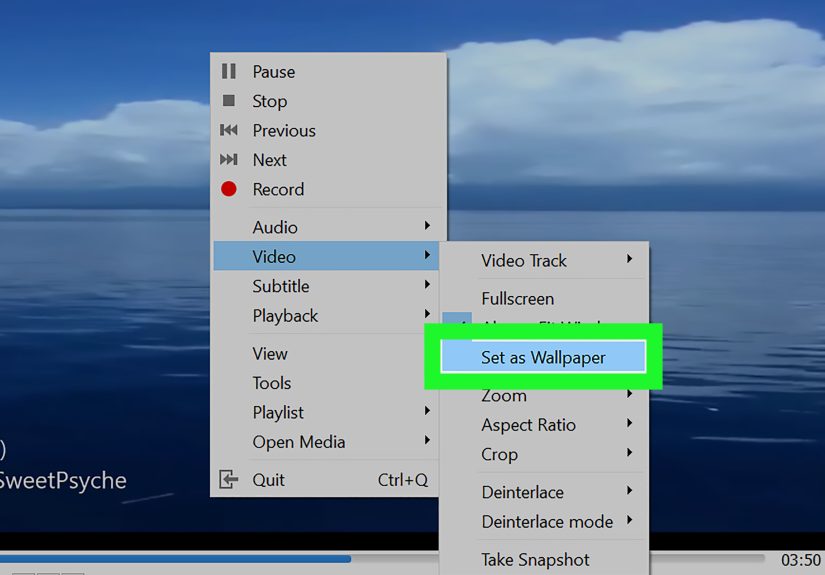
- Restart VLC; play video → Video → Set as Wallpaper.
- Note: VLC can be flaky and may hide taskbar use only for quick demos.
Safety & performance checklist
- Prefer H.264 MP4 for compatibility.
- Mute video unless you want sound.
- Pause on battery and fullscreen to save power.
- Download software from official pages only.
What users and testers report (quick summary)
Community threads and HOW-TO sites agree: Wallpaper Engine gives the smoothest experience and is optimized for games; Lively is the best free option; VLC works but is not ideal for day-to-day use. Push/DesktopHut/BioniX provide useful alternatives with playlist and screensaver features. If Microsoft adds native video wallpapers to Windows in the future, these third-party tools will still offer richer customization.
Meta & SEO block (copy-ready)
sapo: Want a living, breathing desktop? Windows 10 doesn’t include a built-in “video wallpaper” button, but with the right tools you can set any MP4 or WebM as your background in minutes. This guide walks you through 11 easy steps from choosing the right app (Lively, Wallpaper Engine, VLC, Push Video Wallpaper, DesktopHut, BioniX) to optimizing performance, muting audio, and avoiding battery drain. Follow the step-by-step instructions and troubleshooting tips to get a smooth animated wallpaper without frying your CPU.
Extra: ~ of real-world experiences and practical notes
After testing and reading dozens of user reports, a few practical patterns emerge. Lively is the “no-cost champion” it’s open source, simple to use, and handles most common video files gracefully. Dragging an MP4 into Lively and applying it to a monitor is delightfully low friction; I found the app paused wallpapers reliably when a game launched full screen, and the performance panel makes it easy to throttle playback. Community documentation (GitHub wiki) is thorough and the app receives regular updates.
Wallpaper Engine feels like the pro tool: the Steam workshop alone is worth the price for people who want huge wallpaper libraries, animated particle effects, or interactive scenes. It’s optimized to reduce CPU/GPU use when you need performance for other apps, and it includes advanced per-monitor and per-app rules. For gamers and creators who want the least impact on system performance and the most control, Wallpaper Engine is the safe buy.
VLC’s “Set as Wallpaper” is a neat trick I used once to demo the idea to less technical friends. It’s great for a one-off open a short clip, toggle “Set as Wallpaper” but it can be flaky on modern Windows configurations. Several community threads describe the VLC wallpaper stealing focus or hiding the taskbar; if you try it, bookmark the Preferences → Video → Output setting so you can restore normal behavior easily. For reliability, I kept VLC for demos and used a real wallpaper manager for daily use.
Push Video Wallpaper and DesktopHut are handy if you want packaged collections and playlist support. Push’s playlist model makes switching moods easy one playlist for work, another for chill and its “use as screensaver” option is useful for kiosk displays or art installations. BioniX is more GIF/animation oriented, but its lightweight animation tools are a win for older hardware. I noticed BioniX handled multiple monitor setups gracefully with minimal overhead on mid-range machines.
Final real-world tip: always test a candidate video for ten minutes while running a CPU/GPU monitor. A short 4K cinematic loop looks gorgeous, but on a less powerful laptop it can spike temperatures and battery drain. If you see sustained high utilization, cut resolution, set pause-on-fullscreen/battery, or switch to a static image while mobile. In community forums, many users reverted to static wallpapers on the road and used animated wallpapers mainly on desktops.
In short, the right tool depends on priorities: free and open (Lively), polished and powerful (Wallpaper Engine), or quick and dirty (VLC). Each approach delivers the visual flair of a video desktop the rest is tuning for your machine and tastes. Happy customizing!