Table of Contents >> Show >> Hide
- Why Grease Is So Annoying to Clean
- The Best DIY Grease Cleaner Spray Recipe
- How to Use DIY Grease Cleaner Spray
- Where This Homemade Degreaser Works Best
- Where Not to Use Vinegar-Based Grease Spray
- Safety Note: Never Mix This Cleaner With Bleach
- A Vinegar-Free DIY Grease Cleaner Spray for Wood Cabinets
- DIY Heavy-Duty Grease Paste for Stubborn Spots
- Common Mistakes When Making Homemade Grease Cleaner
- How Often Should You Use a DIY Kitchen Degreaser?
- How to Prevent Grease Buildup in the Kitchen
- DIY Grease Cleaner Spray vs. Store-Bought Degreaser
- Personal Experience: What Actually Works When Cleaning Grease
- Conclusion
If your stovetop looks like it hosted a tiny oil festival, your cabinet doors feel suspiciously sticky, and your backsplash has developed a “fried dinner glow,” it may be time for a simple, budget-friendly DIY grease cleaner spray. The good news: you do not need a laboratory, a hazmat suit, or a cleaning product with a name that sounds like a superhero villain. A homemade grease-cutting spray can be made with everyday ingredients like warm water, dish soap, white vinegar, and baking soda, depending on the surface you plan to clean.
This guide explains how to make an effective DIY grease cleaner spray, where to use it, where not to use it, and how to get better results without turning your kitchen into a slippery science experiment. The goal is simple: remove greasy buildup from common kitchen surfaces while keeping the process practical, affordable, and safe.
Why Grease Is So Annoying to Clean
Kitchen grease is not just “dirt with confidence.” It is a clingy mixture of cooking oils, steam, food particles, dust, and time. When oil splatters from pans or rises in the air while cooking, it lands on nearby surfaces. At first, it may be invisible. Then dust joins the party, and suddenly your cabinet tops, vent hood, microwave handle, and backsplash feel tacky.
The longer grease sits, the more stubborn it becomes. Fresh oil can usually be wiped away with warm soapy water. Old grease often needs more dwell time, gentle agitation, and a formula that can break down oily residue. That is where a DIY grease cleaner spray becomes useful. It helps loosen the grime so you can wipe it away instead of scrubbing like you are trying to erase a bad decision.
The Best DIY Grease Cleaner Spray Recipe
This recipe is designed for everyday kitchen grease on sealed, non-porous surfaces such as ceramic tile, glass, laminate counters, sealed painted cabinets, range hoods, and appliance exteriors. Always test first in a small hidden area, especially on painted, wood, or specialty finishes.
Ingredients
- 2 cups warm water
- 1 tablespoon grease-cutting liquid dish soap
- 1 tablespoon white vinegar
- 1 teaspoon baking soda, added slowly
- Optional: 3 to 5 drops lemon essential oil for scent
Tools
- Clean spray bottle
- Microfiber cloths
- Soft sponge
- Small funnel
- Label for the bottle
How to Make It
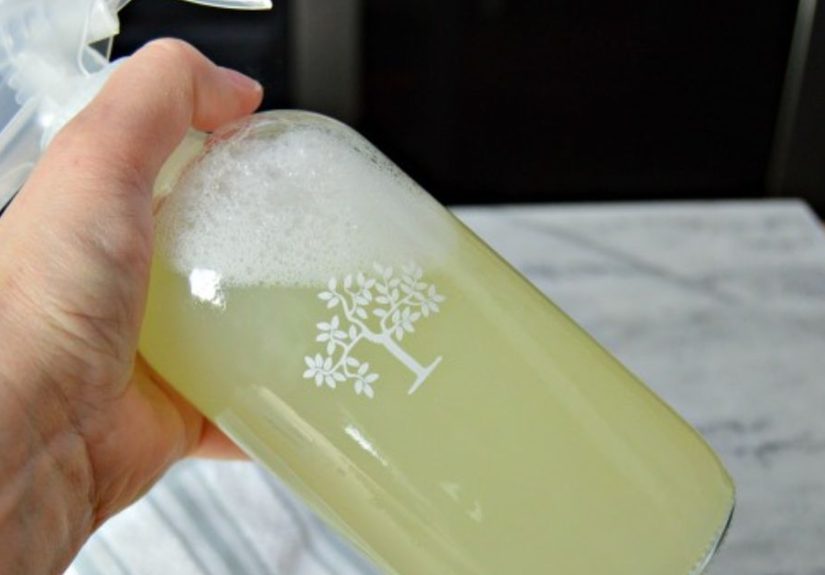
- Pour warm water into a clean spray bottle.
- Add the dish soap and gently swirl the bottle.
- Add white vinegar.
- Add baking soda slowly. The mixture may fizz, so do not rush this step.
- Let the fizz settle before attaching the spray nozzle.
- Label the bottle clearly: “DIY Grease Cleaner Spray.”
- Shake gently before each use.
The dish soap is the main grease fighter because detergents are designed to lift fats and oils. Vinegar helps with light mineral residue and general grime, while baking soda adds mild cleaning power. However, vinegar and baking soda partially neutralize each other when mixed, so this spray works best as a gentle daily degreaser, not a miracle potion for ten years of cabinet-top archaeology.
How to Use DIY Grease Cleaner Spray
Spraying and wiping immediately can work for light grease, but tougher buildup needs a little patience. Think of dwell time as letting the cleaner give the grease a motivational speech before removal.
Step-by-Step Cleaning Method
- Remove crumbs, dust, or loose debris first.
- Spray the greasy surface lightly but evenly.
- Let the cleaner sit for 2 to 5 minutes.
- Wipe with a damp microfiber cloth.
- For stubborn spots, use a soft sponge and gentle circular motion.
- Wipe again with a clean damp cloth to remove soap residue.
- Dry the surface with a fresh microfiber cloth.
Do not oversaturate surfaces, especially cabinets. Too much moisture can sneak into seams, edges, and wood grain. A slightly damp cloth is usually better than a dripping one. Your goal is “clean kitchen,” not “indoor splash pad.”
Where This Homemade Degreaser Works Best
A good DIY kitchen grease cleaner is especially helpful in the areas where cooking residue quietly collects. These spots often look fine until you touch them and realize they have the texture of a forgotten sticker.
Stovetops
Use the spray on cool stovetop surfaces only. Remove grates or burner covers if needed, then spray greasy areas and let the cleaner sit briefly. Wipe with a damp cloth and dry thoroughly. Never spray directly into gas burner openings or electrical components.
Range Hoods
Range hoods catch a lot of airborne grease. Spray the exterior surface, let it sit for a few minutes, then wipe from top to bottom. If the hood filter is greasy, remove it and clean it separately according to the manufacturer’s instructions.
Backsplashes
Tile backsplashes are usually great candidates for homemade grease cleaner spray. Spray lightly, let it work, and wipe clean. Be careful with unsealed grout, because acidic ingredients like vinegar can weaken certain grout over time.
Microwave Exteriors
Handles and control panels collect fingerprints and food oils. Spray the cleaner onto a cloth first, not directly onto electronic buttons or screens. Then wipe and dry immediately.
Cabinet Doors
Cabinets near the stove often develop a greasy film. Use a light mist on a cloth and wipe gently. For painted or sealed wood cabinets, avoid soaking the surface and always dry afterward.
Where Not to Use Vinegar-Based Grease Spray
White vinegar is popular because it is inexpensive and useful, but it is still acidic. That means it is not friendly to every surface. Before you spray with enthusiasm, check the material.
Avoid Using This Spray On:
- Marble, granite, limestone, travertine, or other natural stone
- Unsealed grout
- Waxed wood
- Unfinished wood
- Cast iron cookware
- Electronic screens
- Aluminum surfaces that may discolor
- Appliance interiors unless the manufacturer allows it
For natural stone, use a pH-neutral cleaner instead. For wood, a very mild dish soap and water solution is usually safer. When in doubt, test first or follow the manufacturer’s cleaning instructions. A few seconds of caution can save you from a countertop with regrets.
Safety Note: Never Mix This Cleaner With Bleach
Note: This DIY grease cleaner spray is for cleaning grease and grime, not disinfecting. Do not mix it with bleach, ammonia, drain cleaner, oven cleaner, or any other commercial cleaning product. Mixing household cleaners can create dangerous fumes. Use one cleaner at a time, rinse surfaces between products, and keep the room ventilated while cleaning.
Also, label your homemade cleaner clearly and keep it away from children and pets. Even simple household ingredients should be handled responsibly. Homemade does not automatically mean harmless; it means you know what is inside the bottle.
A Vinegar-Free DIY Grease Cleaner Spray for Wood Cabinets
If you want a gentler homemade degreaser for sealed wood or painted cabinets, skip the vinegar. Dish soap and warm water are often enough for light to moderate grease, and they are less likely to bother delicate finishes.
Gentle Cabinet Degreaser Recipe
- 2 cups warm water
- 1 teaspoon liquid dish soap
- Optional: 1 teaspoon rubbing alcohol for faster drying on durable finishes
Mix the ingredients in a spray bottle, mist onto a microfiber cloth, and wipe the cabinet surface. Follow with a second cloth dampened with plain water, then dry immediately. This method is less dramatic than a foaming cleaner, but it is practical and finish-friendly.
DIY Heavy-Duty Grease Paste for Stubborn Spots
For old, sticky grease that refuses to surrender, a spray may not be enough. In that case, use a simple baking soda paste. Baking soda is mildly abrasive, so it can help lift residue without being as harsh as scouring powder. Still, test first because even mild abrasives can dull some finishes.
Grease-Cutting Paste Recipe
- 3 tablespoons baking soda
- 1 teaspoon dish soap
- Enough warm water to form a paste
Apply the paste to the greasy area with a soft sponge. Let it sit for 5 minutes, then rub gently. Wipe away with a damp cloth and dry well. This works especially well on small sticky areas around handles, range hood edges, and backsplash corners. Do not use it on glossy, easily scratched, or natural stone surfaces.
Common Mistakes When Making Homemade Grease Cleaner
Using Too Much Soap
More soap does not always mean more cleaning power. Too much dish soap leaves a film that attracts more dirt. If your surface feels slippery after cleaning, you probably used too much. Wipe again with plain water and reduce the soap next time.
Expecting Vinegar to Disinfect Everything
Vinegar can help clean some grime, but it is not the same as an EPA-registered disinfectant. For raw meat spills, illness-related cleaning, or surfaces that truly need sanitizing, clean first and then use an appropriate disinfecting product according to its label.
Mixing Random Ingredients
The internet loves dramatic cleaning “hacks,” but your kitchen does not need a volcano show. Avoid mixing bleach, ammonia, vinegar, hydrogen peroxide, rubbing alcohol, or commercial cleaners unless a trusted product label specifically says it is safe. A simple recipe is usually better than a chaotic one.
Skipping the Rinse Wipe
Dish soap cuts grease, but it should not stay on the surface forever. A clean damp cloth removes leftover soap and loosened grime. This final rinse wipe is the difference between “clean” and “why is this still tacky?”
How Often Should You Use a DIY Kitchen Degreaser?
For busy kitchens, use a DIY grease cleaner spray once or twice a week on high-touch areas such as stovetops, cabinet handles, microwave doors, and the backsplash behind the stove. If you fry food often, clean the range hood and nearby cabinets more frequently. Grease is much easier to remove when it is fresh.
For lighter cooking households, a weekly wipe-down may be enough. The key is consistency. A two-minute cleaning session after cooking can prevent the kind of sticky buildup that later requires an arm workout and emotional support.
How to Prevent Grease Buildup in the Kitchen
The best grease cleaner is the one you do not have to use aggressively. Prevention keeps your kitchen cleaner and saves time.
- Use the range hood or exhaust fan while cooking.
- Cover pans when simmering sauces or frying foods.
- Wipe splatters as soon as the surface cools.
- Clean cabinet handles weekly.
- Wash or replace range hood filters regularly.
- Use splatter screens when frying.
- Keep microfiber cloths nearby for quick cleanup.
Grease is sneaky, but it is not unbeatable. A few small habits can keep it from turning into a sticky kitchen sweater.
DIY Grease Cleaner Spray vs. Store-Bought Degreaser
Homemade grease cleaner spray is affordable, customizable, and useful for routine cleaning. It is a great choice for light grease, food splatters, and weekly maintenance. Store-bought degreasers, however, may be better for heavy-duty jobs such as oven interiors, commercial kitchen messes, or thick old grease on metal surfaces.
The smartest approach is not choosing one forever. Use a gentle DIY spray for everyday upkeep and reserve stronger products for occasional deep cleaning. When using commercial cleaners, follow the label, ventilate the room, wear gloves if recommended, and never combine products.
Personal Experience: What Actually Works When Cleaning Grease
After testing different homemade grease cleaner methods in real kitchens, one lesson becomes obvious very quickly: grease rewards patience and punishes laziness. The first instinct is to spray the cleaner and immediately start scrubbing like a person trying to win a kitchen-themed Olympic event. That usually makes the job harder. Letting the cleaner sit for even three minutes can make a huge difference. The grease softens, the dish soap gets time to surround the oil, and the cloth picks up more grime with less effort.
The best results usually come from using the right cloth, not just the right cleaner. Microfiber cloths work better than paper towels because they grab residue instead of sliding it around. Paper towels can be useful for the first pass on a very oily surface, but microfiber gives the cleaner finish. I like using a two-cloth method: one damp cloth for cleaning and one dry cloth for polishing. It sounds fancy, but it is really just a way to avoid streaks and leftover soap film.
Another practical discovery: warm cleaner works better than cold cleaner. You do not need boiling water, and you should never use hot liquid in a spray bottle that is not designed for heat. But warm water helps loosen grease faster than cold water. If the bottle has been sitting under the sink, I gently shake it and spray a small amount onto a cloth dampened with warm water. That small change often improves the cleaning power.
Cabinet tops are the true test of any grease cleaner. They collect the mysterious combination of oil, dust, and “how long has that been there?” A spray alone may struggle with thick buildup. For those areas, I have had better luck dusting first, then using the DIY grease spray, waiting a few minutes, and following with a baking soda paste only on the worst spots. The paste should be used gently, because aggressive scrubbing can damage finishes. Slow circles beat angry scrubbing every time.
For cabinet doors, less is more. Too much liquid can leave streaks or creep into seams. Spraying the cloth instead of the cabinet gives better control. This is especially important around handles, where grease builds up but finishes can wear down. A light wipe, a plain-water follow-up, and a dry cloth usually make the doors look refreshed without risking damage.
One more real-world tip: label the bottle and date it. Homemade cleaners do not come with professional packaging, preservatives, or usage instructions printed on the side. A simple label prevents confusion and keeps everyone in the house from wondering whether the bottle contains cleaner, plant mist, or someone’s experimental lemonade. I prefer making small batches that can be used within a few weeks, rather than storing a giant bottle for months.
The final experience-based takeaway is that a DIY grease cleaner spray works best as a maintenance tool. It is excellent for weekly cleaning, fresh splatters, sticky fingerprints, stovetop film, and backsplash residue. It is not magic. If grease has been baking onto a surface for years, you may need repeated cleaning, a paste treatment, or a product made for heavy-duty degreasing. But for regular kitchen care, this simple spray is inexpensive, effective, and far less dramatic than letting grease slowly claim your cabinets as its permanent home.
Conclusion
A DIY grease cleaner spray is one of the easiest homemade cleaning solutions to keep in your kitchen. With warm water, a small amount of dish soap, and careful use of vinegar or baking soda, you can handle everyday grease on stovetops, backsplashes, appliance exteriors, and many sealed surfaces. The secret is not using the strongest formula possible; it is using the right cleaner for the surface, giving it time to work, and wiping away residue properly.
For delicate surfaces such as natural stone, unsealed wood, waxed finishes, or electronics, skip vinegar-based sprays and choose a safer cleaning method. For true disinfecting, use a proper disinfectant after cleaning. Most importantly, never mix homemade cleaners with bleach, ammonia, or other commercial products. Clean kitchens are wonderful. Mystery fumes are not.
Used regularly, this homemade grease cleaner can help your kitchen stay fresher, brighter, and less sticky. It is simple, affordable, and practical enough to become part of your weekly routine. Your stovetop may not send a thank-you card, but it will look much better.