Table of Contents >> Show >> Hide
Few home projects deliver as much drama per square foot as a barn door. One minute your pantry is just a pantry. The next minute it has “custom designer feature” energy and acts like it belongs in a magazine spread with an expensive candle burning nearby. That is the magic of a well-built sliding door: it saves swing space, adds character, and makes a plain opening feel intentional.
The best part is that DIY barn door plans are surprisingly flexible. You can build a simple slab door for a clean modern room, a classic X-brace version for farmhouse style, a double-door setup for a wide opening, or even a compact bypass design for closets and laundry spaces. The trick is not just making a pretty door. It is choosing the right plan for the room, the wall space, the hardware, and the level of privacy you actually need. A barn door can be brilliant for a pantry, office, mudroom, laundry nook, or bedroom transition. For a bathroom that needs maximum sound control, it can be less “spa retreat” and more “everyone hears the toothpaste cap hit the sink.”
This guide walks through practical DIY barn door plans for different types of homes, what to measure before you touch a saw, how to choose materials, and which design details make the finished door look polished instead of “weekend project with emotional damage.”
Why Barn Doors Still Work in Modern Homes
Barn doors have stuck around because they solve real design problems. In tight hallways, small bedrooms, pantries, laundry rooms, and home offices, a swinging door can eat up valuable floor space. A sliding door keeps the opening functional without forcing you to choreograph every movement like a parking attendant. They also work across more styles than people think. Yes, farmhouse looks great, but so do painted slab doors, sleek black hardware, frosted glass inserts, and minimalist flat-panel designs.
For homeowners remodeling on a budget, barn doors also create impact fast. You can build one from common boards, finish it to match your trim or cabinetry, and upgrade the entire room without moving walls. That said, good design starts with honesty. Barn doors are space-saving, but they still need wall space to slide. They look custom, but only if the measurements are accurate. And they offer visual privacy better than acoustic privacy. Build for the room you have, not the fantasy barn you saw online at 1:13 a.m.
Measure First, Brag Later
Door Size
A smart rule for most interior projects is to make the door a little larger than the opening so it fully covers the frame. In many DIY plans, that means a door roughly 2 to 3 inches wider than the opening and about 1 inch taller. For example, a 30-inch pantry opening may work well with a 34- to 36-inch door, depending on trim and overlap preferences.
Track Length and Wall Clearance
The door needs somewhere to go when open. If your opening is on a wall crowded with light switches, art, vents, or another doorway, the project may fight you every step of the way. As a planning rule, many installers use a track length of about twice the door width, plus a little extra clearance. That is why a barn door is ideal on a long, uninterrupted wall and less ideal where the wall is already doing too much.
Weight, Support, and Safety
A barn door is not a poster. It is heavy, and the hardware needs real support. The track should be anchored into studs or a properly installed backer board. Use the stops that come with the kit, install anti-jump hardware, and do not skip the floor guide. That humble little guide is what keeps the door from swinging and wobbling like it had too much cold brew.
Choose the Right DIY Barn Door Plan for Your Space
1. The Simple Slab Barn Door
Best for: modern homes, offices, bedrooms, minimalist interiors
This is the cleanest and easiest plan for beginners. The design is straightforward: edge-joined boards or a solid-core base faced with plywood, trimmed cleanly at the perimeter, then painted or stained. It works beautifully in white, black, warm oak tones, or even a color that matches the wall for a quieter look.
Why it works: It is easier to build square, easier to finish, and easier to make look expensive. If you want “custom” without “rustic petting zoo,” this is the plan.
2. The Classic Crossbuck Barn Door
Best for: pantries, mudrooms, farmhouse kitchens, laundry rooms
This is the iconic barn door style with vertical planks and a decorative X or Z brace. It adds instant texture and personality, especially in casual spaces. Use pine if you want an affordable option, or reclaimed boards if you want extra character and a few mysterious nail holes for storytelling purposes.
Why it works: It brings visual warmth and looks intentional even in simple rooms. It is especially popular for pantry doors, where style matters and perfect soundproofing definitely does not.
3. The Double Barn Door Plan
Best for: wide openings, dining rooms, flex rooms, primary suites
When the opening is too wide for one door, go with a pair. Double doors create balance and make a room feel more architectural. They are also useful when you want the opening to feel grand without committing to a full renovation. Paint both doors to match the trim, or go bold with dark paint and contrasting hardware.
Why it works: It turns a functional opening into a feature wall. It also lets you manage big openings without needing one oversized door that weighs as much as a small moon.
4. The Bypass Barn Door Plan
Best for: closets, laundry areas, storage walls
Bypass doors slide past one another, which makes them ideal where there is not enough wall space for a full single-door slide. This is a smart option for reach-in closets, stacked washer-dryer nooks, or utility areas where concealment matters more than dramatic flair.
Why it works: It solves the wall-space problem and keeps bulky openings tidy. If your hallway is narrow, this plan can be a lifesaver.
5. The Glass-Accent Barn Door
Best for: home offices, kitchens, transitional spaces
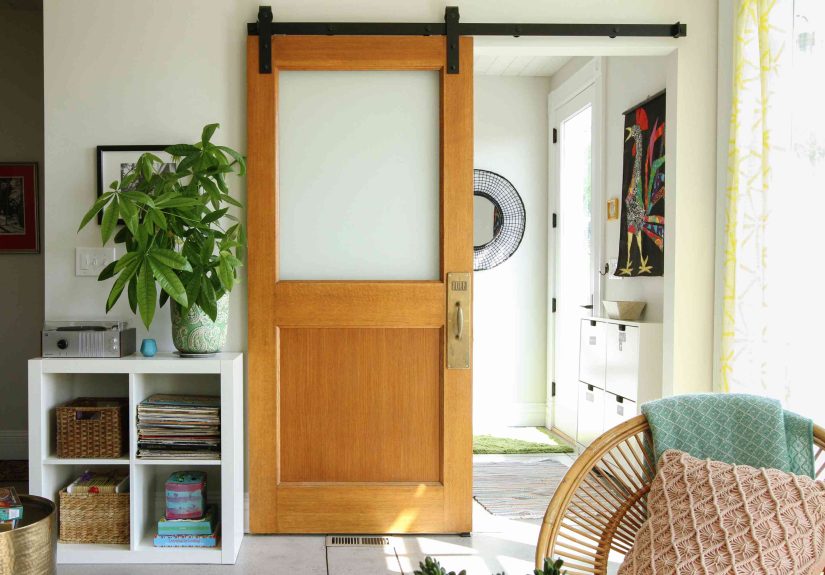
If you want privacy without blocking all the light, consider a barn door with glass panels or a frosted insert. It is especially useful for home offices where you want separation but still need brightness. Frosted or reeded glass can soften visibility while keeping the room from feeling closed in.
Why it works: It feels lighter and more refined than a full solid wood slab, especially in contemporary homes.
A Practical Step-by-Step Build Plan
Step 1: Pick Your Material Strategy
You have three common choices. First, build from dimensional lumber such as pine boards for a classic DIY approach. Second, use a sheet of quality plywood with a trim frame for a flatter, more modern look. Third, repurpose an old door and convert it with sliding hardware. The best option depends on your tools, budget, and patience level.
Step 2: Build the Door Flat and Square
Lay out your pieces on a flat surface and check for square before fastening anything. This sounds basic because it is basic, and yet it is where many DIY dreams go to become “rustic” by force. Glue and screw the face boards or frame securely, clamp where possible, and keep checking measurements diagonally from corner to corner.
Step 3: Sand and Finish Before Hanging
Do not wait until the door is hanging to decide that rough edges are “part of the charm.” Sand thoroughly, fill visible holes if needed, and apply paint or stain before installation. A prefinished door is easier to handle, easier to clean, and much less likely to leave you crouched in a hallway with a brush and regret.
Step 4: Install the Header or Backer Board
If the track does not align perfectly with studs, install a properly sized backer board across the wall and fasten it securely into studs. This creates a solid base for the rail and can also help the door clear baseboards and trim.
Step 5: Mount the Track and Rollers
Keep the rail level. Attach the rollers to the door according to the hardware template. Then, with a helper, lift the door onto the track. Barn doors are a “please do not do this alone” project. This is not the time to prove you once carried a sectional sofa by yourself in college.
Step 6: Add Stops, Floor Guide, and Pull
Install the end stops, anti-jump pieces, and floor guide so the door slides smoothly and stays aligned. Then add a flush pull or handle that matches the room. Matte black hardware feels modern-industrial, brass reads warmer and more polished, and stainless steel works nicely in contemporary spaces.
Best Barn Door Plans by Room
Pantry
A crossbuck or slim slab plan works beautifully here. This is one of the easiest places to use a barn door because the privacy demands are low and the visual payoff is high. Try a painted door in a kitchen accent color, or use light wood with simple hardware for a more modern pantry look.
Laundry Room
A bypass or single slab plan is practical for laundry spaces, especially where appliances make swing clearance awkward. Choose a durable finish that can handle humidity and frequent use. If the laundry area is loud, consider a heavier solid-core style for slightly better separation.
Bedroom or Primary Suite
Use a double door or a full-height slab plan to create a more elevated look. This works especially well between a bedroom and dressing area, sitting room, or en suite entry where style matters as much as function.
Home Office
A glass-panel or clean slab design suits offices best. It feels polished, intentional, and less theme-park farmhouse. A darker painted finish can help the room read more tailored and professional.
Closet
For standard closets, bypass plans are often the most efficient. For a statement closet in a bedroom, a single barn door can also work if you have enough wall clearance to the side.
Bathroom
Yes, you can use one. No, it is not always the best idea. A barn door can be stylish for a primary bathroom or powder room, but it does not create the same tight seal as a conventional hinged door. Use it when aesthetics and space-saving matter more than maximum acoustic privacy.
Common Barn Door Mistakes to Avoid
Choosing the wrong room: A barn door is great for many spaces, but not every space. If privacy is the top priority, think carefully.
Ignoring baseboard clearance: If the trim sticks out, the door may not sit correctly without spacers or a backer board.
Buying weak hardware: Match the hardware rating to the weight and thickness of the door.
Skipping the floor guide: The guide prevents wobble and helps the door stay aligned.
Forgetting the wall: You need enough blank wall for the door to slide fully open. A gorgeous door that blocks a light switch is still a problem.
What DIYers Usually Learn the Hard Way
The experience of building a barn door is almost always the same at first: confidence, enthusiasm, one extremely optimistic trip to the home center, and the firm belief that this will be “a quick little weekend project.” Then the measuring starts. Suddenly, you notice the opening is not perfectly square, the wall is slightly out of plumb, the baseboard sticks out farther than expected, and the charming old house you love has decided to become a geometry quiz.
That does not mean the project is a headache. It means barn doors teach useful lessons fast. One of the biggest is that the wall matters just as much as the door. Many DIYers go in focused on stain color, handle shape, and whether they want a chevron pattern or a clean slab. Then they realize the real hero of the whole project is the mounting surface. If the studs are not where you want them, the backer board becomes your best friend. If the rail is even a little off level, the door will let you know by rolling like it has a personal agenda.
Another common experience is discovering that “rustic” and “unfinished” are not the same thing. Reclaimed wood, distressed pine, and visible grain can look amazing, but only when the build is still clean and intentional. Good sanding, crisp edges, and a finish that suits the room make the difference between designer rustic and “this was assembled during a power outage.” Many homeowners who love the barn-door look eventually say the finish choice mattered more than they expected. A natural matte seal can make a modern door feel warm. A deep paint color can make a simple plan look custom. Even the hardware color changes the personality of the room.
DIYers also tend to remember the first time the door actually goes up on the rail. That moment is half triumph, half stress test. It looks fantastic, but now every tiny detail becomes obvious: whether the handle height feels right, whether the door clears the trim, whether the floor guide is centered, and whether the door fully covers the opening when closed. This is where patience pays off. The people happiest with their finished project are usually the ones who slowed down for the final adjustments instead of declaring victory 12 minutes too early.
Then there is the everyday living experience, which is where barn doors either earn their keep or quietly annoy people. In the right room, they are fantastic. A pantry door glides open easily and adds character to the kitchen. A laundry-room door keeps visual clutter hidden. A home office door creates separation without feeling bulky. In the wrong room, though, the romance fades. That is why experienced DIYers often say the smartest decision was not the style they picked, but the location. The best barn door plan is the one that fits the room’s traffic flow, privacy needs, and wall space from day one.
In the end, most people who build one end up wanting another. Not because the first project was perfect, but because it taught them how to make the next one better. The first barn door gives you the confidence to measure more carefully, finish more thoughtfully, and choose a design that truly suits your home. And that is the real beauty of DIY: each project leaves you with something useful, something good-looking, and at least one story that begins with, “Well, that was not in the tutorial.”
Conclusion
The best DIY barn door plans balance style, structure, and common sense. Start with the room, not the trend. Measure the opening, confirm the wall space, choose hardware that can handle the weight, and pick a design that fits your home’s personality. A slim slab door can sharpen up a modern office. A crossbuck plan can warm up a pantry. A bypass layout can rescue a cramped closet. And a double-door setup can turn a plain opening into a focal point.
If you plan carefully, a barn door is more than a decorative feature. It becomes a hardworking piece of the house that saves space, hides clutter, and adds custom character without requiring a full remodel. That is a pretty good return for a project that mostly asks for lumber, patience, and the humility to measure twice before creating a very stylish mistake.