Table of Contents >> Show >> Hide
- The moment that went viral (and why it hit so hard)
- What a cochlear implant is (and why it can make kids feel “different”)
- Why a matching tattoo can matter psychologically
- Support strategies beyond the ink
- A quick, respectful note: the Deaf community and different paths
- Other real-world examples of “solidarity ink”
- If you’re thinking about doing something similar, consider these boundaries
- What this story teaches us (even if we never pick up a tattoo needle)
- Additional experiences and reflections ()
Parenting comes with a thousand tiny decisionswhat’s for dinner, which bedtime story is “the only acceptable one,”
and how to respond when your kid looks at their own body and asks a question that lands like a weight:
“Why am I not like everyone else?”
One dad found an answer that was equal parts bold, tender, and (let’s be honest) extremely committed to the bit:
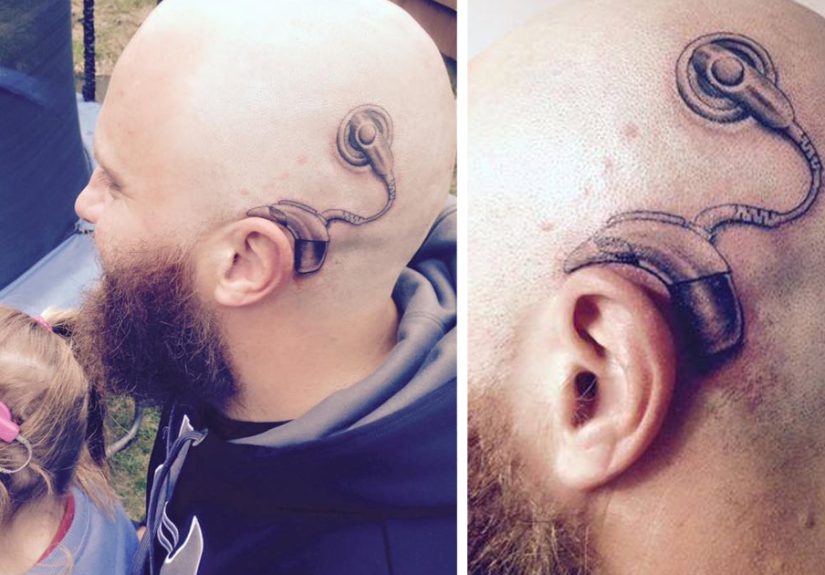
he shaved his head and got a tattoo of a cochlear implantthe same kind his 6-year-old daughter wearsso she
wouldn’t feel like the odd one out. It’s the kind of move that makes you laugh, tear up, and immediately rethink
every “I support you” speech you’ve ever given that didn’t involve permanent ink.
But beyond the viral-photo sweetness, this story opens a bigger conversation: why kids feel “different,” what
cochlear implants actually do, how stigma shows up in playground-sized ways, and how parents can build confidence
without turning their child’s identity into a before-and-after makeover narrative.
The moment that went viral (and why it hit so hard)
The headline version is simple: a father wanted his child to feel confident wearing a cochlear implant, so he got
a matching tattoo on the side of his head. The human version is more specific and more relatable.
In the widely shared story, the dad (Alistair Campbell, from Taupo, New Zealand) shaved his head to make room for
a tattoo that looks like a cochlear implant. His daughter, Charlotte, had received cochlear implants as a young
child, including a second implant later on. When she saw her dad’s “implant,” her reaction was exactly what you’d
hope for: curiosity, a giggle, and a little kid stamp of approval“cool.”
What made people stop scrolling wasn’t just the tattoo. It was the message underneath it:
“You don’t have to carry ‘different’ alone.”
The dad didn’t try to hide the device, erase it, or treat it like a problem to solve. He stepped into her world,
visually and permanently, to make the point that her difference wasn’t a defectit was part of her story.
What a cochlear implant is (and why it can make kids feel “different”)
Cochlear implant basics: not a “volume booster,” but a different route to sound
Cochlear implants are medical devices designed for people with severe hearing loss or deafness who may not get
enough benefit from hearing aids. A hearing aid amplifies soundbasically turning up the volume. A cochlear
implant works differently: it bypasses damaged parts of the inner ear and directly stimulates the auditory nerve.
The brain then learns to interpret those signals as sound. It’s real hearing, but it’s also its own learning
processmore like learning a new language than flipping a switch.
Cochlear implants usually have two main parts:
- An internal part placed during surgery (under the skin, with electrodes in the cochlea).
- An external part worn on the ear or head that captures sound and sends it to the internal device.
For many children, implants can improve access to speech and everyday sounds, especially with consistent therapy
and family support. Outcomes vary, and it’s not a one-size-fits-all experiencesome kids thrive with spoken
language, some use sign language, some use both, and many families build a “toolkit” that changes over time.
Why kids can feel singled outeven when adults think the device is “no big deal”
Adults often see medical devices as practical. Kids see them as social.
A cochlear implant can stand out in photos, at swim lessons, during class presentations, or on that one day a
classmate decides to ask a question loudly enough for everyone to hear.
And it’s not only about curiosity. Children with disabilities or special health needs may face higher risks of
being bullied or excluded. Even when bullying doesn’t happen, kids can internalize a sense of being “other” if
they rarely see peers who look like them or use similar tools.
That’s why small signals of belonging matter. A parent’s calm confidence, a teacher’s inclusive language, a
friend who treats the device like it’s as normal as glassesthese are the building blocks of “I’m okay as I am.”
Why a matching tattoo can matter psychologically
Let’s be clear: a tattoo isn’t a treatment plan. But as a symbol, it can be powerful for a childespecially in
early elementary years, when kids are forming their “who am I?” story.
1) It turns “different” into “shared”
Children don’t always need explanations as much as they need belonging. A matching tattoo says,
“This is part of our family story,” not “this is the thing that makes you strange.” It changes the emotional
math from me vs. everyone to us together.
2) It reframes the device from “medical” to “meaningful”
Medical hardware can feel heavydoctor visits, adjustments, therapy sessions, new routines. A parent’s gesture can
shift the vibe. It doesn’t pretend the hard parts don’t exist, but it helps the child associate the device with
love, pride, and support instead of anxiety or embarrassment.
3) It gives a child language they can use with peers
A confident kid with a simple script can navigate a lot:
“This helps me hear.” “It’s my cochlear implant.” “My dad has one toosort of.”
Suddenly, the child isn’t stuck in the role of “kid being examined.” They’re the storyteller.
Support strategies beyond the ink
A tattoo makes a headline, but daily confidence is built in quieter ways. If your child wears a cochlear implant,
hearing aid, glasses, braces, a port, or any device that attracts attention, the goal is the same:
help them feel competent, normal, and proudwithout forcing them to be a motivational poster.
Normalize, don’t dramatize
Treat the device like a regular part of life: charge it, clean it, pack spare suppliesno big speeches required.
When adults act relaxed, kids get the message that they don’t need to be embarrassed.
Build a “curiosity script”
Practice short answers your child can choose from:
- “It helps me hear.”
- “It’s my cochlear implant.”
- “I don’t feel like explaining right now.”
- “You can ask one question, then we’re done.”
The key is choice. Confidence grows when kids feel in control of what they share.
Create representation on purpose
Look for books, shows, and real-life communities where kids see others with hearing devices.
Representation doesn’t have to be “inspirational.” It can be as simple as “Oh, that kid has one too.”
Loop in the school team early
Teachers and school staff can help set a tone: normalizing assistive technology, explaining it in an
age-appropriate way (with the child’s permission), and enforcing clear anti-bullying rules. Inclusive classrooms
don’t happen by accident; they happen because adults plan for them.
A quick, respectful note: the Deaf community and different paths
Cochlear implants can be life-changing for some families. They can also be complicated culturally and personally.
Many Deaf adults emphasize the importance of sign language access and warn against language deprivationmeaning a
child grows up without consistent access to a full language (spoken or signed). Some families choose implants and
also use sign language. Others choose hearing aids, sign language, or other communication approaches.
The common ground is this: children thrive when they have reliable communication, supportive relationships, and a
sense of belongingat home, at school, and in their broader community.
Other real-world examples of “solidarity ink”
The “matching cochlear implant tattoo” story isn’t the only time parents have used tattoos to help kids feel less
alone. One widely reported example from the U.S. involved a dad who got a “zipper” tattoo on his chest to match
his young daughter’s scar from open-heart surgeries. The idea was the same: take something a child might feel
self-conscious about and make it shared“zipper buddies,” not “me by myself.”
These stories spread because they’re emotionally legible. You don’t need a medical degree to understand the
gesture. You just need to remember what it felt like to stand out in a room and wish someone would stand with you.
If you’re thinking about doing something similar, consider these boundaries
1) The tattoo should be about supportnot spotlight
The best version of a solidarity tattoo says, “I’m with you,” not “Look at me being with you.” If you plan to
post it publicly, ask yourself: is this mainly for my child’s confidence, or my own validation?
(Honest answers only. Parenting is hard. We all want a gold star sometimes.)
2) Let your child lead the meaning
Some kids love the idea of a matching symbol. Others don’t want extra attention.
If your child is old enough to have an opinion, their opinion matters. Your support can be visible in many ways:
a bracelet, a sticker, a hairstyle, a custom hat, or simply being the parent who answers questions calmly and
doesn’t act weird about the device.
3) If you get tattooed, do it safely
Tattoos involve breaking the skin barrier, which means infection risk is real. Choose a reputable, licensed shop,
follow aftercare instructions, and watch for signs of infection or allergic reaction. The FDA has warned that
contaminated tattoo inks can cause infections, and dermatology experts note that worsening redness, increasing
pain, fever, or pus can signal a problem. Translation: don’t “DIY” your way into the urgent care waiting room.
What this story teaches us (even if we never pick up a tattoo needle)
The dad’s tattoo works as a headline because it’s dramatic. But the deeper lesson is simple and repeatable:
- Kids borrow confidence from adults until they can build their own.
- Difference becomes less scary when it’s named without shame.
- Belonging is a daily practice, not a one-time gesture.
Whether your child wears a cochlear implant, uses an inhaler, has a visible scar, or just feels “different” in a
way you can’t immediately fix, the goal isn’t to make them blend in. It’s to help them stand out without feeling
alone.
Additional experiences and reflections ()
If you talk to enough parents of kids with hearing devices, you’ll hear a pattern: the hard part often isn’t the
technologyit’s the social moments wrapped around it. There’s the first day of school when a child wonders if
anyone will stare. There’s the birthday party where a well-meaning adult asks, “What’s that thing on your head?”
in the same tone people use when they find a mysterious bug in the salad. And there’s the quiet car ride home
afterward, when a kid doesn’t say much, but you can tell the question is echoing.
Many families describe early wins as surprisingly ordinary. A child learns to answer questions with a single
sentence and moves on. A friend shrugs and says, “Cool,” and the entire world feels lighter. A teacher makes a
point to normalize assistive tech“Some people wear glasses, some people use hearing devices, some people do
both”and suddenly the device isn’t the center of attention anymore.
Then there are the moments that build real pride. Some kids love picking colors or decorations for their external
processors. Others like choosing hairstyles that show the device off, almost like it’s part of their outfit.
Families often mention a shift that happens when a child stops asking “Do I have to wear it?” and starts asking
“Did we pack the extra batteries?” That question isn’t just practicalit’s identity. It’s a child saying, “This
is mine. I know how to manage it.”
Solidarity gestureslike a matching tattoo, a matching sticker, or even a parent wearing a “twin” accessorytend
to work best when they’re paired with everyday skills. A kid who can explain their device and feels
emotionally supported is less likely to be thrown off by curiosity. Parents sometimes role-play awkward scenarios
at home, turning them into a game: “Okay, I’m a nosy kid at recess. What do you say?” Practicing in the living
room makes real-world moments feel less like a pop quiz.
Another common experience is realizing that confidence isn’t constant. A child can feel totally fine for months,
then become self-conscious after one comment at the pool. That doesn’t mean you failedit means kids grow, and
their awareness grows too. Many parents find it helpful to keep the conversation open and low-pressure:
“Do you want advice, comfort, or a distraction?” Sometimes the best support is a plan. Sometimes it’s a hug.
Sometimes it’s tacos.
And that brings us back to the tattoo story. The ink wasn’t magic. It didn’t erase the challenges or guarantee
easy social moments. But it offered something a 6-year-old can understand instantly: “I’m on your team.” For many
kids, that feeling becomes the foundation they carry into every classroom, every friendship, and every “Why am I
different?” question that shows up later in life.