Table of Contents >> Show >> Hide
- Why Emergency Radios Are Suddenly a Cyber Monday Star
- What Makes a Good Emergency Radio Worth Buying?
- Cyber Monday Price Trends: What Counts as a Real Deal?
- Best Types of Emergency Radios to Watch on Cyber Monday
- How to Shop Smart Without Getting Fooled by Clearance Hype
- Who Should Buy an Emergency Radio During Cyber Monday?
- Emergency Radio Features Worth Paying Extra For
- How Emergency Radios Fit Into a Real Preparedness Kit
- Specific Cyber Monday Buying Examples
- Common Mistakes to Avoid
- Real-World Experience: What Emergency Radio Ownership Actually Feels Like
- Conclusion: A Small Deal That Can Become a Big Safety Win
Research basis: NOAA/NWS weather-radio guidance, FEMA/Ready emergency-kit guidance, CDC preparedness checklists, American Red Cross preparedness supplies, retailer listings, and recent tested-review/deal roundups.
Cyber Monday is usually famous for laptops, robot vacuums, headphones, and other gadgets that make life more convenient. But one of the smartest buys this shopping season may be the humble emergency radio: the little crank-powered, battery-backed, NOAA-tuned device that sits quietly in a closet until the lights go out and suddenly becomes the most important gadget in the house.
This year, Cyber Monday emergency radio deals are pushing many weather radios, hand-crank radios, solar emergency radios, and portable NOAA radios into clearance-price territory. Some recent sale listings have shown basic models dipping near impulse-buy prices, while more fully loaded units with power banks, flashlights, SOS alarms, USB charging, and weather alerts are also seeing meaningful discounts. In plain English: the gadget you hope you never desperately need is finally priced like something you can buy before you need it.
That matters because an emergency radio is not just “another camping thing.” It is a backup communication tool for winter storms, hurricanes, tornado warnings, power outages, wildfire evacuations, and those charming moments when your smartphone battery is at 4% and the internet has decided to take a personal day. A good emergency weather radio can keep you connected to NOAA weather broadcasts, local AM/FM updates, and in many cases, charge a phone just enough to send a message or check in with family.
Why Emergency Radios Are Suddenly a Cyber Monday Star
Emergency radios used to live in the same mental drawer as duct tape, bottled water, and that flashlight with batteries from 2014. Practical? Absolutely. Exciting? Not exactly. But consumer interest has changed. More households now think about backup power, severe weather, off-grid communication, and emergency kits as normal home essentials rather than “prepper-only” territory.
Retailers know this. During Cyber Monday, emergency radios get swept into several deal categories at once: outdoor gear, camping equipment, storm supplies, portable power, home safety, and electronics accessories. That overlap helps explain why shoppers may see clearance-style markdowns on weather radios from brands and marketplace sellers offering features like NOAA weather bands, hand cranks, solar panels, rechargeable batteries, reading lamps, and built-in USB ports.
The best deals are not always the biggest radios. In fact, many shoppers are better served by a compact NOAA emergency radio that is easy to store, simple to operate, and quick to recharge. A giant model with every feature under the sun sounds great until you realize you need three hands and a user manual to make it behave during a storm. Cyber Monday is a good time to buy value, not chaos with an antenna.
What Makes a Good Emergency Radio Worth Buying?
A clearance price is only a bargain if the radio can actually do its job. Before jumping on a Cyber Monday emergency radio deal, shoppers should understand the core features that separate useful weather radios from novelty gadgets that look heroic on a product page and whimper during a blackout.
1. NOAA Weather Band Access
The first feature to look for is NOAA Weather Radio access. NOAA Weather Radio broadcasts weather information, watches, warnings, and hazard updates through a network of transmitters across the United States. A regular AM/FM radio can be helpful, but a dedicated weather band gives you more direct access to emergency weather information.
Some radios simply receive the seven NOAA weather channels, while others include alert modes that can activate when warnings are issued. For households in tornado-prone areas, hurricane zones, flood-risk regions, or places with fast-changing winter weather, this is not a cute bonus. It is the main event.
2. Battery Backup and Multiple Charging Options
Emergency radios often advertise three, four, or even five power sources. The most useful combination is rechargeable battery, replaceable battery support, USB charging, hand crank, and solar trickle charging. Each method has a role. USB charging is fastest before a storm. Replaceable batteries are dependable if stored properly. The hand crank is a last-resort lifeline. Solar is helpful, but it should be treated as a slow backup rather than a magical sunshine-powered miracle.
Cyber Monday listings often highlight huge battery numbers, such as 4000mAh, 5000mAh, 10000mAh, or more. A bigger battery can be useful, especially if the radio doubles as a power bank, but battery capacity alone does not tell the whole story. Build quality, charging efficiency, radio reception, speaker clarity, and flashlight runtime matter just as much.
3. Alert Features and SAME Technology
Some desktop weather alert radios support SAME, which stands for Specific Area Message Encoding. This allows users to program alerts by county or area, helping reduce unnecessary warnings from places far away. If you live in an area where storms can arrive while people are asleep, a SAME-capable weather alert radio can be a smart home safety investment.
Portable hand-crank radios do not always include SAME technology. Many are designed more for general emergency use, camping, backup listening, and power outages. That does not make them bad; it simply means they serve a slightly different purpose. The ideal setup for many households is a desktop alert radio for the home plus a portable crank radio for the car, emergency bag, or basement shelter area.
4. Built-In Flashlight and SOS Alarm
A built-in flashlight is one of those features that sounds ordinary until the power goes out and every real flashlight in the house has mysteriously moved to another dimension. Many emergency radios now include LED flashlights, reading lamps, and red flashing SOS modes. These features are especially helpful during outages, roadside emergencies, camping trips, or evacuations.
Look for practical controls. A flashlight button should be obvious. The SOS alarm should not activate accidentally every time the radio is tossed into a backpack. Nothing says “prepared household” like accidentally blasting a siren at midnight because the dog bumped the emergency drawer.
Cyber Monday Price Trends: What Counts as a Real Deal?
Emergency radio prices vary widely. Simple pocket weather radios may cost less than a family pizza night. Better hand-crank models with NOAA, flashlight, solar panel, and a modest power bank often land in the $25 to $60 range. More rugged or feature-rich models can climb higher, especially if they include stronger batteries, better waterproofing, Bluetooth, larger lights, or brand-name reliability.
Recent Cyber Monday deal pages have shown discounted emergency radios around the mid-$20 range, with some budget models dipping lower and popular models like Midland, FosPower, RunningSnail, Raynic, and similar emergency radio brands appearing in seasonal promotions. Retailer pages from major stores also show weather radios and hand-crank models competing in the same crowded discount space, which is good news for shoppers who compare before buying.
A strong Cyber Monday emergency radio deal usually has three traits: the sale price is clearly lower than the typical price, the model has enough real reviews or testing history to inspire confidence, and the feature list matches your actual needs. A 60% discount on a radio with weak reception is not a bargain. It is a small orange paperweight with ambition.
Best Types of Emergency Radios to Watch on Cyber Monday
Portable Hand-Crank Emergency Radios
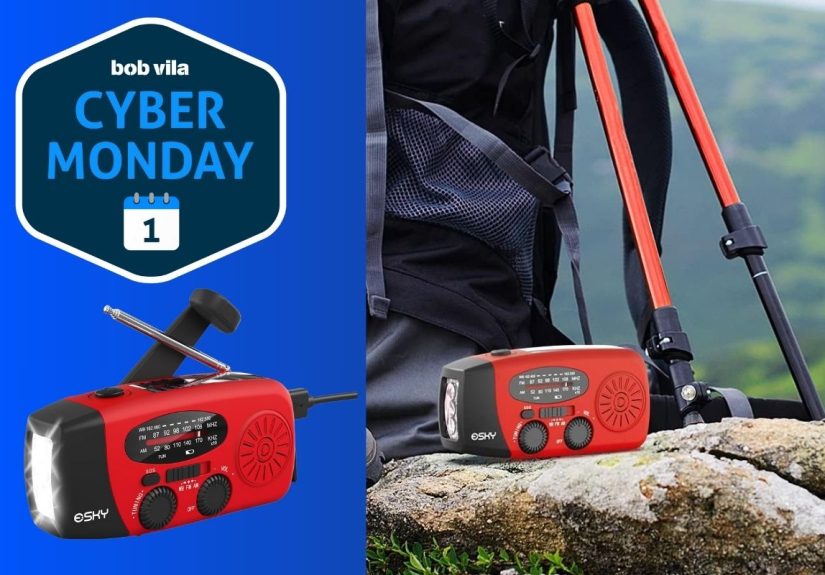
These are the classic Cyber Monday deal magnets. They usually include AM/FM radio, NOAA weather band, a rechargeable battery, hand crank, small solar panel, flashlight, and USB phone-charging port. They are popular because they work for homes, cars, camping kits, dorm rooms, and go-bags.
Best for: families building a first emergency kit, apartment dwellers, campers, road-trippers, and anyone who wants one device that can handle several basic emergency tasks.
Desktop NOAA Weather Alert Radios
Desktop weather alert radios are less flashy but extremely useful. These models are often designed to sit in one place, stay plugged in, and alert you when warnings are issued. Many include battery backup and SAME programming. They may not charge your phone or light up a campsite, but they are excellent at being loud, clear, and ready.
Best for: homes in tornado zones, hurricane-prone regions, rural areas, seniors, families with children, and anyone who wants automatic weather alerts without relying only on a smartphone.
Solar Emergency Radios With Power Banks
Solar emergency radios with larger batteries are attractive because they combine information, lighting, and backup charging in one gadget. During Cyber Monday, these models often get big promotional treatment because the feature list looks impressive. Just remember that small solar panels recharge slowly. Solar is best for topping up the battery over time, not for instantly reviving a fully drained device.
Best for: camping, long outages, RV kits, hurricane kits, and shoppers who want a multipurpose device with backup phone charging.
Pocket Weather Radios
Pocket weather radios are smaller, simpler, and often cheaper. They may run on standard batteries and offer AM/FM/weather band reception. They usually lack big batteries and fancy lights, but their simplicity is a strength. In a stressful situation, fewer buttons can be a gift.
Best for: glove compartments, hiking packs, school emergency kits, travel bags, and backup use.
How to Shop Smart Without Getting Fooled by Clearance Hype
Cyber Monday shopping can feel like sprinting through a digital warehouse while someone yells “limited time” in your ear. Emergency radios are no exception. Product pages may brag about giant batteries, military-style toughness, “professional” alerts, or miracle solar charging. Some claims are useful. Some need a raised eyebrow.
Start with the radio function. Can it receive NOAA weather bands clearly? Does it have AM/FM? Is the antenna sturdy? Are tuning controls easy to use? A radio that charges phones but struggles to receive broadcasts is missing the point.
Next, check power options. A rechargeable battery is convenient, but a model that also supports replaceable batteries gives you more flexibility. If the radio only charges by USB and hand crank, make sure you are comfortable with that. Cranking for a little power is fine. Cranking like you are trying to start a Model T in a thunderstorm is less delightful.
Then, evaluate the flashlight and power bank realistically. A built-in light is great for rooms, tents, and short trips outside. A small emergency radio can also give a phone enough juice for essential communication, but it is not a full replacement for a dedicated power station or large battery bank.
Who Should Buy an Emergency Radio During Cyber Monday?
Nearly every household can justify at least one emergency radio, but Cyber Monday is especially useful for people who need to build multiple kits. If you want one for the kitchen, one for the car, one for a storm shelter area, and one for a camping bag, clearance pricing can make that possible without draining the budget.
Homeowners in areas with hurricanes, tornadoes, ice storms, wildfires, floods, or frequent power outages should consider an emergency radio a basic safety item. Renters should consider one too, especially because apartment buildings can lose power, Wi-Fi, elevator access, and cell reliability during severe events. A portable radio does not care whether you own the roof over your head. It just works.
Outdoor enthusiasts are another obvious group. Campers, hikers, hunters, anglers, RV travelers, and road-trippers can benefit from NOAA weather updates, flashlight features, and backup charging. A compact weather radio can be especially useful when phone signal fades or when a storm turns a peaceful weekend into an unpaid weather internship.
Emergency Radio Features Worth Paying Extra For
Not every feature deserves more money. Bluetooth speakers, decorative screens, and oversized claims may be nice, but they are not always essential. The features worth paying more for are the ones that improve reliability.
Pay extra for better reception, durable construction, water resistance, USB-C charging, a replaceable battery, SAME alerts for home models, strong battery life, and clear controls. A good display can also help, especially for tuning weather channels or checking battery level. For older adults or families with young children, large buttons and simple labels are more valuable than a crowded feature panel.
Also consider brand support. Established emergency radio brands and retailers with clear return policies may be safer choices than mysterious listings with dramatic photos and suspiciously poetic product names. During Cyber Monday, the cheapest option is tempting, but dependable gear should not feel like a lottery ticket.
How Emergency Radios Fit Into a Real Preparedness Kit
An emergency radio is important, but it is not a full emergency plan by itself. It should live alongside water, nonperishable food, flashlights, extra batteries, first aid supplies, phone chargers, prescription medication, copies of key documents, cash, and basic sanitation items. Official emergency guidance commonly recommends a battery-powered or hand-crank radio as part of a household disaster kit.
The radio’s job is information. It helps you know whether to shelter, evacuate, avoid flooded roads, expect freezing temperatures, or prepare for more severe weather. In an outage, good information reduces guessing. And guessing during an emergency is like trying to assemble furniture without instructions, except the furniture is your safety.
Once you buy a radio, test it before storing it. Charge it. Tune to the strongest NOAA channel in your area. Try the flashlight. Check the crank. Read the quick-start guide. Label the charging cable. Store it where people can find it. The best emergency radio is not the one with the most features; it is the one your household can use quickly when things get weird.
Specific Cyber Monday Buying Examples
A shopper looking for a low-cost backup might watch for compact hand-crank radios under $25. These often include NOAA weather band, AM/FM, a flashlight, and a small rechargeable battery. They are ideal for secondary kits or first-time buyers.
A family preparing for storm season may prefer a $35 to $60 model with a stronger battery, better build quality, USB phone charging, multiple lighting modes, and clearer tuning. This is the sweet spot for many shoppers because it balances price and performance.
Someone living in a tornado-prone region may want a dedicated desktop NOAA alert radio with SAME programming, then add a portable crank radio as a backup. That two-radio strategy covers both overnight alerts and mobility during outages or evacuation.
For campers and RV users, look for rugged construction, water resistance, a bright area light, and a radio that can sit upright without tipping over every time someone walks past. Tiny design details become surprisingly important when you are trying to make coffee in the dark.
Common Mistakes to Avoid
The first mistake is buying only on price. A clearance emergency radio that cannot hold a charge or receive weather broadcasts is not preparedness; it is clutter with a handle. Read recent reviews and look for comments about reception, battery life, durability, and ease of use.
The second mistake is overvaluing solar charging. Solar panels on emergency radios are useful, but small panels work slowly. Charge the radio fully by USB before storm season and treat solar as a backup, not the main plan.
The third mistake is ignoring batteries. If your radio supports AA or AAA batteries, store fresh batteries nearby. If it uses a rechargeable lithium battery, recharge it every few months. Emergency gear that has not been checked in two years has a sense of humor, and it is not a kind one.
The fourth mistake is buying a radio and never learning how it works. Cyber Monday is for purchasing. The week after is for testing. Ten minutes of setup can save a lot of confusion later.
Real-World Experience: What Emergency Radio Ownership Actually Feels Like
Owning an emergency radio is a little like owning a fire extinguisher. It is not something you admire every morning while sipping coffee, but when you need it, you want it to work immediately. The most valuable lesson from using emergency radios is that simple beats fancy when the power is out and everyone in the house is asking the same three questions: What happened? How long will this last? Is it safe to go outside?
In a typical outage, the first few minutes are oddly quiet. The Wi-Fi dies, the refrigerator stops humming, and the house suddenly feels like it has been switched to airplane mode. A charged emergency radio changes the mood quickly. You can turn it on, tune to a local station or NOAA broadcast, and get information without refreshing a phone that may not have service. That sense of connection is calming. It gives the household something better than rumors, guesses, and dramatic neighborhood group chats.
The flashlight feature is also more useful than many people expect. During a blackout, a radio with a built-in reading lamp can sit on a table and light up enough space for cards, snacks, medication labels, or a printed emergency contact list. It will not turn your living room into a stadium, but it can make the room functional. That matters when everyone is trying to move around safely.
The hand crank is best understood as an emergency backup, not a lifestyle. Yes, it works. No, you probably do not want to rely on it as your main charging method for hours. The better habit is to keep the radio charged before bad weather arrives, then use the crank only if the battery gets low. The solar panel is similar. It is a helpful backup for daylight topping-up, especially on camping trips, but USB charging before an emergency is still the grown-up move.
Another practical lesson: storage location matters. If the emergency radio is buried behind holiday decorations, old cables, and a mystery box labeled “misc,” it might as well be on the moon. Keep it in a known place, ideally with a charging cable, spare batteries, and a small note explaining how to tune the weather band. In a family, every capable person should know where it is and how to turn it on.
Emergency radios also make excellent gifts because they are useful without being dramatic. A discounted Cyber Monday model can go to a college student, a parent, a new homeowner, a road-trip friend, or someone who keeps saying, “I really should make an emergency kit.” It is thoughtful, practical, and much less boring than handing someone a pack of batteries with a bow on it.
The biggest experience-based takeaway is this: buy the radio before the forecast looks scary. When a hurricane, blizzard, or severe storm warning is already on the way, the best models may sell out, shipping times get awkward, and prices can jump. Cyber Monday gives shoppers a rare chance to prepare during calm weather and pay clearance-style prices. That is the kind of boring adult decision that feels brilliant later.
Conclusion: A Small Deal That Can Become a Big Safety Win
Cyber Monday emergency radio deals may not have the glamour of a giant TV or a shiny new phone, but they offer something better: peace of mind at a price that is hard to ignore. A reliable NOAA weather radio can help your household stay informed during power outages, severe weather, evacuations, and communication disruptions. Whether you choose a budget hand-crank radio, a desktop weather alert model, or a larger solar emergency radio with a power bank, the goal is the same: clear information when normal systems fail.
The smartest Cyber Monday strategy is to buy based on reliability, not just the loudest discount badge. Look for NOAA weather band access, practical power options, clear controls, useful lighting, and enough battery life for real emergencies. Test the radio when it arrives, store it where people can find it, and make it part of a complete emergency kit.
Note: Cyber Monday prices, coupons, and stock levels can change quickly. Always verify the current sale price, return policy, shipping time, and product specifications before buying.