Table of Contents >> Show >> Hide
- What the Viral Clip Appears to Show
- Before We Call It Trafficking: What Human Trafficking Actually Means
- Why Vacation Settings Can Be a Perfect Storm
- The Red Flags People Recognize in Videos Like This
- The Stranger’s Move: Why “Hey, I Know You” Can Be a Lifesaver
- How to Stay Safer on Vacation (Without Ruining the Fun)
- What To Do If You Think Someone Is Being Targeted
- Where to Report Concerns in the U.S.
- How Hotels and Travel Brands Are Trying to Close the Gaps
- Myths Viral Videos Accidentally Supercharge (and the Reality)
- Bottom Line
- Travel Experiences That Hit Close to Home (and What They Teach)
You know that feeling when a vacation starts out as “cute birthday trip energy” and ends up as “I should’ve packed pepper spray and a therapist”?
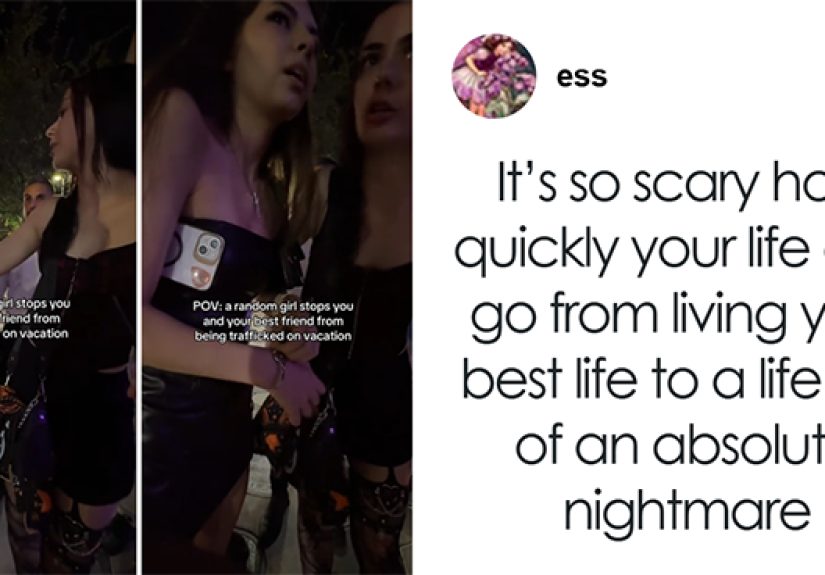
That’s the vibe behind a viral clip making the rounds online: two women on a trip, a crowded nightlife setting, a group of men who won’t take a hint,
and one stranger who steps in with the kind of confidence most of us can only summon when the Wi-Fi drops.
In the video, a woman appears to intervene, firmly claiming the women as her friends and guiding them away from the men.
The moment is short, tense, and extremely relatable to anyone who’s ever tried to politely escape a conversation with a dude who thinks “no” means “convince me.”
Social media quickly slapped a headline on it“trafficking attempt”and viewers split into two camps: terrified and furious… sometimes both.
Let’s unpack what these videos can teach us (and what they can accidentally distort), then turn the adrenaline into something useful:
real, practical travel safety habits that don’t require you to spend your whole vacation staring into the distance like a paranoid meerkat.
What the Viral Clip Appears to Show
The clip is filmed in a nightlife environmentloud music, tight crowd, fast-moving interactions. Two women appear to be surrounded or closely approached by men.
A third woman (the “stranger”) steps in, confronts the situation, and essentially deploys the classic safety move:
“Hey! There you arecome with me.”
She positions herself between the men and the women, asserts familiarity (“they’re my friends”), and physically escorts them away.
In some versions of the story that circulated with the clip, venue staff and security are also described as helping the women get back safely afterward.
Here’s the key: from the outside, we can’t confirm every detail of what the men intended. But we can learn from the dynamics the clip captures:
isolation tactics, boundary pushing, confusion in a high-stimulation environment, and how quickly a situation can tilt from “uncomfortable” to “unsafe.”
Before We Call It Trafficking: What Human Trafficking Actually Means
“Human trafficking” isn’t just “something scary that happens to women on vacation.” It’s a specific crime centered on exploitation.
Under U.S. definitions, trafficking involves the use of force, fraud, or coercion to compel someone into labor or a commercial sex act.
It does not require crossing borders, and it doesn’t always look like a movie scene with duct tape and a van idling in the shadows.
That distinction matters for two reasons:
- Accuracy protects real victims. If we label every creepy encounter as “trafficking,” we muddy what trafficking isand how to identify it.
-
Safety still matters. Even if an incident isn’t trafficking, it can still involve harassment, assault risk, drink spiking, robbery, or abduction attempts.
The “what” might differ, but the “get to safety” plan stays the same.
Why Vacation Settings Can Be a Perfect Storm
Vacations mess with your usual safety autopilot. You’re in a new city, you don’t know the “normal” of the area, and you’re likely doing the three things
that make predators absolutely thrilled (and that make your mother absolutely stressed):
staying out late, drinking, and trusting strangers.
Traffickers and other offenders often exploit vulnerability and isolationthings that can spike when someone is traveling.
Hotels and motels can be exploited as venues for trafficking operations, which is one reason the hospitality industry has pushed training programs for staff.
Nightlife environments add extra risk factors: dim lighting, noise, crowds, alcohol, and a social norm of strangers approaching strangers.
Translation: it’s not about “being dramatic.” It’s about conditions.
The scariest situations often don’t start scary. They start as “friendly” and become controlling step-by-step:
moving you away from your friends, insisting on giving you a ride, pressuring you to leave the venue, or trying to manage your decisions for you.
The Red Flags People Recognize in Videos Like This
We can’t diagnose intent through a 20-second clip, but we can talk about behaviors that commonly show up in unsafe situationstrafficking-related or not.
Viewers often react strongly when they see patterns like:
- Boundary testing: ignoring “no,” talking over the women, hovering too close, blocking movement.
- Isolation attempts: encouraging someone to step outside, go to a car, or “come meet my friend.”
- Confusion leverage: counting on the noise/crowd to make it harder to think clearly or ask for help.
- Group pressure: multiple people closing in, making the target feel outnumbered or embarrassed to push back.
- Fast escalation: “Let’s leave now” energy, especially if the person seems uncomfortable or impaired.
None of these automatically equal trafficking. But all of them are reasons to shift from “polite mode” to “get safe mode.”
You don’t owe anyone nice manners at the expense of your safety. Your travel souvenir should be a keychain, not a trauma response.
The Stranger’s Move: Why “Hey, I Know You” Can Be a Lifesaver
One reason the stranger’s intervention hits so hard is because it’s both simple and socially powerful.
She doesn’t debate the men. She doesn’t ask permission. She changes the social script:
she introduces a new “truth” that gives the women an exit without having to argue.
Why it works
- It interrupts momentum. Predators and pushy strangers rely on continuous pressure. A confident interruption breaks the spell.
- It reduces confrontation for the target. The women don’t have to explain, justify, or escalate. They just leave.
- It adds witnesses. A bystander turning the situation public changes the risk calculus for the aggressor.
If you ever need to do this for someone else, you don’t have to be dramatic. You can be casual:
“Oh my gosh, I’ve been looking for youcome to the bathroom with me.”
And if you’re the person being helped, you don’t need to be “sure.” You can go anyway. Safety first, social awkwardness later.
How to Stay Safer on Vacation (Without Ruining the Fun)
1) Make a tiny safety plan before you go out
- Share location with a trusted friend (at least during nights out).
- Pick a meetup point if you get separated (front desk, a specific corner, a nearby well-lit store).
- Set a “we leave together” ruleeven if you’re annoyed at each other for 12 minutes.
- Have a rideshare script: “We’re calling our ride now.” No debating.
2) Use the buddy system like it’s your job
Groups are harder to isolate. If someone wants to separate you from your friends, treat that as a flashing neon sign that says,
“THIS IS A BAD IDEA, BESTIE.”
3) Protect your drink and your decision-making
- Get your own drink directly from the bartender when possible.
- Don’t accept open drinks from strangers.
- If a drink tastes “off” or you feel unusually impaired, tell staff immediately and stick with someone you trust.
- Keep your phone charged; a dead phone turns inconvenience into vulnerability fast.
4) Don’t advertise your isolation
Posting “Solo in Miami!!! Room 1206 vibes!!!” is basically an invitation to chaos. Share photos later. Your followers can wait. Your safety can’t.
5) Make staff your allies
In bars, clubs, and hotels, staff are often trained to handle safety situations. If you feel uneasy, say something.
A simple “I don’t feel safecan you help me get out of here?” is enough. You don’t have to give a TED Talk.
What To Do If You Think Someone Is Being Targeted
If your instincts ping while you’re travelingwhether you suspect trafficking, assault risk, or something elsefocus on safe action,
not heroic solo missions.
A practical bystander checklist
- Check in: “Hey, are you okay? Do you want an out?” (Give them an easy yes/no.)
- Create an exit: “Come with meI need you for a second.” (Bathroom, bar, front desk, security.)
- Bring in backup: Staff/security are there for a reason. Use them.
- Document safely: Note descriptions, time, location, vehicle details if relevantwithout escalating risk.
- Report through proper channels: In emergencies call 911. For trafficking concerns, use specialized hotlines and tip lines.
One of the most important safety notes from official guidance: do not try to “rescue” someone by confronting suspected traffickers yourself.
You don’t know who is armed, who is watching, or how retaliation could land on the victim or you. Get help the smart way.
Where to Report Concerns in the U.S.
If you’re in the United States and someone is in immediate danger, call 911.
If you suspect human trafficking or want expert guidance:
- National Human Trafficking Hotline: 1-888-373-7888 (24/7) or text 233733 (BEFREE), plus chat options.
- DHS/ICE tip line for suspected trafficking: 1-866-347-2423 (for reporting suspicious activity to federal law enforcement).
If your concern involves a minor being exploited or endangered, the National Center for Missing & Exploited Children (NCMEC) has reporting resources as well.
And if what you’re witnessing looks like sexual violence risk (including suspected drug-facilitated assault), resources like RAINN can connect people to support.
How Hotels and Travel Brands Are Trying to Close the Gaps
One constructive takeaway from viral stories is that they push industries to respond. In the U.S., hotel associations and nonprofit partners
have expanded training efforts that help staff recognize suspicious patterns: frequent short stays, controlling companions, refusal of housekeeping,
signs of coercion, and more. Programs like AHLA’s anti-trafficking initiatives and partner trainings are designed to help staff identify and report concerns
without putting victims at greater risk.
That matters because trafficking isn’t only a “crime on the street.” It can intersect with ordinary businesseslodging, transportation, tourismespecially when offenders
try to hide in plain sight. Training doesn’t fix everything, but it increases the odds that someone notices and knows what to do next.
Myths Viral Videos Accidentally Supercharge (and the Reality)
Social media loves a clean storyline: “Stranger almost trafficked; hero saves the day.”
Real life is messier. A few common myths can cause people to panic in the wrong direction:
Myth: Trafficking is usually a random kidnapping by strangers
Reality: Many trafficking situations involve manipulation, fraud, and coercion over time, often by someone the victim knows or comes to trust.
That doesn’t mean stranger-danger never exists. It means the most useful prevention strategy is education and recognizing patternsnot just watching for vans.
Myth: If there’s no movement across borders, it’s not trafficking
Reality: Trafficking is about exploitation. Movement isn’t required.
Myth: If the person isn’t asking for help, nothing is wrong
Reality: People may be afraid, monitored, embarrassed, threatened, or unsure what’s happening. A calm bystander check-in can be the difference between isolation and options.
The goal isn’t to “win” an argument online about what the video “really was.”
The goal is to build a culture where stepping in is normal, getting help is easy, and safety is not treated like a personality flaw.
Bottom Line
Whether the viral moment was an attempted trafficking setup, a predatory pickup, or a dangerous misunderstanding, the lesson holds:
trust the discomfort, stick together, use staff as allies, and don’t wait for “proof” before choosing safety.
The stranger in the video didn’t need perfect certainty to act. She needed awareness, confidence, and a plan that prioritized getting the women out of the situation.
That’s the energy to pack with your sunscreen.
Travel Experiences That Hit Close to Home (and What They Teach)
To make this practical, here are travel scenarios people commonly describe in real lifeespecially in busy vacation areas.
These aren’t meant to scare you into staying home; they’re meant to give you a mental “playbook” so you don’t freeze when something feels off.
1) The “Too Helpful” Stranger
You’re waiting outside a club for your ride and someone insists they’ll “help” you get home. They’re overly friendly, overly close,
and oddly invested in where you’re staying. The lesson: help that comes with pressure isn’t help.
A safe helper respects your boundaries. A risky person keeps trying to negotiate them.
2) The “Bathroom Escort” That Saves the Night
A friend suddenly looks glassy-eyed and confusedway more impaired than the drinks would explain. In many stories, the turning point is a friend (or another woman)
physically staying with them, getting them to a bathroom or staff area, and refusing to let them leave with someone unfamiliar.
The lesson: when someone’s condition changes fast, treat it seriously. Get staff, get water, consider medical help, and keep them with trusted people.
3) The “Let’s Go Somewhere Quieter” Pitch
In loud venues, “quieter” sounds logicaluntil it becomes isolation. People recount being urged to step outside, go to a car, or “meet friends at another spot.”
The lesson: change of location is the moment risk often spikes.
If you go anywhere, go with your group, and tell someone exactly where you’re headed. Better yet: don’t go.
4) The “I Know You” Intervention
One of the most effective real-world safety interventions is the same one in the viral video: someone pretending familiarity to create an exit.
Travelers describe strangers saying, “Girl, I’ve been looking everywhere for you!” or “We need you over here for a second,”
then quietly asking if they’re okay. The lesson: community safety works.
If someone offers you a clean out, take it. You can sort out awkwardness once you’re safe.
5) The Hotel Lobby Reset
A surprisingly powerful move is relocating to a “public, controlled” space: the hotel lobby, the front desk, a well-lit store, anywhere with cameras and employees.
People often say the moment they got into a lobby, the pressure dropped. The lesson: public places with staff are safety multipliers.
If someone is following you or won’t leave you alone, don’t go straight to your room. Go to the front desk first.
6) The “After” That Matters Most
After a scary incident, many travelers second-guess themselves: “Was I overreacting?” “Maybe they were just flirting.”
The lesson: your safety decisions don’t need consensus approval.
If you felt unsafe, that’s enough. The most helpful post-incident steps often include: writing down what happened while it’s fresh,
checking in with friends, reporting to venue staff if needed, and saving any relevant ride receipts or messages.
Here’s the hopeful part: most trips are safe, most strangers are normal, and most nights end with tacosnot trauma.
But having a plan doesn’t make you fearful. It makes you free. The best vacations are the ones where you can relax because you know exactly what you’ll do
if the vibe shifts. Confidence is the real travel hack.