Table of Contents >> Show >> Hide
- Is It Safe to Freeze Milk?
- What Happens to Milk When You Freeze It?
- Which Types of Milk Freeze Best?
- How to Freeze Milk: Our Test Kitchen’s Step-by-Step Method
- How Long Can You Freeze Milk?
- The Right Way to Thaw Frozen Milk
- How Long Does Thawed Milk Last?
- Best Ways to Use Frozen and Thawed Milk
- Common Frozen Milk Problems (and How to Fix Them)
- Real-Life Freezer Milk Lessons from Our Test Kitchen
- Bottom Line: Yes, You Can Freeze MilkIf You Do It Smart
If you’ve ever stared down a half-full milk jug that’s dangerously close to its “use by” date, you’ve probably wondered the same thing our test kitchen does: Can you freeze milk? The short answer is yes. The longer, more helpful answer is “yes, but do it the right way unless you enjoy lumpy lattes and sad cereal.”
Freezing milk is a smart way to cut food waste, save money, and make sure you always have milk on hand for baking, cooking, and coffee emergencies. But because milk is a delicate mix of water, fat, and protein, it doesn’t behave exactly like frozen water. Texture can change, flavor can shift a little, and different types of milk don’t all freeze equally well. That’s where our test kitchen comes in.
Below, you’ll find our test kitchen–approved guide to freezing milk: how to freeze it, how to thaw it, which types freeze best, and the tastiest ways to use thawed milk. We’ll also share some real-world lessons from the kitchen so you can skip the mistakes and go straight to the good stuff.
Is It Safe to Freeze Milk?
Let’s start with the big question: is frozen milk safe to drink and cook with? From a food safety standpoint, yesfreezing milk at 0°F (-18°C) keeps it safe. Freezing doesn’t kill all bacteria, but it sends them into hibernation mode so they can’t multiply.
Food safety agencies and dairy groups generally agree on this rule of thumb:
- Milk can be safely stored in the freezer for up to about 3 months for best quality.
- After that, it may still be safe but the flavor and texture keep declining.
- Frozen milk should always be thawed in the refrigerator or another cold environment, never on the counter.
The sooner you freeze milk after buying it, the better its quality will be after thawing. Freezing fresh milk that’s still well within its date gives you the best flavor and texture once it comes back to life.
What Happens to Milk When You Freeze It?
Here’s where science sneaks into your fridge. Milk is mostly water, with fat and protein molecules floating around in an emulsion. When you freeze it:
- Water in the milk forms ice crystals, which can nudge fat and protein out of their cozy little suspension.
- When you thaw it, the fat can separate and rise, creating a grainy or slightly curdled appearance.
- The color may look a bit pale yellow when frozen. That’s normal and comes from fat and riboflavin.
The good news? These texture changes are usually cosmetic, not dangerous. A thorough shake (or whisk) after thawing often smooths things out enough for cooking, baking, and even drinking if you’re not ultra-picky about texture.
Which Types of Milk Freeze Best?
Not all milk is created equal when it comes to the freezer. Our test kitchen sees clear winners and “better for cooking only” contenders.
Dairy Milk (Cow’s Milk)
Regular dairy milk generally freezes well:
- Skim and 1% milk: These low-fat milks freeze beautifully. Less fat means less separation. They’re great for drinking, cereal, coffee, and recipes after thawing.
- 2% milk: Also freezes nicely, with only mild separation. A good shake usually fixes it.
- Whole milk: Higher fat equals more noticeable separation and creaminess changes. Still safe and tasty, but better for cooking, baking, and creamy sauces than for pouring straight into a glassespecially if you’re texture-sensitive.
Lactose-Free, Ultra-Filtered, and Shelf-Stable Milk
Many lactose-free or ultra-filtered milks (like some high-protein brands) also freeze reasonably well. Because formulations vary, you might notice different levels of separation, so it’s smart to test with a small batch first. Shelf-stable (UHT) milk can be frozen too, but it already went through heat treatment, so texture changes can be more pronounced. Again, fantastic for cooking and baking, maybe less ideal for drinking.
Plant-Based Milks
What about almond milk, oat milk, and friends?
- Almond milk: Tends to separate and look grainy when thawed. Best used in smoothies, baked goods, or hot cereal where you won’t notice small texture quirks.
- Oat milk: Can get a bit slimy or “gummy” after freezing. Use thawed oat milk in pancakes, muffins, or creamy soups rather than in iced coffee.
- Soy milk: Often freezes better than other plant milks, though some separation still happens. A strong shake helps.
- Coconut milk: The high fat content can cause clumps and separation. It still works very well in curries, sauces, and baked goods.
Overall, plant-based milks are best frozen for cooking and baking, not for drinking straight.
Breast Milk (Human Milk)
Breast milk is its own category with special guidelines. In general, it can be safely frozen and stored in breast milk storage bags or clean containers, then thawed in the refrigerator or under lukewarm running water. However, because feeding needs and safety rules are more specific, caregivers should always follow pediatrician or official breastfeeding guidelines rather than general kitchen tips.
How to Freeze Milk: Our Test Kitchen’s Step-by-Step Method
Ready to freeze milk like a pro? Here’s how our test kitchen does it for the best texture and flavor.
1. Choose the Right Container
You can freeze milk in its original container or transfer it to another one, but a few rules apply:
- Always leave headspace. Milk expands as it freezes. If you’re freezing in a jug or bottle, pour out about 1/2 to 1 cup first so the container doesn’t crack or pop.
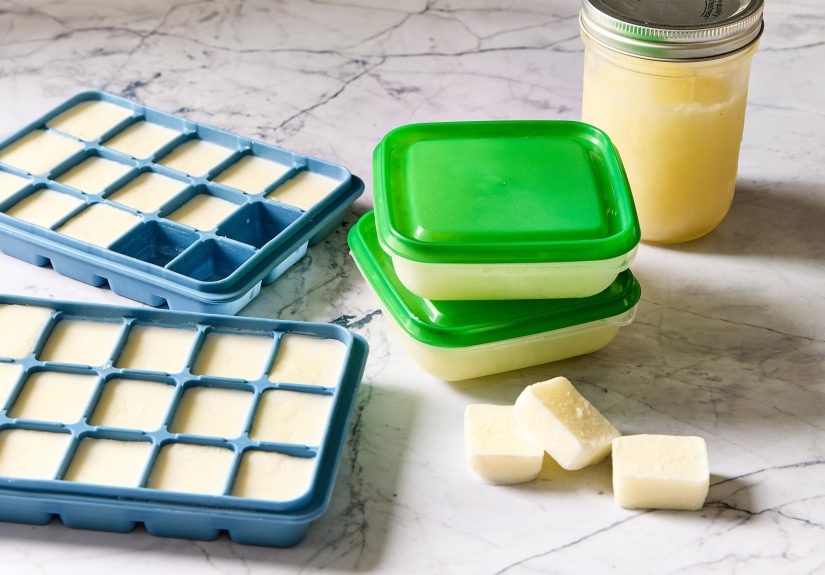
- Use freezer-safe containers. Sturdy plastic, glass designed for freezing (like wide-mouth canning jars), silicone freezer bags, or ice cube trays all work.
- Airtight is essential. Air exposure opens the door to freezer burn and off flavors.
- Label everything. Write the date and type of milk on the container. Once it’s frozen, they all look suspiciously alike.
2. Portion for How You Actually Cook
Our test kitchen loves portioning milk based on everyday uses:
- Ice cube trays: Perfect for adding a splash to coffee, tea, smoothies, or sauces. Once frozen, pop the cubes into a freezer bag and label it.
- 1–2 cup containers: Ideal for baking recipes, oatmeal, mac and cheese, and creamy soups.
- Larger jugs: Good if your family goes through a lot of milk and you plan to use it quickly once thawed.
3. Freeze Quickly and Evenly
Faster freezing usually means smaller ice crystals and slightly better texture. To help your milk freeze efficiently:
- Set your freezer to 0°F (-18°C) or colder.
- Space containers so air can circulate around them.
- Avoid overpacking your freezer; a little breathing room improves performance.
Most home freezers will freeze small portions (like cubes) in a few hours and larger containers overnight.
How Long Can You Freeze Milk?
Here’s the general freezer timeline our test kitchen uses for quality:
- Best quality: Use frozen milk within 1 month if you’re picky about texture.
- Good quality: Up to about 3 months for everyday cooking, baking, and smoothies.
- Beyond 3 months: Usually still safe if kept frozen solid, but flavor and texture will continue to slide downhill.
Remember: freezer time is about quality, not safety. If your milk has been frozen longer and still looks and smells normal after thawing, it’s typically fine to use in cooked dishes, though it might not taste great on its own.
The Right Way to Thaw Frozen Milk
Thawing is where things often go wrong. Do it right, and you’ll get smooth, safe milk. Do it wrong, and you might end up with sour smells and questionable chunks.
Method 1: Slow Thaw in the Fridge (Best Overall)
This is our go-to method:
- Place the frozen milk in the refrigerator on a plate or in a shallow dish to catch condensation.
- Let it thaw gradually. Smaller containers may thaw in 12–24 hours; larger jugs can take up to 2 days.
- Once fully thawed, shake vigorously or whisk to recombine any separated fat.
This method keeps the milk at a safe temperature the entire time and gives you the most consistent texture.
Method 2: Cold-Water Bath (Faster but Still Safe)
Short on time? You can thaw milk more quickly in cold water:
- Keep the milk in a sealed, leakproof container.
- Submerge it in a bowl or sink of cold waternever warm or hot.
- Change the water every 30 minutes to keep it cold.
- Once thawed, move it to the fridge and use within a couple of days.
What Not to Do
- Don’t thaw milk at room temperature. The outer layers can warm into the “danger zone” where bacteria grow while the center is still frozen.
- Don’t microwave frozen milk to thaw it. Microwaves heat unevenly and can create hot spots that scald proteins and encourage bacterial growth in partially thawed areas. Gentle microwaving is fine for already-thawed milk you’re heating for a recipe, but not for the initial thaw.
How Long Does Thawed Milk Last?
Once your milk is thawed:
- Use it within 3–5 days for best quality.
- Always store it in the refrigerator, tightly sealed.
- Do not refreeze thawed milk. The texture will deteriorate even more, and repeated temperature changes aren’t ideal for safety.
Before using thawed milk, give it a quick check: if it smells sour, looks curdled in a way that shaking doesn’t fix, or has an off flavor, it’s time to say goodbye.
Best Ways to Use Frozen and Thawed Milk
Is thawed milk good for sipping? Sometimes yesespecially low-fat varieties that froze and thawed quickly. But our test kitchen’s secret weapon is using thawed milk in recipes where minor texture changes won’t matter at all.
Our Favorite Uses for Thawed Milk
- Baked goods: Pancakes, waffles, muffins, quick breads, cakes, brownies, and biscuits love thawed milk.
- Breakfast dishes: Oatmeal, overnight oats, French toast custard, and baked oatmeal work perfectly with previously frozen milk.
- Savory recipes: Mac and cheese, creamy soups, casseroles, mashed potatoes, and béchamel sauces are all fantastic ways to use thawed milk.
- Smoothies: Toss frozen milk cubes straight into the blender with fruit, greens, and nut butter for an extra-chilly drink.
- Coffee and tea: Frozen cubes of milk make excellent iced latte boosters without watering down your drink.
If you plan to drink thawed milk straight, choose skim or low-fat, freeze it quickly, use it within a month, and shake it like you mean it. Many people find the taste and texture perfectly acceptable, especially if it’s ice-cold.
Common Frozen Milk Problems (and How to Fix Them)
“My Milk Looks Grainy or Separated.”
This is the most common complaint. It usually shows up as little specks of fat and protein floating or clinging to the sides of the container.
Try this:
- Shake the container thoroughly, or pour the milk into a jar and shake it like a cocktail.
- Whisk it vigorously in a bowl, or briefly blend it with an immersion blender (just don’t whip in tons of foam).
- Use it in recipes where the texture won’t be noticeable, like baking or sauces.
“My Frozen Milk Turned Yellow.”
Don’t panic. Many milks turn a light yellow when frozen because the fat and pigments are more visible in solid form. Once thawed and shaken, it should look closer to normal.
“My Milk Tastes Like the Freezer.”
Milk is a bit of a flavor sponge. If your ice cream tastes like onions, your milk definitely can too.
- Use airtight, odor-free containers.
- Keep strong-smelling foods tightly wrapped.
- Use the milk in highly flavored recipeslike cheesy casseroles or chocolate muffinsif it picked up mild odors.
“Can I Freeze Buttermilk or Half-and-Half?”
Yes, but expect even more separation. Cultured buttermilk, half-and-half, and cream-based products freeze best when destined for cooking or baking. You probably won’t love the texture for pouring into coffee after freezing, but they’re great in biscuits, dressings, sauces, and baked goods.
Real-Life Freezer Milk Lessons from Our Test Kitchen
Theory is nice, but nothing beats real-world experience. Over countless recipe tests and “oops, we bought too much milk again” moments, our test kitchen has gathered a handful of freezer milk truths that can save you time, money, and a few culinary heartbreaks.
1. The “End of the Jug” Problem Is Real. A lot of home cooks pour the last third of a jug down the drain because it’s about to expire. Our team started freezing that leftover milk insteadsometimes just a cup or even a few tablespoons at a time. Those little odds and ends ended up powering everything from midweek pancakes to rich chocolate pudding. It’s a small habit shift that adds up over a month or two.
2. Labeling Is Not Optional. Ask anyone who has grabbed a container of frozen “mystery white liquid” and added it to coffee only to realize it was actually coconut milk, not dairy. Our testers now label every container with three things: type of milk, date, and portion size (for example, “2% milk, 1 cup, Jan 5”). That tiny bit of information makes it effortless to pull exactly what you need for a batter or sauceno guessing, no measuring frozen blocks.
3. Ice Cube Trays Are Quiet Heroes. One tester started freezing milk in ice cube trays “just to see what would happen.” What happened is that everyone copied her. Frozen milk cubes quickly became a staple for iced coffee (no watery drinks), blended soups (add a cube for creaminess), and smoothies (especially for kids who want something like a milkshake without actual ice cream every time). Once the cubes are solid, popping them into a labeled freezer bag takes almost no effort and keeps your trays in rotation.
4. Thawed Milk Shines in Comfort Food. When the team compared fresh vs. thawed milk in select recipes, the biggest difference was in glass, not on the plate. In mac and cheese, chowders, casseroles, and custards, tasters couldn’t reliably tell which batch used previously frozen milk. That’s become our favorite way to “hide” thawed milk: in cozy, comforting recipes where it adds richness without being the star of the show.
5. Texture Expectations Make All the Difference. If you expect thawed milk to behave like it just came from the dairy case, you’ll probably be disappointed. But if you think of frozen milk as a versatile pantry ingredienta little more rustic, but still very usefulyou’ll be thrilled by how much waste it prevents. Our testers now automatically route older milk to “freezer duty” a few days before the date on the carton rather than waiting until it smells even a little suspicious.
6. Freezer Milk Is a Budget Saver. Buying larger containers of milk is often cheaper per ounce, but that only pays off if you actually use it all. Freezing is a powerful way to capture that value. Our test kitchen has used frozen milk to stretch grocery budgets during heavy baking seasons (holidays, birthdays, potlucks) and for planning ahead when sales hit. It’s easier to say “yes” to a great deal when you know you won’t be pouring the savings down the drain.
7. Once You Start, You’ll Keep a “Milk Bank.” One of our favorite habits is maintaining a small “milk bank” in the freezer: a few cubes for coffee, a couple of two-cup containers for baking, and a quart or so of regular milk for emergency mac and cheese night. It creates a quiet sense of kitchen securityyou always have what you need to pull together breakfast, a quick dessert, or a creamy sauce, even if you forgot to grab milk at the store.
In short, freezing milk isn’t just a backup plan; done right, it becomes part of a smart kitchen strategy. Once you’ve tried it a couple of times, you’ll get a feel for which containers you like, how much to portion, and where thawed milk fits best in your cooking routine.
Bottom Line: Yes, You Can Freeze MilkIf You Do It Smart
So, can you freeze milk? Absolutely. When you freeze it fresh, store it airtight at 0°F, thaw it slowly in the fridge, and use it within a couple of months, frozen milk becomes a reliable, budget-friendly ingredient in your kitchen. Skim and low-fat milks freeze best for drinking, while whole, plant-based, and richer dairy products are stellar in cooking and baking after thawing.
Think of your freezer as a pause button, not a last-ditch rescue mission. Move milk to the freezer while it’s still in good shape, and you’ll always have a stash ready for smoothies, sauces, soups, and sweetsand maybe the occasional glass of very cold, very well-shaken milk.