Table of Contents >> Show >> Hide
- What “Bensham Cloakroom Basin Taps” Actually Means
- Why People Pick Bensham for a Cloakroom
- Fit Check: Will These Work With Your Sink?
- Performance: Water Pressure, Flow, and What “0.1 Bar” Means
- Design Details That Matter in a Powder Room
- Installation Notes (Without the Overconfidence)
- Maintenance and Troubleshooting in the Real World
- Buying Advice: What to Look for If You Want “Bensham Vibes” in the U.S.
- Conclusion: Small Faucet, Big Impact
- Experiences With Bensham-Style Cloakroom Taps (Extra Notes)
The best powder-room upgrades are the ones nobody expects. You know the vibe: tiny sink, tiny room, tiny towel…
and then bama faucet that looks like it wandered in from an old-world hotel and decided to raise the
property value by sheer confidence.
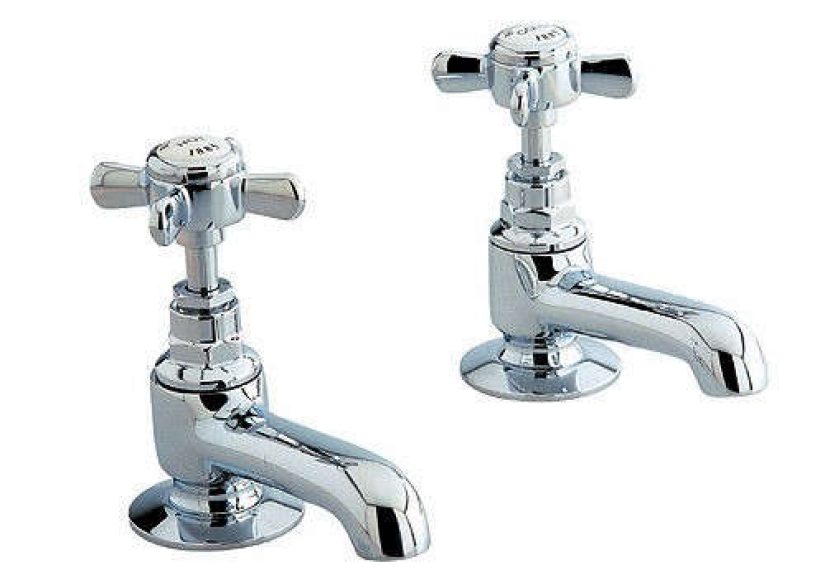
That’s the lane the Bensham Cloakroom Basin Taps live in. They’re designed for a “cloakroom”
(British-English for a small half-bath / powder room) and they lean hard into classic stylingwhile still using
modern internals so you’re not signing up for a life of drip-drip-drip regret.
What “Bensham Cloakroom Basin Taps” Actually Means
In plain American terms, these are bathroom sink faucets meant for small basins, often with a
two-hole setup (separate hot and cold taps). The Bensham versions are typically described as:
- A pair of taps (hot + cold) rather than one mixer
- A shallower spout meant to behave on compact basins (less splashing, fewer “why is my counter wet?” moments)
- Traditional looks with modern reliability features (like ceramic disc cartridges)
- Chrome over brass, the classic “bright, clean, and doesn’t scare buyers” finish
Why People Pick Bensham for a Cloakroom
Cloakroom sinks are small, and small sinks are picky. A faucet that’s perfect on a big primary-bath vanity can feel
like a garden hose on a teacup in a powder room. Bensham taps are positioned as “small but still stunning,” and the
design choices reflect that: shorter reach, period styling, and parts meant to keep operation smooth over time.
1) The proportions are the whole point
When you’re working with a narrow basin, the faucet has one job: put water in the bowl, not on your sleeves.
A shorter spout reach helps keep the stream centered. That sounds obvious until you’ve washed your hands in a
powder room and accidentally watered the vanity like it’s a houseplant.
2) Classic look, modern guts
Traditional taps used to mean old-school internals and a higher chance you’d someday learn the phrase “replace the washer.”
Modern versions often use ceramic disc cartridgesa big reliability upgrade that’s common in today’s better
bathroom faucets. The Bensham line is described as using ceramic disc cartridges to support longer, low-maintenance operation.
3) Chrome and brass: boring in the best way
Chrome is popular because it’s bright, easy to match, and forgiving in small rooms that don’t get a lot of natural light.
Brass bodies are valued for durability. In other words, it’s the “quiet luxury” of plumbing: not flashy, just solid.
Fit Check: Will These Work With Your Sink?
Before you fall in love with any faucet, do the boring part first: confirm your sink’s hole configuration and spacing.
Cloakroom basins commonly come with two holes (for separate taps) or one hole (for a single-handle mixer).
Step 1: Count the holes
- Two-hole sink: Great match for separate hot/cold taps (like many Bensham sets).
- Single-hole sink: Not a natural fit for two separate taps unless you’re changing the sink or drilling (not recommended for most DIYers).
- Three-hole sink: Often used for widespread or bridge-style setups; can sometimes adapt, but it depends on spacing and trim.
Step 2: Measure clearance like you mean it
Cloakrooms are tight. Make sure you have enough space behind the basin for the tap bodies and supply connections,
and enough room above for comfortable hand clearance. A compact tap can be a blessing hereunless it’s so short you
feel like you’re washing your hands under a polite drinking fountain.
Step 3: Compare spout reach to bowl position
Ideally, the water stream lands near the center of the drain. Too far back and it splashes your knuckles.
Too far forward and it splashes everything else. If you can, check a spec drawing and look at projection
(how far the spout extends over the sink).
Performance: Water Pressure, Flow, and What “0.1 Bar” Means
One of the most interesting claims you’ll see tied to Bensham cloakroom taps is that they can perform with very
low minimum pressure (often cited as 0.1 bar). That’s extremely low in U.S. terms (about 1.45 psi),
and it’s typically discussed in the context of homes that don’t have strong mains pressure or have gravity-fed systems.
In the U.S., most homes with municipal supply typically run at significantly higher pressure than that, so the more
practical takeaway is: these taps shouldn’t be “pressure fussy” for most American bathrooms.
If you’re on a well system, have a pressure regulator, or have unusual plumbing conditions, it still pays to confirm
what your system deliversespecially in a small bathroom where a weak stream feels extra sad.
How flow rate ties into comfort (and codes)
In many U.S. contexts, bathroom faucet flow is shaped by efficiency standards and local rules. A common reference point
is that older “standard” bathroom faucets have been associated with around 2.2 gallons per minute,
while many WaterSense-labeled models target a lower maximum flow. Translation: modern faucets can feel just as usable
while using less waterhelpful in a powder room that gets constant on/off use.
Design Details That Matter in a Powder Room
Lever handles vs. cross handles
Bensham is often shown as a lever style (sometimes even labeled as a “chrome lever kit”), but the broader “traditional”
category includes cross handles, porcelain indices, and other period touches. Here’s the practical difference:
- Levers: Easy to use with soapy hands, faster on/off, friendlier for kids and guests.
- Cross handles: Classic look, precise feel, slightly more “heritage hotel” energy.
Quarter-turn action and ceramic discs
Many modern two-handle taps use a quarter-turn or near-quarter-turn mechanismless twisting, fewer dramatic wrist
flourishes. Ceramic discs are commonly used to reduce dripping and improve longevity compared to older washer-based
designs, especially when properly installed and kept reasonably clean.
Chrome finish: how to keep it shiny without turning it into a science project
Chrome is relatively low-maintenance, but water spots and mineral buildup can still show upespecially in hard water areas.
The key is gentle cleaning and consistency. Wipe it down, don’t attack it with abrasive pads, and if flow starts acting weird,
the aerator may just need a clean.
Installation Notes (Without the Overconfidence)
Installing cloakroom basin taps is usually straightforward if the sink is accessible and you’re comfortable working
under a basin. But if you’ve ever tried to tighten a mounting nut while your shoulder is wedged against a vanity wall,
you know “straightforward” can be a very funny word.
Typical installation flow
- Shut off water at the stops (and verify it’s actually off).
- Remove the old taps and clean the mounting surface.
- Set the new tap bodies in place with the provided seals/washers.
- Tighten mounting hardware evenlysnug, not “gorilla tight.”
- Connect supply lines and check that hot and cold are oriented correctly.
- Turn water back on slowly and check for leaks at every connection.
If anything about your setup is unusualold shutoff valves, fragile supply lines, questionable DIY choices from
a previous eraconsider a plumber. The goal is “new faucet glow-up,” not “surprise indoor fountain.”
Maintenance and Troubleshooting in the Real World
When flow gets weak
Nine times out of ten, the culprit is the aerator or mineral scale. If your flow turns into a sad, sideways spray,
cleaning the aerator (and gently removing buildup) can restore performance.
When the handle feels stiff
Mineral deposits can affect moving parts over time. Regular gentle cleaning helps, and in many faucet designs,
cartridges can be serviced or replaced if needed. (If you’re dealing with very hard water, consider an overall strategy
like periodic descalingyour shower head will also thank you.)
When you’re worried about what’s in the water
In the U.S., “lead free” requirements for plumbing fittings are a real thing, and they matter. Reputable manufacturers
typically design to meet applicable limits and standards, but if you’re upgrading older fixtures, it’s worth understanding
what “lead free” means in regulatory terms and buying from sources that clearly state compliance.
Buying Advice: What to Look for If You Want “Bensham Vibes” in the U.S.
If you’re shopping in American retail channels and can’t easily find the exact Bensham set, you can still get the same
look-and-feel by focusing on the traits that make it work in a cloakroom:
- Two-handle, deck-mounted configuration (if your sink has two holes)
- Compact spout reach suited for small basins
- Ceramic disc valves/cartridges for durability
- Brass construction (or at least reputable materials and certification)
- Water-efficient flow (especially if you want WaterSense-style performance)
- Finish match with your towel ring, toilet lever, and any visible hardware in the tiny room
A quick cloakroom checklist
- Does the faucet match the sink’s hole count?
- Will the spout reach land water in the bowl, not on the rim?
- Is there enough clearance behind/under the basin to connect supplies?
- Do you want a traditional separate hot/cold experience, or do you prefer a mixer for convenience?
- Is the finish easy to maintain in your water conditions?
Conclusion: Small Faucet, Big Impact
The Bensham Cloakroom Basin Taps are all about doing one thing really well: making a small bathroom sink feel intentional.
With classic styling, compact proportions, and modern internals like ceramic discs, they’re positioned as a practical
upgrade that doesn’t demand constant attention. If your powder room is the most-used room guests see, a well-chosen
set of cloakroom taps is a surprisingly high-return move.
Experiences With Bensham-Style Cloakroom Taps (Extra Notes)
Let’s talk about the part nobody puts on the product page: what it’s like to live with a tiny faucet in a tiny room
that somehow hosts 80% of your household’s handwashing. A cloakroom basin tap doesn’t get the glamorous “spa moment”
treatment like a rainfall shower. It gets the chaotic energy of guests trying to wash their hands while also holding
a phone, a toddler, and a conversation.
The first experience you notice with a compact, traditional tap set is how much the stream placement matters.
On a big vanity sink, a slightly off-center stream is a minor inconvenience. On a cloakroom basin, it’s a splash festival.
A shorter, shallower spout is the unsung hero here. The water tends to land where it should, which means your counter
stays drier and your hand towel stops living a double life as a mop.
Then there’s the “guest factor.” Separate hot and cold taps feel charminguntil someone tries to play the world’s
smallest temperature mixing game. In real life, a lot of people default to cold in a powder room because it’s quick.
The upside is that traditional taps can look fantastic and feel deliberately designed, especially in older homes,
cottage-style remodels, or anywhere you’re chasing a heritage look. The downside is that some guests will stare at them
like you’ve installed a puzzle.
Lever handles (when the style uses them) are usually the most forgiving. They’re easy to understand, quick to turn,
and generally kinder when hands are slippery. If you’ve ever watched someone aggressively twist a cross handle like
they’re trying to open a stuck pickle jar, you’ll appreciate how levers reduce the drama. But cross handles win on
aesthetics. If your goal is “classic powder room with a wink,” cross handles are the wink.
Maintenance-wise, chrome is the reliable friend who always shows upuntil you have hard water. In hard water homes,
you’ll eventually see spotting, and you might get that chalky ring around the aerator. The experience here is less
“my faucet is broken” and more “my faucet is reminding me we live on planet minerals.” The good news is that gentle,
regular cleaning keeps it looking sharp. The better news is that when the faucet uses modern cartridges, you’re less
likely to deal with annoying drips. That’s a quality-of-life upgrade you don’t fully appreciate until you’re trying
to sleep and the bathroom is doing its best impression of a metronome.
One more real-world moment: the under-sink space. Cloakrooms are notorious for tight vanity cabinets and awkward angles.
When you’re installing or servicing taps, everything under there feels like it was designed by someone who hates elbows.
If you’re planning a remodel, give yourself the gift of accesseither a removable panel or enough clearance to actually
reach the shutoffs without becoming a human pretzel. Your future self will be grateful, and your plumber will look at
you with genuine respect (which is rare and valuable).
Finally, there’s the emotional experience: a cloakroom is a small room that people remember. It’s often the “surprise”
bathroom, the one guests use, the one you can afford to make a little bold. A well-chosen tap setespecially one with
classic proportionscan make the entire room feel considered. It’s the design equivalent of ironing your shirt before
a meeting: you didn’t have to, but everybody notices the effort.