Table of Contents >> Show >> Hide
- Before you add a nice scent, subtract the stink
- 1. Do a 10-minute “fresh-air reset” (yes, it counts)
- 2. Put baking soda to work where smells camp out
- 3. De-stink closets and bathrooms with activated charcoal
- 4. Make a simmer pot that smells like you have your life together
- 5. Deodorize drains, disposals, and “wet stink” zones naturally
- 6. DIY room spray and linen spray (that doesn’t scream “mall candle aisle”)
- 7. Create slow-and-steady scent with a reed diffuser or dry sachets
- Wrap-up: your home’s “good smell” formula
- Experiences that match real life (so you can pick what actually works)
- Experience 1: The “I cooked fish and now the couch knows” problem
- Experience 2: The teen-bedroom situation (aka “a sock ecosystem”)
- Experience 3: Bathroom funk that returns 20 minutes after you clean
- Experience 4: “My house smells fine… until it rains”
- Experience 5: You want a signature scent that guests notice (in a good way)
- SEO tags (JSON)
You know that moment when you open your front door and your house greets you with a smell that can only be described as “mystery casserole meets damp towel”? Yeah. The good news: you don’t need heavy perfumes, plug-ins, or a candle collection that makes your smoke detector nervous. You can make your home smell incredible with simple, natural habits and a few DIY tricks that work with how odors actually behave.
Here’s the not-so-secret secret: the best-smelling homes don’t just add fragrancethey remove the stink first, then layer in gentle, clean scents. Think of it like getting dressed: deodorant first, cologne second. (Please don’t reverse that order. Society thanks you.)
Before you add a nice scent, subtract the stink
Odors cling to soft stuff (carpet, couches, curtains), hide in moist places (bathrooms, sinks, laundry), and get “re-heated” by cooking and sunlight. If you try to cover those smells with fragrance, you usually end up with a weird mash-up: Lavender Trash is not the vibe.
The methods below are designed to do two things: (1) reduce odor sources naturally and (2) make the air smell fresh on purposewithout turning your home into a perfume department.
1. Do a 10-minute “fresh-air reset” (yes, it counts)
If your home smells stale, start with the most natural air freshener of all: outside air. Ventilation helps dilute and move out indoor pollutants and odor particles, especially after cooking, cleaning, or a crowded movie night. If the weather (or outdoor air quality) allows, this is the fastest way to make a space feel clean again.
How to do it (fast and effective)
- Create a cross-breeze: Open windows on opposite sides of your home for 5–10 minutes.
- Use “spot ventilation”: Run the kitchen hood while cooking and the bathroom fan during/after showers.
- Air out the soft stuff: Crack windows while you vacuum or change bedding to kick out trapped “fabric air.”
Smell upgrade tip
When you’re done, close windows and add a gentle scent (see #4–#7). Fresh air is the reset button; the next steps are your “signature scent” options.
2. Put baking soda to work where smells camp out
Baking soda is the humble hero of natural deodorizing. It’s especially helpful in enclosed spaces and on fabrics where odor molecules like to settle in and set up a tiny little lease agreement.
Quick wins (room-by-room)
- Fridge: Place baking soda in an open container on a shelf (not tucked behind last week’s leftovers) and refresh it regularly. Pair it with a quick wipe-down for best results.
- Trash can: Sprinkle a little in the bottom of the can (and between bag changes). For a deeper reset, wash the can and deodorize it with a baking-soda solution, then let it dry fully.
- Carpets & rugs: Lightly sprinkle baking soda, let it sit (longer = stronger), then vacuum thoroughly. Test an inconspicuous area first if your rug is delicate.
- Shoes, gym bags, pet beds: A small breathable sachet of baking soda can help absorb funk without adding fragrance.
Make it smell “clean,” not “kitchen”
If you want a subtle scent, you can add a tiny amount of essential oil to a sachet (or use a naturally scented dried herb), but the real power move is this: use baking soda to neutralize odors first, then use a separate method (like a simmer pot) to add a pleasant fragrance. That way you’re not trying to perfume over old smells.
3. De-stink closets and bathrooms with activated charcoal
Some smells aren’t “dirty”they’re just trapped. Closets, shoe cabinets, bathrooms, and laundry corners can get that closed-door, slightly musty vibe. Activated charcoal is great here because it’s a passive odor-absorber: no fragrance, no spray, no drama.
Where it shines
- Closets and drawers (especially around shoes)
- Bathrooms that don’t get much airflow
- Laundry areas where damp towels try to start a new civilization
- Cars (if your car smells like “fast food plus regret”)
How to use it
Choose charcoal bags or containers made for odor absorption. Place them near (not inside) the smelliest zonelike on a closet shelf, behind the toilet, or near a hamper. Replace or refresh them as directed by the product instructions.
Bonus: Charcoal is perfect for people with fragrance sensitivities because it removes odor without adding any scent.
4. Make a simmer pot that smells like you have your life together
A simmer pot (sometimes called stovetop potpourri) is basically aromatherapy for your whole house using stuff you can eat: citrus peels, herbs, spices, and water. It’s warm, cozy, customizable, and it makes your home smell like you’re hosting a magazine photoshooteven if you’re in sweatpants eating crackers.
Simple “fresh and clean” simmer pot
- 1 lemon or orange (sliced or just peels)
- 2–3 sprigs rosemary (or a few mint leaves)
- 1 cinnamon stick (optional, for warmth)
- Water to cover
How to do it safely
- Add ingredients to a pot, cover with water, and bring to a gentle simmer.
- Turn heat low and keep an eye on the water level (top up as needed).
- Don’t leave it unattended. Use a timer so you remember it exists.
Seasonal variations
- Fall: apple peels + cinnamon + clove
- Winter: orange + cranberry + vanilla (a tiny splash of extract)
- Spring: lemon + rosemary + a few peppercorns
- Summer: lime + mint + a little ginger
If you want a lower-maintenance version, you can simmer briefly, then let the warm pot sit on the stove (off heat) to keep scenting the air as it cools.
5. Deodorize drains, disposals, and “wet stink” zones naturally
Sometimes the smell isn’t in the airit’s in the places water hangs out. Kitchen sinks, bathroom drains, shower curtains, and dishcloths can create that sour, damp odor that makes your whole home feel less fresh.
Natural drain freshen-up
- Pour a small amount of baking soda down the drain.
- Add vinegar and let it fizz for a few minutes.
- Flush with hot water.
Other “wet stink” fixes
- Dishcloths and sponges: Replace often. If they smell, they’re done. (They had a good run.)
- Shower curtains/liners: Wash or replace so mildew doesn’t perfume your bathroom.
- Towels: Let them dry completely between uses. A towel that never dries becomes a smell generator.
This step is pure payoff: when drains and damp fabrics stop stinking, every other scent you add becomes clearer and more pleasant.
6. DIY room spray and linen spray (that doesn’t scream “mall candle aisle”)
If you want an instant refresh, a homemade spray can be light, clean, and customizable. The trick is using a base that helps blend the scent evenly so you’re not just misting oily droplets into the air.
Easy DIY room spray (2–4 oz bottle)
- Distilled water
- Witch hazel (commonly used in DIY sprays)
- Essential oil (optional, use sparingly)
How to make it
- Add a small amount of essential oil to the bottle (start low; you can always add more).
- Add witch hazel, then top with distilled water.
- Shake before each use.
Where to use it
- In the air: A couple sprays in the center of the room (not directly onto walls).
- On linens: Light mist on curtains, bedding, or couches (spot-test first).
- In the car: Spray lightly on floor mats, let dry.
Safety note (important, not scary)
Essential oils are concentrated. Keep them away from kids and pets, don’t ingest them, and don’t use them near open flames. If anyone in your home has asthma or scent sensitivity, skip oils entirely and use this method with plain witch hazel + water, or rely more on odor-removal steps (#1–#5).
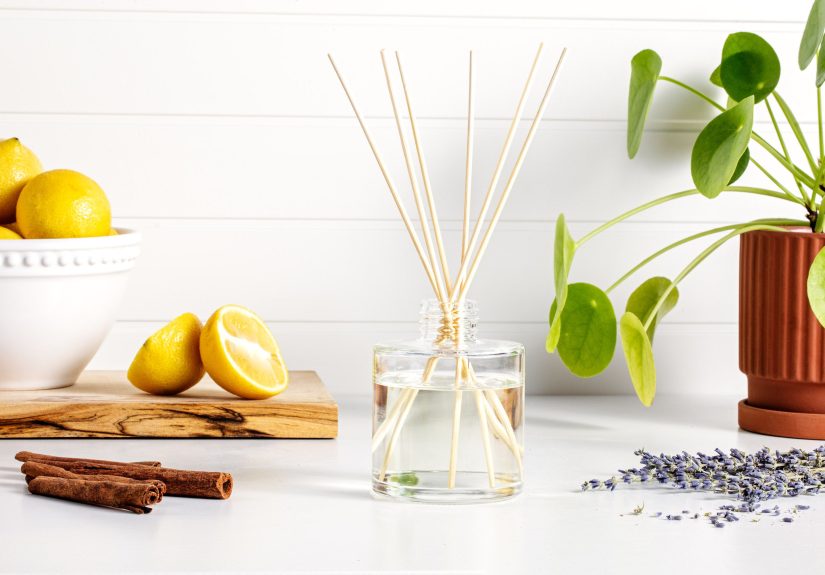
7. Create slow-and-steady scent with a reed diffuser or dry sachets
For a home that smells good all day (not just right after you clean), you want a background scent that’s gentle and consistent. Two natural options: a DIY reed diffuser or dry sachets.
DIY reed diffuser basics
- Container: Narrow-neck bottle or small jar
- Base: Carrier oil (like almond or safflower oil)
- Scent: A small amount of essential oil (optional)
- Reeds: Reed sticks (or dried botanicals if you prefer the look)
Add carrier oil, then a modest amount of essential oil if you’re using it. Insert reeds and flip them occasionally to refresh the scent (or swirl gently if using botanicals).
Dry sachets (no oils needed)
Fill a small breathable bag (or a tied coffee filter) with one of these:
- Dried lavender (closets, pillows)
- Dried rosemary + lemon peel (kitchen drawers)
- Baking soda + dried herbs (gym bags, shoes)
These are especially nice if you want “fresh” without anything that feels perfumey.
Wrap-up: your home’s “good smell” formula
If you want a house that smells amazing naturally, follow this order: ventilate (fresh-air reset), neutralize odors (baking soda + charcoal), fix wet stink (drains + damp fabrics), then add a gentle signature scent (simmer pot, sprays, or diffusers).
Start with just two stepslike #1 and #4and you’ll notice a difference fast. Add the rest as you go, and soon your home will smell like “clean and cozy” instead of “what happened in here?”
Experiences that match real life (so you can pick what actually works)
Not every home smell problem is the same. A simmer pot won’t defeat a mystery trash odor, and a room spray won’t fix a damp towel situation. Here are common “this is my life” scenariosand which natural method usually wins.
Experience 1: The “I cooked fish and now the couch knows” problem
Cooking smells love to travel, then cling to fabrics like they pay rent. The fastest combo is #1 fresh-air reset while you run the kitchen fan, followed by #2 baking soda on rugs (if the smell settled in). Once the odor is dialed down, #4 simmer pot is perfect because it doesn’t just smell niceit changes the whole vibe. Citrus + herbs tends to read “clean,” while cinnamon + clove reads “cozy.”
Experience 2: The teen-bedroom situation (aka “a sock ecosystem”)
The temptation is to spray something and sprint away. But the real fix is boring and effective: crack a window (#1), move laundry out, and use #3 charcoal in the closet or near the hamper. After that, a #7 sachet in drawers gives a subtle “fresh” that doesn’t feel like you’re trying to hide evidence.
Experience 3: Bathroom funk that returns 20 minutes after you clean
This is often a moisture/airflow issue. Run the fan longer, wipe wet surfaces, and use #3 charcoal as a quiet background helper. If there’s a drain smell, #5 is your best friend. Once the bathroom is actually neutral, a light #6 linen spray (or even just plain water + witch hazel) feels crisp without becoming overpowering in a small space.
Experience 4: “My house smells fine… until it rains”
Rain can turn hidden mustiness into a full broadcast. In that case, #3 charcoal in closets and near entryways is a simple fix, plus extra ventilation (#1) when weather allows. If you have rugs by the door, #2 baking soda can help remove that wet-dog/old-shoe vibe after things dry. Then layer a gentle scent like #7 sachets (dry herbs/citrus) so the house smells “fresh,” not “perfume battling humidity.”
Experience 5: You want a signature scent that guests notice (in a good way)
The easiest “signature scent” that feels natural is a repeatable recipe: do #1 for five minutes before guests arrive, then use a consistent #4 simmer pot combo you love (for example, orange + rosemary + vanilla). If you want something always-on, set up #7 reed diffuser in the entryway with a soft, clean blend. The key is restraint: guests should think, “Wow, it smells nice in here,” not “I can taste the fragrance.”
The best part of going natural is control. You can dial scents up or down, avoid headaches from strong fragrances, and make your home smell like a place humans liveclean, comfortable, and welcoming.