Table of Contents >> Show >> Hide
Halloween is the one night of the year when tiny superheroes, grumpy vampires, and adults wearing suspiciously expensive skeleton sweaters all agree on one thing: this holiday is ridiculously fun. But Halloween is more than candy buckets and glowing porch lights. It is a mash-up of ancient history, folklore, community traditions, and modern American celebration, which is probably why it feels both spooky and strangely cozy at the same time.
If you have ever wondered why we carve pumpkins, why kids say “trick or treat,” or why black cats got such an unfair public relations problem, you are in the right haunted house. Below are 42 fun Halloween facts, history notes, and trivia tidbits for kids and adults. Some are ancient, some are sweet, and some are the kind of facts that make you sound weirdly impressive at a fall party.
Why Halloween Still Has Everyone Hooked
Halloween survives year after year because it works on every level. Kids love the costumes and candy. Adults love the nostalgia, parties, decorations, and chance to pretend a fog machine is a reasonable household purchase. History lovers enjoy the deep roots, and trivia fans get a gold mine of eerie details. In other words, Halloween is doing a lot of heavy lifting for one holiday that basically runs on pumpkins and enthusiasm.
42 Fun Halloween Facts, History, and Trivia
Ancient Origins and Early History
- Halloween is more than 2,000 years old. Most historians trace its roots to Samhain, an ancient Celtic festival connected to the end of harvest and the start of a darker, colder season.
- Samhain marked a seasonal turning point. For Celtic communities, this festival helped mark the new year around November 1, when summer ended and winter began to creep in like an uninvited ghost.
- People once believed spirits wandered the earth on this night. One major Samhain belief was that the line between the living and the dead grew thinner around this time of year.
- Bonfires were part of the original atmosphere. Long before battery-powered candles and plastic gravestones, large communal fires played a central role in old seasonal observances.
- Costumes began as protection, not performance. Early disguises were meant to confuse or ward off spirits, not to win a social media costume contest.
- Halloween also has Christian roots. In the eighth century, November 1 became associated with All Saints’ Day, which gradually blended with older seasonal customs.
- The name came from “All Hallows’ Eve.” Over time, the evening before All Saints’ Day became known as All Hallows’ Eve, which eventually turned into Halloween.
- Roman traditions likely added a few ingredients to the mix. Historians often point to Roman festivals such as Feralia and celebrations honoring Pomona as part of Halloween’s layered history.
- That may explain the apple obsession. Because Pomona was associated with fruit and orchards, her influence may help explain why bobbing for apples became linked to Halloween.
- Irish and Scottish immigrants helped Halloween thrive in the United States. When large waves of immigrants arrived in the 19th century, they brought many of the customs that helped shape modern American Halloween.
Trick-or-Treating, Costumes, and Old Traditions
- Trick-or-treating has medieval cousins. One early custom called “souling” involved poor people going door to door and receiving food in exchange for prayers for the dead.
- Another tradition was “guising.” In Scotland and Ireland, people dressed in costume and performed songs, poems, or jokes before receiving food, coins, or treats.
- The phrase “trick or treat” was first recorded in 1927. That makes it a lot younger than Halloween itself, even if it now sounds like it has always existed.
- Trick-or-treating partly grew as an anti-vandalism strategy. Communities promoted organized door-to-door treating to steer Halloween away from wild pranks and destructive mischief.
- Postwar candy culture helped the tradition explode. After World War II and the end of sugar rationing, Halloween became sweeter, more family-focused, and much more candy-centered.
- Cartoons helped make trick-or-treating mainstream. A 1951 “Peanuts” comic and Disney’s 1952 short Trick or Treat helped cement the holiday in American popular culture.
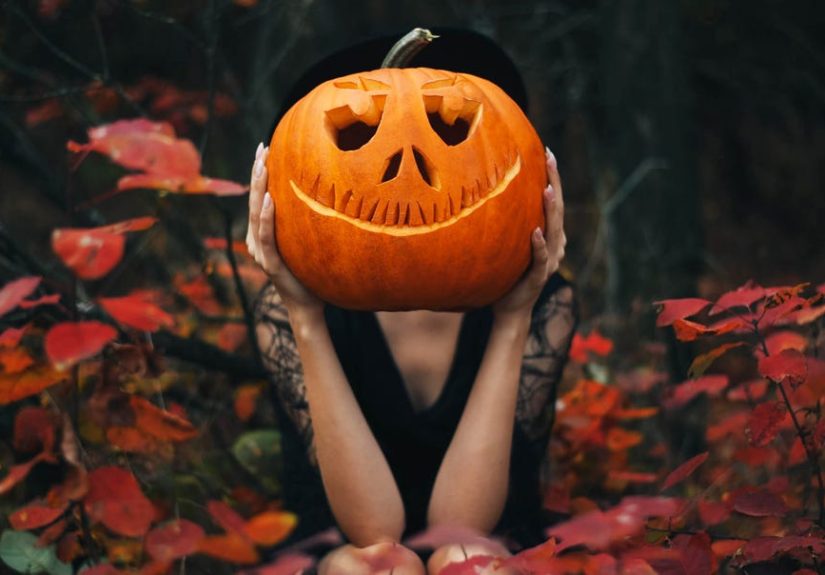
- Jack-o’-lanterns did not begin as pumpkins. In Ireland and parts of Britain, people originally carved turnips, beets, and other vegetables before pumpkins stole the spotlight.
- The name comes from a folktale character called Stingy Jack. According to legend, Jack tricked the Devil and ended up wandering the earth with a glowing coal inside a carved turnip.
- Pumpkins became the American favorite for a practical reason. Once the custom reached the United States, pumpkins were easier to find, easier to carve, and a lot less likely to fight back than a turnip.
- Lantern light once carried symbolic power. Candles, glowing coals, and fires were not just decoration in older traditions; they were tied to guidance, protection, and warding off unwelcome spirits.
Candy, Superstitions, and Delightfully Weird Trivia
- Old Halloween in America could get rowdy. Before neatly wrapped candy bars became the norm, Halloween was often associated with pranks, practical jokes, and neighborhood chaos.
- Candy corn dates to the 1880s. This famously divisive treat has been around for well over a century, which means people have had plenty of time to argue about it.
- It was originally marketed as “Chicken Feed.” Early candy corn branding leaned into farm imagery, which made sense in an era when much of the country still had strong agricultural roots.
- Candy corn was not always strictly a Halloween candy. It became more strongly linked to Halloween later, especially as seasonal marketing expanded in the 20th century.
- Black cats got a bad reputation from superstition, not reality. Their spooky status grew from folklore, religious fear, and witchcraft legends, not from anything cats actually did besides being cats.
- Halloween costumes used to be much creepier. Early costumes often aimed to look ghostly, ragged, or unsettling, instead of copying movie characters, musicians, or internet memes.
- Victorian Halloween was full of fortune-telling games. In the 1800s, parties often included playful rituals meant to predict romance, marriage, or future luck.
- That means Halloween once had a matchmaking side. In some traditions, the holiday was as much about courtship and future spouses as it was about ghosts and goblins.
- Packaged candy eventually replaced homemade treats. It was easier to hand out, easier to collect, and widely seen as safer than loose or homemade goodies from strangers.
- In St. Louis, many kids tell jokes to earn candy. Instead of simply saying “trick or treat,” some trick-or-treaters deliver a pun or joke first, which honestly feels like a fair trade.
Modern American Halloween Trivia
- Halloween is mostly secular in North America today. Even though it has old religious and pre-Christian roots, modern Halloween is largely celebrated as a community and cultural event.
- Halloween has even inspired charity traditions. Trick-or-Treat for UNICEF began in Philadelphia in 1947, encouraging children to collect spare change for a global cause.
- Every U.S. state grows pumpkins. That means Halloween’s favorite decoration has nationwide support, from coast to coast.
- The United States produced about 1.44 billion pounds of pumpkins in 2024. That is enough pumpkin to make porches happier and pie lovers very emotional.
- Illinois led the nation in pumpkin production in 2024. It produced about 485 million pounds, which is a truly heroic amount of orange.
- The top five pumpkin-producing states grew over 67% of the total crop in 2024. A lot of Halloween’s visual magic starts with a relatively small club of very busy states.
- Pumpkins serve two big markets. Some are grown for fresh and ornamental use, while others are headed for processing into canned pumpkin and other food products.
- The U.S. Census once estimated about 41 million potential trick-or-treaters. In 2019, that figure covered children ages 5 to 14, which is a lot of tiny footsteps on front porches.
- There were also about 126.8 million occupied housing units in 2020. In Halloween terms, that is a whole lot of possible candy stops.
- Candy corn still refuses to leave the spotlight. The National Confectioners Association reported it ranked among the top three Halloween treats people most wanted to receive while trick-or-treating.
- People even have strong opinions on how to eat candy corn. In one NCA poll, 52% said they eat the whole piece at once, while others start at either the white tip or yellow base like tiny snack strategists.
- Halloween remains one of America’s most popular holidays for children. That staying power comes from its rare mix of history, imagination, neighborhood fun, and sugar-powered optimism.
Why These Halloween Facts Matter
Fun trivia is great on its own, but Halloween facts become even more interesting when you notice what they reveal. This holiday is not just about getting startled by a motion-activated skeleton near the garden hose. It shows how traditions travel, change, and survive. Ancient harvest rituals became church observances, then neighborhood celebrations, then full-blown American seasonal culture complete with costumes, candy aisles, and pumpkin-spice everything. Halloween is basically a master class in cultural remixing.
That is also what makes the holiday work for both kids and adults. Children enjoy the adventure. Adults enjoy the memories. Everyone gets a little folklore, a little theater, and a little permission to be silly on purpose. Not many holidays can offer all of that while also letting you eat candy dressed as a pirate.
Halloween Experiences That Make the Holiday Unforgettable
One reason Halloween stays so beloved is that people do not just learn about it, they experience it. The holiday has a way of turning ordinary neighborhoods into little movie sets. A front porch becomes a pirate ship. A classroom becomes a pumpkin patch. A living room becomes mission control for candy sorting, costume repairs, and emergency tape fixes five minutes before trick-or-treating starts. Even people who claim they are “not that into Halloween” somehow end up standing over a pumpkin with a spoon in one hand and roasted seeds in the other.
For kids, Halloween often feels like one giant adventure. There is the excitement of choosing a costume, which can take weeks of very serious debate. One day they want to be a dinosaur, the next a wizard, and by the final hour they are somehow a dinosaur wizard with glow sticks. Then comes the magic of going house to house after dark, hearing leaves crunch underfoot, seeing porch lights flicker, and spotting other kids dressed as everything from ghosts to astronauts. Even shy children often become braver on Halloween, because the costume gives them a little extra confidence. Saying “trick or treat” through a superhero mask somehow feels easier than saying hello on a normal Tuesday.
Adults experience Halloween differently, but just as intensely. For many, it brings back memories of pillowcases full of candy, school parades, homemade costumes, and parents pretending not to steal the good chocolate. There is also the joy of being the person who opens the door and sees a parade of tiny witches, cartoon pumpkins, and extremely serious five-year-old ninjas. Handing out candy can feel strangely heartwarming. For one night, the neighborhood talks to itself. People wave, laugh, compliment costumes, and briefly become part of the same story.
Then there are the traditions that happen before Halloween night even begins. Pumpkin carving is half art project, half emotional endurance test. Haunted houses test who is genuinely brave and who is simply loud. Classroom parties, hayrides, corn mazes, and family movie nights all add to the season. Some families go all in with giant yard displays and fog machines. Others keep it simple with a bowl of candy and one cheerful paper bat taped to the door. Either way, Halloween tends to create the kind of small, vivid memories people keep for years.
That may be the real reason Halloween lasts. It combines history with play and gives people of all ages a chance to participate, imagine, and laugh together. Even when the candy is gone and the fake cobwebs are still hanging from the ceiling in mid-November, the feeling of the night sticks around. Halloween is not just a holiday people observe. It is one they step into.
Conclusion
Halloween is proof that a holiday can be ancient, meaningful, weird, funny, and delicious all at once. Its roots reach back to Samhain and All Hallows’ Eve, but its modern spirit lives in neighborhoods, classrooms, parties, pumpkin patches, and candy bowls everywhere. Whether you are a kid collecting treats, an adult decorating the porch, or the household historian explaining why turnips walked so pumpkins could run, Halloween gives everyone a role to play.
So the next time someone asks why we celebrate Halloween, you can tell them the answer is bigger than costumes and candy. It is history, folklore, imagination, and community rolled into one gloriously spooky night. Also, yes, candy corn is still causing drama.