Table of Contents >> Show >> Hide
- Why Apollo photos hit so hard, even decades later
- The 31 Apollo mission photos that still give us goosebumps
- Earthrise (Apollo 8, 1968)
- The crew’s “we are really here” cabin moments (Apollo 8, 1968)
- First live TV from American astronauts in space (Apollo 7, 1968)
- Apollo 7: the “we’re back” vibe (Apollo 7, 1968)
- Spacewalk stillness (Apollo 9, 1969)
- Docked spacecraft ballet (Apollo 9, 1969)
- “Snoopy” in lunar orbit (Apollo 10, 1969)
- The Moon below, the plan above (Apollo 10, 1969)
- Aldrin descends the Lunar Module ladder (Apollo 11, 1969)
- Buzz Aldrin’s visor reflection (Apollo 11, 1969)
- Bootprint in lunar soil (Apollo 11, 1969)
- Aldrin beside the U.S. flag (Apollo 11, 1969)
- “First step” stills from live television (Apollo 11, 1969)
- Training with the Moon camera (Apollo 11, pre-flight)
- Two spacecraft, one Moon: Apollo 12 meets Surveyor 3 (Apollo 12, 1969)
- Tool carriers and lunar work (Apollo 12, 1969)
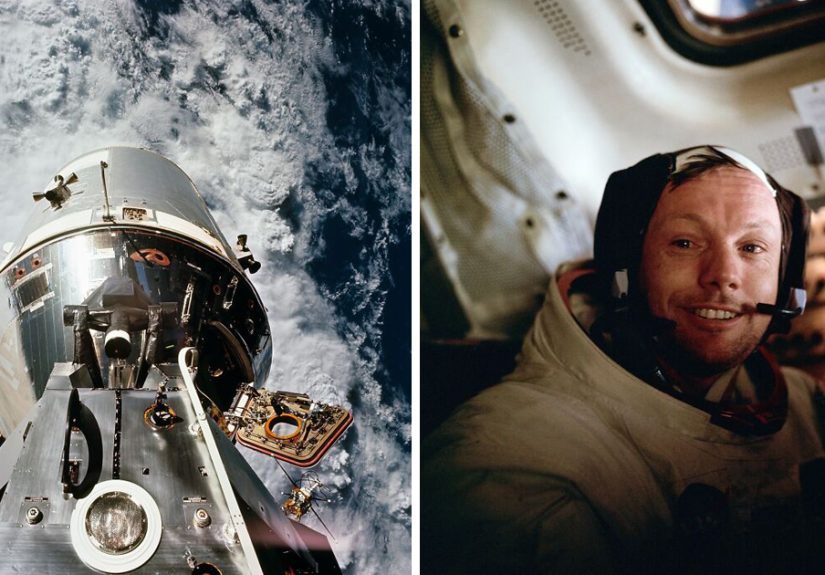
- “Damaged Apollo 13” service module (Apollo 13, 1970)
- The Apollo 13 lifeboat reality (Apollo 13, 1970)
- Recovery photos: faces after the storm (Apollo 13, 1970)
- Tracks to “Antares” (Apollo 14, 1971)
- Alan Shepard’s lunar golf moment (Apollo 14, 1971)
- Apollo 14: the Fra Mauro fieldwork vibe (Apollo 14, 1971)
- The first Lunar Rover in action (Apollo 15, 1971)
- Hadley-Apennine panoramas: mountains on the Moon (Apollo 15, 1971)
- Hammer vs. feather (Apollo 15, 1971)
- The Fallen Astronaut memorial plaque (Apollo 15, 1971)
- Apollo 16’s lunar salute (Apollo 16, 1972)
- Apollo 16: the “Grand Prix” rover energy (Apollo 16, 1972)
- Apollo 17 night launch: Saturn V as a moving sun (Apollo 17, 1972)
- The Blue Marble (Apollo 17, 1972)
- Cernan checks out the Lunar Roving Vehicle (Apollo 17, 1972)
- Orange soil at Shorty Crater (Apollo 17, 1972)
- Crescent Earth above the lunar horizon (Apollo 17, 1972)
- Deep-space work: Evans on EVA (Apollo 17, 1972)
- How to “read” Apollo photos like a space nerd (in a good way)
- Experiences that make these Apollo photos hit even harder (bonus )
- Conclusion
Some photos are “nice.” Apollo photos are physically unsettlingthe good kind of unsettling, like hearing your favorite song
right when you need it, except the song is the sound of a Saturn V shaking Florida into a new zip code.
The Apollo era didn’t just put people on the Moon; it built a visual language for awe. These frames are proof that a camera can be a time machine:
one click and you’re back in a tin can hurtling through vacuum, watching Earth turn into a marble you could almost cover with your thumb.
Below are 31 Apollo mission photos (and a couple of famously captured “still moments”) that keep giving us goosebumpsbecause they’re beautiful,
because they’re brave, and because they quietly whisper, “Humans actually did this. With slide rules.”
Why Apollo photos hit so hard, even decades later
First: the stakes were real. You can feel it in every imageevery tether, every visor reflection, every shadow. Apollo photography wasn’t about filters;
it was about evidence, engineering, and memory. Second: the compositions are accidentally perfect. Harsh sunlight, pitch-black sky, razor-edged shadows
the Moon is basically a minimalist photographer’s dream studio. Third: these pictures are full of tiny, human details: a scuffed boot, a wrinkled glove,
a handwritten label, a crewmate’s face floating behind a window.
And then there’s the emotional sucker punch: Apollo photos show two worlds at once. The alien one underfoot, and the familiar one hanging overhead.
That contrastdust and home, silence and heartbeatis the secret ingredient in the best “moon landing photos.”
The 31 Apollo mission photos that still give us goosebumps
-
Earthrise (Apollo 8, 1968)
Earth peeking over the lunar horizonsmall, bright, and shockingly alive. It’s not just pretty; it’s perspective in a single frame.
The Moon looks like cold stone. Earth looks like a promise. Many people credit this photo with helping a whole planet feel… like a planet. -
The crew’s “we are really here” cabin moments (Apollo 8, 1968)
Not every goosebump photo needs a horizon. Interior shots from early Apollo missions carry a different weight: cramped spaces, checklists,
and faces lit by instrument glow. It’s the visual equivalent of hearing someone calmly say, “All systems nominal,” while orbiting the Moon. -
First live TV from American astronauts in space (Apollo 7, 1968)
Apollo 7 made space feel immediatelike you could knock on the capsule and ask for an autograph. Still images from those early broadcasts
are rough, yes, but that’s part of the charm: history arriving with static and grit, like the universe was tuning in with rabbit ears. -
Apollo 7: the “we’re back” vibe (Apollo 7, 1968)
After tragedy and delays, Apollo 7 proved the program could fly crewed again. Photos of the spacecraft and crew read like a deep exhale
NASA and the public collectively unclenching. You can’t see relief, but somehow these images manage. -
Spacewalk stillness (Apollo 9, 1969)
Apollo 9’s EVA imagery is quietly mind-bending: an astronaut suspended over Earth, depending on a suit and a plan. The awe isn’t just the view
it’s the idea that “human outside spaceship” became a routine checkbox on the road to the Moon. -
Docked spacecraft ballet (Apollo 9, 1969)
Photos showing the Command Module and Lunar Module together feel like watching two puzzle pieces click into place.
Rendezvous wasn’t a bonus feature; it was the whole trick. These shots are the visual proof that Apollo’s choreography actually worked. -
“Snoopy” in lunar orbit (Apollo 10, 1969)
The Apollo 10 Lunar Modulenicknamed “Snoopy”was the dress rehearsal that turned “maybe” into “we’re doing this next.”
Images tied to Apollo 10 carry that delicious tension: close enough to taste the Moon, still one mission away from stepping onto it. -
The Moon below, the plan above (Apollo 10, 1969)
Apollo 10 photos remind you that exploration isn’t just courage; it’s procedure. The Moon’s texture looks like a map that forgot to be gentle.
Every frame whispers: “Measure. Check. Confirm. Then commit.” -
Aldrin descends the Lunar Module ladder (Apollo 11, 1969)
A human being climbing down into historyone careful step at a time. The ladder shot is pure suspense: a boot hovering over powdery unknown,
the LM’s metallic geometry against absolute black. It looks like a scene from science fiction… except it’s a documentary. -
Buzz Aldrin’s visor reflection (Apollo 11, 1969)
The famous portrait that contains a second photo inside it: the photographer, the Lunar Module, the flagcaught in a curved visor like a tiny
fishbowl universe. It’s the Moon’s version of a group selfie, except the “group” includes an entire planet hanging in the sky. -
Bootprint in lunar soil (Apollo 11, 1969)
A single footprint that looks almost sculpted. This is one of the simplest Apollo mission photosand one of the most haunting.
No face, no horizon, just evidence: we pressed down on another world, and the world kept the receipt. -
Aldrin beside the U.S. flag (Apollo 11, 1969)
Iconic for obvious reasons, but look closer and it becomes stranger: the flag’s stiff “wave,” the suit dusted like powdered sugar,
the shadows so sharp they could cut paper. It’s patriotic, surebut also deeply surreal. -
“First step” stills from live television (Apollo 11, 1969)
Grainy, high-contrast, and unforgettable. The low-resolution is the point: the entire planet watched a flickering ghost of a human step off
a ladder and onto the Moon. These frames feel like the universe saying, “Best I can do is static, but you’ll remember it forever.” -
Training with the Moon camera (Apollo 11, pre-flight)
Photos of astronauts practicing with the Hasselblad aren’t “action shots,” but they’re goosebump-worthy because they show the craftsmanship.
The Moon photos didn’t happen by accident. They were rehearsedlike a play where the stage is vacuum and the audience is Earth. -
Two spacecraft, one Moon: Apollo 12 meets Surveyor 3 (Apollo 12, 1969)
An astronaut standing near an earlier unmanned lander is a timeline you can see. Apollo 12 didn’t just visit the Moon; it visited our own
robotic past. The image is a quiet flex: “We landed near it on purpose.” -
Tool carriers and lunar work (Apollo 12, 1969)
Apollo 12 photos often feel like a job site on another world: instruments, samples, methodical movement. It’s goosebumps via competence.
The Moon isn’t conquered by dramait’s studied with patience. -
“Damaged Apollo 13” service module (Apollo 13, 1970)
The moment the crew finally sees what happened: a service module torn open, panels missing, insides exposed to space.
It’s a photo that makes your stomach drop, because you instantly understand how close “exploration” lives to “catastrophe.” -
The Apollo 13 lifeboat reality (Apollo 13, 1970)
Images tied to the Lunar Module as a lifeboatsystems repurposed, power rationed, breath and time carefully countedhit differently.
They’re not triumphant. They’re human survival in engineering form. Goosebumps, but make them sweaty. -
Recovery photos: faces after the storm (Apollo 13, 1970)
Post-splashdown shots carry a special kind of emotion: exhaustion, relief, that thousand-yard stare that says,
“We just argued with physics and got a draw.” These are the photos where the happy ending looks earned. -
Tracks to “Antares” (Apollo 14, 1971)
The Modular Equipment Transporter leaving bright tracks in lunar soil turns the Moon into a canvas. The LM in the distance looks like a small
metal tent on a desert plain. The message is simple: we walked here, we dragged gear, we did science, we left marks. -
Alan Shepard’s lunar golf moment (Apollo 14, 1971)
A goofy idea executed in a deadly serious environmentbecause sometimes humor is how humans handle enormity.
The photo (and famously recorded moment) works because it’s ridiculous and profound at the same time: a golf swing on the Moon. -
Apollo 14: the Fra Mauro fieldwork vibe (Apollo 14, 1971)
Apollo 14 images often show the Moon as a place you can get tired in. Slopes, dust, hauling tools, stopping to photograph what you came for.
Goosebumps come from relatability: even on the Moon, it’s still a hike. -
The first Lunar Rover in action (Apollo 15, 1971)
The rover changed everything: farther trips, bigger science, more “road trip” energy on an airless world.
Photos of astronauts loading equipment feel like watching the Moon get its first field truckand immediately putting it to work. -
Hadley-Apennine panoramas: mountains on the Moon (Apollo 15, 1971)
Apollo 15 panoramas are unreal: towering massifs, long shadows, a horizon that feels too crisp to be natural.
The astronaut and rover look tiny, like punctuation marks in a sentence written by geology over billions of years. -
Hammer vs. feather (Apollo 15, 1971)
A simple physics demo performed on the Moonbecause why not settle a Galileo argument where air resistance can’t ruin the punchline?
The image (and captured moment) feels like science class became myth: curiosity, tested on an alien stage. -
The Fallen Astronaut memorial plaque (Apollo 15, 1971)
A small plaque and a tiny figure in the dustquiet, solemn, and human. Apollo photos usually shout “achievement.”
This one whispers “cost.” It’s an image that makes you pause, even if you’ve seen it a hundred times. -
Apollo 16’s lunar salute (Apollo 16, 1972)
John Young mid-leap, saluting the flaggravity turned down, joy turned up. It’s a photo that looks playful until you remember:
he’s doing that in a pressurized suit, on a world with no air, next to a spacecraft that must work perfectly to get them home. -
Apollo 16: the “Grand Prix” rover energy (Apollo 16, 1972)
Lunar Rover photos from Apollo 16 feel like a victory lap for engineering. Wheels biting into dust, tracks etched into the surface,
the LM parked like a campsite you can’t afford to leave without. It’s adventure with a checklist. -
Apollo 17 night launch: Saturn V as a moving sun (Apollo 17, 1972)
Some launches look powerful. Apollo 17’s launch photos look biblicallight spilling across the pad, smoke boiling like weather.
You don’t need context to get goosebumps. Your nervous system understands “enormous” just fine. -
The Blue Marble (Apollo 17, 1972)
Earth, fully lit, floating in blackness. Crisp clouds, visible continents, a planet that looks like it was made for postcards and existential
crises. It’s one of the most reproduced images in history for a reason: it makes “home” feel both precious and improbably beautiful. -
Cernan checks out the Lunar Roving Vehicle (Apollo 17, 1972)
A commander and a machine in the early moments of a moonwalk. The rover looks stripped down, purposeful, almost like a skeleton of a car.
The astronaut looks like a lone mechanic in the quietest garage imaginable. -
Orange soil at Shorty Crater (Apollo 17, 1972)
The Moon surprises you with color. Apollo 17 images that reveal orange soil feel like a plot twist: not everything up there is gray.
It’s goosebumps because it’s discovery caught in real timegeology waving a little flag that says, “You don’t know me yet.” -
Crescent Earth above the lunar horizon (Apollo 17, 1972)
A thin Earth hanging over the Moondelicate, curved, almost unreal. It’s “Earthrise,” but later and sharper, like a sequel that lands a new
emotional punch. The Moon looks ancient. Earth looks temporary. You feel it in your ribs. -
Deep-space work: Evans on EVA (Apollo 17, 1972)
An astronaut outside the Command Module in deep space, retrieving film canistersbecause even the photographs needed a rescue mission.
These images are pure vulnerability: one person, one suit, nothing but distance in every direction.
That’s the magic of Apollo mission photos: the big moments are huge, but the small details keep pulling you back.
The Moon doesn’t let you hide sloppy thinking, and neither do the pictures.
How to “read” Apollo photos like a space nerd (in a good way)
Follow the shadows
Lunar sunlight is harsh and unfiltered. Shadows aren’t softthey’re crisp, long, and diagnostic. They reveal slopes, crater rims, and the texture
of regolith in a way that feels almost 3D.
Zoom in on the human stuff
Look for dust on boots, scuffs on suits, wrinkled gloves, and little tool marks. Apollo images are packed with “work happened here” evidence:
a cable routed just so, a sample bag, a footprint that overlaps another footprint.
Notice what’s missing
No air, no weather, no swaying treesso anything that moves is either mechanical or human. That absence is part of the goosebumps: the Moon looks
peaceful, but it’s aggressively indifferent.
Experiences that make these Apollo photos hit even harder (bonus )
The weird thing about Apollo mission photos is that they don’t stay on the screen. They follow you around. You’ll be fine one minutejust casually
scrollingand the next minute you’re staring at a bootprint like it’s a sacred artifact. And honestly? It kind of is.
If you’ve ever stood under a Saturn V in a museum, you know the first sensation: your brain refuses to accept the scale. Photos of launches are
impressive, but seeing the rocket’s size in person changes how you interpret every Apollo image afterward. Suddenly, that “night launch” shot isn’t
just dramatic lightingit’s the visual record of a controlled earthquake built by humans. You walk out thinking, “Oh. Of course the sky looks like
that. A skyscraper just learned how to fly.”
Another experience that rewires your reaction is watching Apollo footage with the sound upespecially the calm voices. Then you go back to the still
photos and you can almost hear the professionalism inside them: the matter-of-fact callouts, the clipped checklists, the understated jokes.
The images stop being “historic” and start being “present.” The visor reflection becomes a moment between coworkers doing an impossible job with
absurdly good manners.
People also talk about the first time they see Earthrise or the Blue Marble at full resolutionreally full resolutionon a big screen. It isn’t just
pretty. It’s intimate. The planet looks close enough to touch, and that closeness feels emotionally illegal, like you’re not supposed to see your own
home from that angle. That’s when “overview effect” stops being a phrase and starts being a physical reaction: a lump in your throat, a sudden urge to
text someone you love, a strange tenderness toward strangers.
Then there’s the quiet ritual of noticing details. You start to hunt for tiny clues: a rover track bending around a rock; the way dust clings to a
boot; the slight tilt of a flag that’s trying to look alive without any wind to help. The photos reward attention the same way nature does. You give
them five seconds and you get a cool picture. You give them five minutes and you get a story: where the astronaut walked, where they stopped, what
they carried, what mattered enough to photograph.
Finally, the most powerful experience might be sharing these images with someone who hasn’t fallen down the Apollo rabbit hole yet. You show them the
bootprint, and they go quiet. You show them the damaged Apollo 13 service module, and they blink like they’re processing a plot twist. You show them
the Blue Marble, and they say, almost automatically, “That’s us?” In that moment, Apollo photos do what they’ve always done: they make exploration
contagious. The goosebumps aren’t just nostalgiathey’re your brain recognizing that big, hard things are possible, and that our tiny species has
already proven it once before.