Table of Contents >> Show >> Hide
- Why Your Home Office Needs a Rug
- How to Choose the Right Office Rug
- 30 Office Rug Ideas to Soften Your Work From Home Setup
- 1. Cloud-Soft Sheepskin Under the Desk
- 2. Low-Pile Patterned Rug for Rolling Chairs
- 3. Neutral Flatweave for a Minimalist Office
- 4. Vintage-Style Persian for Personality
- 5. Jute or Sisal Rug for Natural Texture
- 6. Washable Rug for Spill-Prone Workers
- 7. Sound-Absorbing Rug for Zoom-Heavy Days
- 8. Color-Block Rug to Mark the Work Zone
- 9. Round Rug in a Corner Office Nook
- 10. Runner Rug for Long, Narrow Offices
- 11. High-Pile Rug Under a Lounge Chair
- 12. Black-and-White Graphic Rug for a Bold Statement
- 13. Soft Pastel Rug for Calm, Focused Work
- 14. Checkerboard Rug for Playful Energy
- 15. Faux Cowhide or Irregular-Shape Rug
- 16. Tone-on-Tone Rug That Matches the Floor
- 17. Bold Jewel-Tone Rug as a Backdrop for Neutral Furniture
- 18. Striped Rug to Stretch the Room
- 19. Monochrome Rug for a Sleek, Modern Setup
- 20. Layered Rugs for Texture and Flexibility
- 21. Outdoor Rug Brought Indoors
- 22. Eco-Friendly Wool or Recycled Fiber Rug
- 23. Oversized Rug for a Built-In Look
- 24. Small Accent Rug Under a Printer or Storage Area
- 25. Patterned Rug That Echoes Your Wall Art
- 26. Family-Friendly Rug in a Shared Study Space
- 27. Anti-Fatigue Mat Layered with a Stylish Rug
- 28. Rug with a Strong Border to Frame the Desk
- 29. Soft Rug Layered Over Existing Carpet
- 30. Seasonal Rug Swap for a Fresh Mood
- Care Tips to Keep Your Office Rug Looking Fresh
- Real-World Experiences with Office Rugs
- Conclusion
Working from home means your “commute” is now the 12 steps from your bed to your desk,
your coworkers are houseplants, and HR is the cat. The one thing that can make this whole
setup feel more intentional (and less like you just opened a laptop on the dining table)?
A great office rug. The right rug warms up the room, softens echo, defines your workspace,
and gives your bare feet something nicer than cold vinyl to land on.
Whether you’ve carved out a corner of the living room or you’ve got a dedicated office,
these office rug ideas will help you create a softer, calmer, more stylish work from home setup.
We’ll walk through size, placement, materials, and then dive into 30 specific rug ideas you can
copy or tweak for your own space.
Why Your Home Office Needs a Rug
Comfort for Long Workdays
Sitting or standing in one spot all day is tough on your body. A rug adds cushioning
underfoot, especially when paired with a quality rug pad. Low-pile and flatweave options
work well under rolling chairs, while plush styles are perfect in reading corners or under
a lounge chair you use for calls or breaks.
Better Acoustics and Less Echo
Hard floors bounce sound around, which can make video meetings feel loud and hollow.
A rug helps absorb noise, reduce echo, and keep your voice from sounding like you’re
calling in from a tiled bathroom. Add curtains and upholstered seating and you’ll notice
a huge improvement in how quiet and focused the room feels.
Visual Zoning and Style
A rug instantly defines an office zone in an open-plan space. It also gives you one
big surface to bring in color, pattern, or texture without repainting walls or buying
a new desk. Think of it as the outfit for your workspace: same furniture, completely
different mood.
How to Choose the Right Office Rug
Pick the Right Size and Placement
A common rule of thumb: choose a rug that’s large enough for your desk and chair to
sit on it with room to roll back without going off the edge. Many designers recommend
at least 18–24 inches of rug extending beyond the back of your chair and about 1–2 feet
of bare floor between the rug and the walls so the room doesn’t feel cramped.
For an 8×10-foot office, a 5×8 or 6×9 rug usually looks balanced. In very small spaces,
you can center a smaller rug just in the seating area or under a compact writing desk and chair.
Consider Pile Height and Chair Wheels
Rolling chairs and thick shag rugs do not get along. If you use a task chair with casters,
look for low-pile, flatweave, or tightly woven rugs. They’re easier to roll across and
less likely to show wheel tracks. If you absolutely love a plush rug, you can:
- Use it in a no-wheels area, like a reading nook.
- Add rollerblade-style casters that glide more smoothly.
- Layer a clear chair mat on top where the wheels roll.
Choose Durable, Easy-Care Materials
Offices are high-traffic spaces. Synthetic fibers like nylon, polyester, and polypropylene
are durable, stain-resistant, and usually budget-friendly. Wool is naturally resilient,
soft, and great for temperature and sound control. Natural fibers like jute and sisal
add gorgeous texture but can be rougher underfoot and more prone to stains, so they’re
better if you don’t eat or drink at your desk.
30 Office Rug Ideas to Soften Your Work From Home Setup
1. Cloud-Soft Sheepskin Under the Desk
Treat your feet to a faux or real sheepskin rug tucked under your desk. It doesn’t have
to cover the whole officejust a cozy patch where you rest your feet. This works best with
a stationary chair or a chair on a separate mat so the pile doesn’t get crushed.
2. Low-Pile Patterned Rug for Rolling Chairs
If you live in your wheeled chair, choose a low-pile rug with a subtle pattern.
A small-scale geometric or broken stripe hides crumbs, coffee drips, and pet hair while
staying smooth enough for easy rolling.
3. Neutral Flatweave for a Minimalist Office
Love a clean, Scandinavian look? A flatweave rug in warm gray, oatmeal, or greige keeps
the room calm and modern. Pair it with a light wood desk, white walls, and one potted plant
that is technically your employee of the month.
4. Vintage-Style Persian for Personality
A worn-in, vintage-inspired rug can make a plain desk feel like it belongs in a design
magazine. Look for distressed reds, blues, or muted jewel tones. The busy pattern hides
stains and adds instant character on video calls.
5. Jute or Sisal Rug for Natural Texture
A big jute or sisal rug creates a beachy, organic vibe. It’s perfect if your home office
shares space with a living room or bedroom and you want everything to blend. Layer a
smaller, softer rug on top near your chair if you find natural fibers scratchy.
6. Washable Rug for Spill-Prone Workers
If your workday is powered by coffee, tea, and the occasional “oops,” a washable rug is
a lifesaver. Many come in modern patterns and can be tossed in the washing machine
when life (or your lunch) gets messy.
7. Sound-Absorbing Rug for Zoom-Heavy Days
Choose a thicker rug with a dense pile or felted backing to absorb more sound.
Pair it with a high-quality rug pad and you’ll notice your space feels quieter and
less echoeygreat for recording, teaching online, or just hiding the fact that the
dog is barking at the mail carrier again.
8. Color-Block Rug to Mark the Work Zone
In a studio apartment or open-plan living area, use a color-block rug to visually
separate your “office” from your lounge space. Choose a color that contrasts gently
with the sofa area so your brain registers, “This is work mode now.”
9. Round Rug in a Corner Office Nook
If your desk fits into a corner or bay window, a round rug can soften the angles.
It works especially well under pedestal desks or small writing tables. Let the desk
sit slightly off-center on the circle for a relaxed, casual look.
10. Runner Rug for Long, Narrow Offices
When your office is more hallway than room, place a runner along the main walking path
and position the desk partially on or just beside it. You still get softness and style
without chopping up the floor visually.
11. High-Pile Rug Under a Lounge Chair
Keep your desk zone practical with low pile, then add a plush, high-pile rug under
a lounge chair or recliner where you read, brainstorm, or doom-scroll between meetings.
It’s your reward corner.
12. Black-and-White Graphic Rug for a Bold Statement
A high-contrast graphic rugthink chevron, grid, or modern stripesinstantly energizes
a neutral office. Keep the furniture simple so the rug is the star, and repeat black accents
in your lighting or picture frames to tie it all together.
13. Soft Pastel Rug for Calm, Focused Work
If bold pattern feels distracting, choose a pastel rug in dusty blue, blush, or sage.
These softer hues are gentle on the eyes and can help your workspace feel more serene,
especially when paired with warm white walls and soft lighting.
14. Checkerboard Rug for Playful Energy
Checkerboard and tiled patterns are trending and translate beautifully in a home office.
Choose a subtle two-tone combo (like beige and cream) if you want something softer,
or go bold with black and white for a “creative studio” vibe.
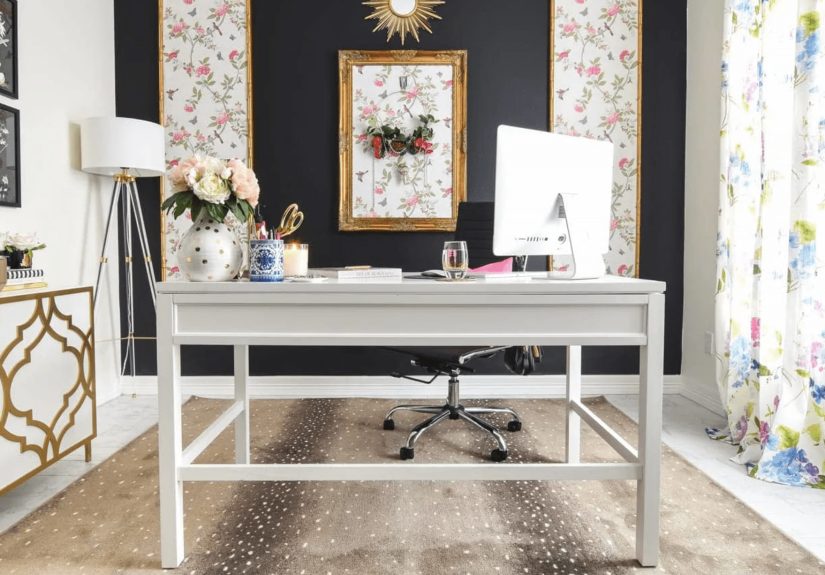
15. Faux Cowhide or Irregular-Shape Rug
An irregular-shape rug, like a faux cowhide, breaks up a room that feels too boxy.
Slide it under the corner of your desk or use it as an accent under a side table.
It’s more decorative than functional for rolling chairs, but it adds serious style points.
16. Tone-on-Tone Rug That Matches the Floor
For small offices, choose a rug just a shade lighter or darker than the floor.
This keeps the room feeling open while still adding softness and sound control.
Look for subtle texturelike a heathered weave or faint patternso it doesn’t read as flat.
17. Bold Jewel-Tone Rug as a Backdrop for Neutral Furniture
If your desk, chair, and shelves are neutral, use the rug to bring in rich color.
A deep teal, emerald, or garnet rug looks sophisticated, especially with black metal
or walnut furniture. It also makes your office look more polished on camera.
18. Striped Rug to Stretch the Room
Stripes are the interior designer’s cheat code. Run the stripes parallel to the
longest wall if you want the room to feel longer, or across the room to make it
feel wider. Just avoid stripes so bold that they become visual noise.
19. Monochrome Rug for a Sleek, Modern Setup
A solid black, charcoal, or deep navy rug can anchor a modern office with a glass
or metal desk. Add metallic accents and a sculptural lamp for a minimalist,
“I take my spreadsheets seriously” look.
20. Layered Rugs for Texture and Flexibility
Start with a large neutral base rug (like jute or sisal) and layer a smaller patterned
rug in the center under your desk. This lets you refresh the look seasonally by swapping
the top rug and helps protect the main rug where you sit and roll.
21. Outdoor Rug Brought Indoors
Indoor–outdoor rugs are tough, easy to clean, and often budget-friendly. They’re perfect
if your “office” doubles as a dining room or you have kids and pets wandering through
during calls. Many patterns now look just as stylish as indoor-only rugs.
22. Eco-Friendly Wool or Recycled Fiber Rug
Want a greener office? Look for rugs made from natural wool, jute, cotton, or recycled
materials. Wool, in particular, is naturally resilient, stain-resistant, and great at
regulating temperaturecozy in winter, not too hot in summer.
23. Oversized Rug for a Built-In Look
If you want a “wall-to-wall” feel without installing carpet, go for a rug that nearly
fills the room while leaving a slim border of visible flooring. This makes the space
feel unified and upscale, especially in larger home offices.
24. Small Accent Rug Under a Printer or Storage Area
Not every office rug has to live under the desk. Use a smaller accent rug under a
storage cabinet, printer stand, or bookshelf to soften that part of the room and
cut down on vibration and noise.
25. Patterned Rug That Echoes Your Wall Art
If you already have artwork you love, pull colors or shapes from it into your rug.
This creates a cohesive look and makes the entire office feel styled on purpose,
not like a collection of random furniture and cables.
26. Family-Friendly Rug in a Shared Study Space
When your home office doubles as a homework hub, choose a durable, low-pile rug with
a busy pattern that hides marker stains and snack crumbs. Add floor cushions or poufs
on top so kids have a soft spot to sit and work.
27. Anti-Fatigue Mat Layered with a Stylish Rug
If you use a standing desk, layer an anti-fatigue mat on top of a larger rug.
The rug keeps the room cohesive, while the mat supports your knees and lower back.
Choose a mat in a color that blends with the rug so it doesn’t visually interrupt the space.
28. Rug with a Strong Border to Frame the Desk
Borders act like built-in picture frames. A rug with a contrasting edge helps define
the desk zone and looks especially sharp in symmetrical setups with a centered desk
and shelving on either side.
29. Soft Rug Layered Over Existing Carpet
Yes, you can put a rug over carpet. Use a low-profile rug with a strong rug pad or rug
tape underneath so it doesn’t ripple. This is a great way to hide builder-grade carpet
in a rental and bring in your own style.
30. Seasonal Rug Swap for a Fresh Mood
Keep two rugs in rotation: a lighter, breathable cotton or flatweave rug for spring
and summer and a thicker, cozier rug for fall and winter. Swapping rugs twice a year
refreshes the room and signals a new season (and maybe a new batch of goals) without
changing anything else.
Care Tips to Keep Your Office Rug Looking Fresh
Vacuum regularly, rotating the rug every few months to even out wear from your chair
and foot traffic. Use a rug pad to prevent slipping and add extra cushioning.
Blot spills quickly with a clean clothrubbing just pushes the stain deeper.
For natural fibers and wool, follow the manufacturer’s cleaning instructions or
call in a professional once in a while if your rug sees heavy use.
Real-World Experiences with Office Rugs
If you’re still on the fence (pun absolutely intended) about adding a rug to your
home office, it can help to think about how people actually live and work with them.
Imagine a one-bedroom apartment where the “office” is technically the end of the
living room. Before the rug, it all blurred together: the desk backed right up to
the sofa, the coffee table collected mail and notebooks, and work hours quietly
stretched into TV time. After adding a medium-size rug under the desk and chair,
the space suddenly felt like a defined work zone. When the laptop closed and the
desk light switched off, it was easier to mentally “leave the office” even though
it was still right there.
In another house, a small basement room became a full-time office during remote work.
The hard vinyl floor made every step echo during calls, and the room felt a little
cold and unfinished. A thick wool rug with a rug pad underneath changed the entire
atmosphere. Video meetings sounded less hollow, the room felt warmer, and walking in
barefoot on winter mornings suddenly wasn’t a punishment.
Parents working from home often find that a rug turns the office into a more flexible
family space. A durable, patterned rug under the desk and a few floor cushions made it
possible for kids to quietly color or read in the corner while a parent finished emails.
The rug softened the floor for everyone and kept clattering toys from echoing through
the house during calls.
Even people who swear they “don’t notice decor” tend to notice a rug once it’s in place.
A simple flatweave rug under a standing desk can make long days easier on joints,
and it’s subtle enough that you forget it’s thereuntil you move to a room without it.
Over time, those small comfort upgrades add up, just like a good chair or better monitor.
The biggest takeaway from real-life setups: you don’t need the perfect rug right away.
Start with something that fits your space, plays nicely with your chair, and feels good
underfoot. As you live with it, you’ll learn whether you prefer more pattern or less,
more softness or more durability, and you can upgrade when it makes sense. A rug isn’t
just decorationit’s a daily comfort you literally stand and roll on. Treat it like
part of your work gear, not just a pretty extra.
Conclusion
A great office rug can transform your work from home setup from “temporary desk in a room”
to a space that actually supports how you work and how you feel. By choosing the right size,
material, and styleand keeping an eye on practical details like chair wheels and cleaning
you can enjoy a softer, quieter, more inspiring workspace every day. Your back, your feet,
and your Zoom background will all say thank you.