Table of Contents >> Show >> Hide
- Why Cell Phone Fires Happen in the First Place
- Way #1: Use Water on a Small Cell Phone Fire
- Way #2: Use a Fire Extinguisher to Knock Down the Flames
- Way #3: Evacuate, Close the Door, and Call 911
- What Not to Do During a Cell Phone Fire
- After the Fire: What to Do Next
- How to Prevent a Cell Phone Fire Before It Starts
- Which of the 3 Ways Is Best?
- Real-Life Experiences and Lessons People Commonly Learn the Hard Way
- Final Thoughts
Most people expect their phone to overheat during a long video call, not audition for a tiny disaster movie on the kitchen counter. But while cell phone fires are rare, they are real. Modern smartphones rely on lithium-ion batteries, which pack a lot of power into a very small space. That is great for battery life and terrible for your peace of mind when something goes wrong.
The good news is that a cell phone fire usually gives warning signs before it turns dramatic. The better news is that there are clear, practical ways to respond. The even better news is that you do not need to become a firefighter with a screwdriver and a brave face. You need calm, distance, and the right move at the right moment.
This guide breaks down 3 ways to put out a cell phone fire, when each method makes sense, and what you should absolutely not do. It also covers how lithium-ion battery fires behave, how to spot trouble early, and how to keep a smoking phone from becoming a house fire with Wi-Fi.
Why Cell Phone Fires Happen in the First Place
Phone batteries do not usually burst into flames for fun. When they fail, there is often a reason behind it. A battery may be damaged after a drop, crushed inside a bent phone, exposed to high heat, charged with the wrong equipment, repaired badly, or weakened by internal defects. Sometimes the issue builds slowly. Sometimes it escalates very fast.
The technical phrase you will hear is thermal runaway. In plain English, that means the battery starts heating itself in a chain reaction. Once that happens, it can release gases, smoke, flames, and enough heat to ignite nearby materials. A phone battery fire is not just a little flame on a gadget. It is a chemical event with a short fuse and a bad attitude.
Common Warning Signs Before a Phone Fire
Many dangerous battery incidents start with clues. Do not ignore these signs:
- The phone becomes unusually hot for no clear reason
- The battery or case starts swelling or bulging
- You hear hissing, popping, or crackling sounds
- You notice an odd chemical smell
- The phone leaks, vents gas, or starts smoking
- The color or shape of the phone changes after a drop or impact
If you notice any of these, stop charging and using the device immediately. A failing battery is not the time for “Let me just finish this text.”
Way #1: Use Water on a Small Cell Phone Fire
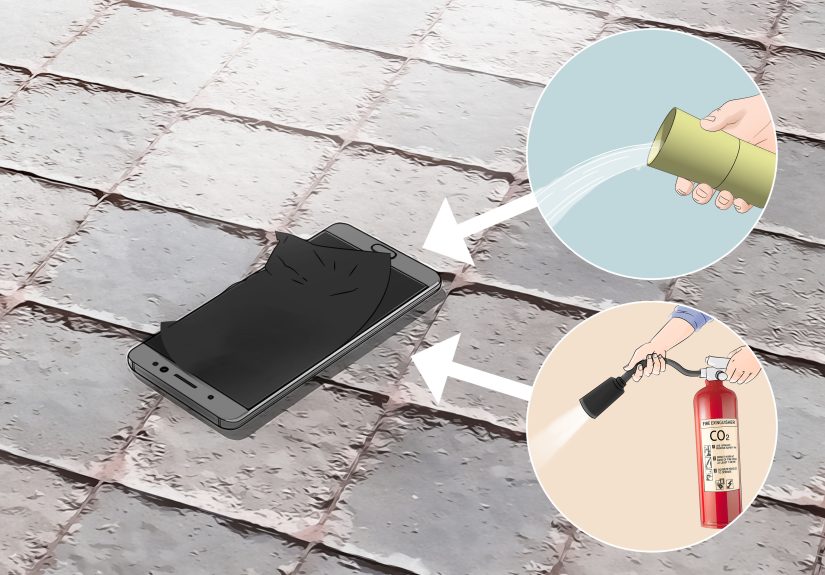
This surprises a lot of people, because many grew up hearing that water and electronics should never mix. In a normal electrical situation, that warning is smart. But with a lithium-ion battery fire, water can help cool the battery and slow or stop the chain reaction. For a small phone fire, this can be one of the most effective options.
When Water Makes Sense
Use water only when the fire is still small and you have a clear path to get away. The phone should not be blocking your exit, the flames should not be spreading fast, and the room should not be filling with heavy smoke. If the scene already looks like a bad life choice, skip the hero moment and move to evacuation.
How to Do It Safely
Pour enough water to cool the phone and the area immediately around it. The goal is not a polite sprinkle. The goal is cooling. A damaged lithium-ion battery may keep producing heat even after visible flames drop, so continue only if you can do so without putting yourself in danger.
Do not lean over the device, pick it up, or try to carry it somewhere else while it is burning. If the charger or outlet area is involved and you cannot safely separate yourself from the power source, get out and call 911. Your phone is replaceable. Your hands, lungs, and face are not.
Why Water Works Here
With a phone battery, the biggest problem is heat. Water helps reduce that heat and can keep nearby cells and surfaces from catching. That matters because cell phone battery fires can restart. Even if the flames vanish, the battery may still be unstable.
After the fire appears out, stay back, watch for reignition, and call emergency services if there is any doubt. A phone that just caught fire has officially retired from active service.
Way #2: Use a Fire Extinguisher to Knock Down the Flames
If water is not practical, a regular household fire extinguisher can help control the immediate flames. This is especially useful if the phone is on a counter, desk, or floor and the fire is starting to spread to nearby materials. A good extinguisher is often the fastest way to stop the visible fire from turning your curtains into a supporting cast.
Which Extinguisher Is Best?
A standard ABC fire extinguisher is the most realistic option for most homes. It can knock down the flames and buy you time. The important thing to understand is that the extinguisher may suppress what you see without fully cooling the battery inside. Translation: the drama may pause, but the episode is not necessarily over.
How to Use It
Stand back, keep your exit behind you, and aim at the base of the flames. Use short bursts. If the fire does not come under control quickly, leave immediately. This is not the moment to stay and negotiate with chemistry.
Once the flames are down, do not assume the phone is safe. A lithium-ion battery can reignite minutes, hours, or even later if internal damage remains. That is why many safety experts stress cooling and continued observation after the visible fire is out.
When an Extinguisher Is Better Than Water
An extinguisher is often the better first move when:
- The phone is near paper, bedding, upholstery, or other fast-burning materials
- You already have an extinguisher within reach
- You need to stop flames quickly before evacuating
- You cannot safely use water in the moment
One more note: use a real extinguisher, not a trendy gadget or a “miracle fire ball” that looked convincing in a video. When a battery is hissing on your nightstand, that is not the time for experimental shopping decisions.
Way #3: Evacuate, Close the Door, and Call 911
Yes, this absolutely counts as one of the smartest ways to deal with a phone fire, because sometimes the safest response is not to fight it yourself. If the battery is venting heavily, flames are growing, smoke is building, or the phone is near bedding, furniture, carpet, or curtains, it is time to get out.
When to Stop Trying to Handle It Yourself
Leave immediately if:
- The fire is spreading beyond the phone
- The room is filling with smoke or chemical fumes
- You hear loud popping or see sparks and jets of flame
- You do not have a clear exit path
- You feel unsure, panicked, or physically too close to the fire
Close the door behind you if you can. That can help slow the spread of heat and smoke while you call 911. Then stay out. Do not go back in for the phone, the charger, the cute case, or the screenshots you forgot to upload. Emergency responders have the tools, training, and protective gear. You have pajamas and opinions.
Why Evacuation Matters With Battery Fires
Battery fires are not just a flame problem. They can release irritating and hazardous gases, and they are known for reignition. That means even after the visible fire seems finished, the battery may flare back up. If the situation has crossed the line from “small incident” to “active fire,” distance is the safest strategy.
What Not to Do During a Cell Phone Fire
Knowing what not to do can be just as important as knowing what works. Here are the biggest mistakes people make during a phone battery fire:
- Do not pick up a burning or smoking phone. It can rupture, spit flames, or burn your hands instantly.
- Do not puncture, crush, or stomp on it. Physical damage can worsen the battery reaction.
- Do not assume the danger is over when the flames stop. Reignition is common with damaged lithium-ion batteries.
- Do not throw the damaged phone in the trash or curbside recycling. It can start another fire later in a truck, bin, or facility.
- Do not keep charging a swollen or overheating phone. That is not optimism. That is denial with a cable attached.
After the Fire: What to Do Next
Once the fire is out and the area is safe, the phone should be treated as hazardous waste, not as a device that merely had “a little issue.” Do not plug it back in to check whether it still works. Do not set it on your dresser and promise yourself you will deal with it later.
Smart Next Steps
- Let the device cool completely
- Keep it away from anything flammable
- Do not recharge or reuse it
- Contact the manufacturer or a qualified repair provider
- Dispose of it through approved battery or hazardous waste channels
If the phone was recalled, follow the manufacturer’s instructions exactly. If it was damaged in a drop, water exposure, or DIY repair attempt, be honest about that too. The goal is safe handling, not preserving the phone’s dignity.
How to Prevent a Cell Phone Fire Before It Starts
The easiest phone fire to put out is the one that never happens. Prevention is not glamorous, but it is wildly effective.
Cell Phone Fire Prevention Tips
- Use chargers and replacement parts made for your device
- Avoid cheap, questionable batteries and off-brand repair shortcuts
- Do not charge your phone under a pillow, blanket, or on a bed
- Keep the phone out of hot cars and direct sunlight
- Replace a damaged battery through a trained technician
- Stop using the phone if it bulges, hisses, leaks, smells odd, or gets abnormally hot
- Charge on a hard, nonflammable surface when possible
Also remember that “warm” is not the same as “dangerous.” Phones heat up during gaming, navigation, streaming, and wireless charging. The real concern is unusual heat combined with warning signs like swelling, smoke, smell, or visible damage.
Which of the 3 Ways Is Best?
If you are wondering which option is the best answer, here is the practical version:
- Use water when the fire is very small and you can cool it safely.
- Use an extinguisher when you need fast flame control and already have one nearby.
- Evacuate and call 911 when the fire is growing, smoking heavily, or making you question your life choices.
The right response depends on size, smoke, spread, and distance. There is no prize for handling more than you safely should. A damaged phone is an inconvenience. A house fire is a chapter.
Real-Life Experiences and Lessons People Commonly Learn the Hard Way
One of the most common experiences people describe with a cell phone fire is how ordinary the moment feels right before it turns serious. A phone is charging on a nightstand. Someone notices it feels hotter than usual. Maybe the battery percentage is not moving correctly, or the case looks slightly lifted at one corner. Most people do not immediately think, “This is a fire hazard.” They think the charger is acting weird, the app is draining power, or the phone is simply old. That is exactly why early warning signs matter so much.
Another common scenario happens after a drop. A phone falls face-down on concrete, survives, and appears fine except for a dent, a bent frame, or a screen that sits a little unevenly. For a day or two, nothing dramatic happens. Then the device starts heating up during charging, gives off a faint smell, or makes a soft popping sound. People often talk themselves into one more charge cycle, one more backup, one more day of use. That delay is where trouble grows. A damaged lithium-ion battery does not always fail immediately. Sometimes it waits until the user has become comfortable again.
There are also the bedtime stories nobody wants. A phone is charging on a soft bed, under a blanket, or pressed into a couch cushion. The user wakes up to a smell, a hiss, or a flash. In some cases, the real panic is not the size of the initial fire but the speed of the confusion. People freeze because the object causing the fire is also the object they use every day. It looks familiar, which makes the danger feel less real for a few critical seconds.
Then there is the “I thought it was out” experience. This one is especially important. The visible flames stop, and the owner assumes the emergency is over. They crack a window, move the phone later, and try to clean up. But damaged batteries can reignite. That second flare-up is what catches many people off guard. The lesson is simple: once a phone battery has smoked, flamed, or vented, it should never be treated like a normal device again.
The clearest pattern across these experiences is not carelessness. It is underestimation. People underestimate heat, ignore swelling, trust a sketchy charger, delay replacing a damaged battery, or assume a tiny fire means tiny risk. The smartest response is early action: stop using the phone, keep it away from flammable materials, and choose safety over convenience. That approach may feel dramatic in the moment, but not nearly as dramatic as explaining to your insurance company how a smartphone turned into a home improvement project.
Final Thoughts
If you remember only one thing from this guide, make it this: a cell phone fire is a battery emergency first and a gadget problem second. Move fast, stay calm, and match your response to the situation. For a very small fire, water may help cool it. For fast flame control, an ABC extinguisher can be useful. And when the fire grows, the smoke builds, or your gut says “nope,” get out, close the door, and call 911.
Phones are smart. Burning phones are not. Treat warning signs seriously, use certified gear, and never give a swollen battery the benefit of the doubt. That is the easiest way to keep your mobile life from becoming a very expensive smoke signal.