Table of Contents >> Show >> Hide
- Why Prune Pepper Plants in the First Place?
- Way #1: Top Young Pepper Plants to Encourage Bushier Growth
- Way #2: Thin Lower Leaves and Remove Problem Growth
- Way #3: Cut Back Pepper Plants at the End of the Season
- Quick Rules for Successful Pepper Plant Pruning
- Common Questions About Pruning Pepper Plants
- Conclusion
- Extra Notes from Real-World Pepper-Growing Experience
- SEO Tags
If you have ever stood in the garden staring at a pepper plant and wondering whether to prune it or just whisper encouragement and back away slowly, you are not alone. Pepper plant pruning sounds dramatic, but it does not have to be. In fact, the best pruning strategy is usually less “Edward Scissorhands” and more “tiny haircut with a plan.”
The truth is that pepper plants do not always need pruning. They can grow and produce just fine without it. But strategic pruning can help shape the plant, improve airflow, reduce disease pressure, support heavier fruit, and make the plant focus its energy where you actually want it: on healthy stems, flowers, and peppers that are worth picking.
So, how do you prune pepper plants without turning a future harvest into a sad little stick? These are the three most useful ways: top young plants to build a stronger frame, thin lower and problem growth to keep plants healthy, and cut back plants at the end of the season if you want to overwinter them or reset them for the next round. Here is how each method works, when to use it, and when to leave the pruners in the shed.
Why Prune Pepper Plants in the First Place?
Before we get into the three ways to prune pepper plants, let’s clear up one thing: peppers are not tomatoes in disguise. A lot of gardeners see a branching pepper plant and assume it should be pruned like an indeterminate tomato. Not so fast. Pepper plant pruning should be selective, not obsessive.
Done well, pruning pepper plants can help the plant develop a sturdier structure, especially early in the season. It can also improve air circulation, reduce the chance that damp lower leaves become disease magnets, and make harvesting easier when the plant is loaded with fruit. In some cases, it can encourage more branching and better flower production. In other cases, especially late in the year, pruning helps gardeners overwinter pepper plants indoors rather than starting from scratch next spring.
Done badly, however, pruning can remove too much foliage, expose fruit to sunscald, stress an already struggling plant, and reduce total harvest. So the goal is not to prune for the sake of pruning. The goal is to prune with purpose.
Way #1: Top Young Pepper Plants to Encourage Bushier Growth
What topping means
Topping is exactly what it sounds like: removing the top growing tip of a young pepper plant. It is the classic answer to the question “how to prune pepper plants for stronger stems and more branching?” Instead of letting the plant race upward on one main stem, topping encourages it to branch out and build a sturdier framework.
When to do it
The best time to top pepper plants is when they are still young, established, and actively growing but not yet loaded with fruit. Many gardeners do this when the plant is around 8 to 12 inches tall or once it has several sets of true leaves. The key is timing: you want the plant to have enough strength to recover quickly, but you do not want to wait until it is already deep into fruit production.
How to do it
Use clean scissors or hand pruners and snip just above a leaf node. That one cut removes the main growing point and signals the plant to push out side branches. Some gardeners also pinch off early flowers or the first tiny fruits at this stage. It feels a little cruel in the moment, like taking away dessert before dinner, but it can help a young transplant put energy into roots, stems, and branching instead of rushing into early fruiting before it is ready.
Why it works
Topping pepper plants can lead to a shorter, stockier, better-balanced plant. That matters because pepper stems can be brittle, especially once the plant is carrying several heavy bells or thick-walled jalapeños. A bushier structure often means more branches, more flower sites, and better support when the weather gets windy or the fruit gets ambitious.
This method is especially useful for bell peppers, jalapeños, shishitos, and other common garden peppers that can get top-heavy. It is also handy in containers, where a compact, balanced plant is often easier to manage than one tall stem flopping around like it forgot leg day.
When not to top
Do not top a plant that is already stressed from cold weather, transplant shock, drought, pests, or nutrient problems. And do not top late in the season when the plant no longer has enough warm time left to regrow and set new fruit. If the plant looks weak, give it a chance to recover first. Pepper plant pruning works best on healthy plants, not on plants already having a rough week.
Way #2: Thin Lower Leaves and Remove Problem Growth
What selective thinning looks like
The second way to prune pepper plants is not about shaping the whole plant. It is about cleanup. This means removing lower leaves that touch the soil, yellowing leaves, damaged stems, diseased growth, and crowded interior foliage that traps moisture and blocks airflow.
If topping is a strategic haircut, this is more like tidying the room so nothing suspicious grows under the bed.
What to remove
Start with the obvious troublemakers: leaves that are yellow, torn, diseased, insect-chewed beyond usefulness, or dragging in the soil. Lower leaves are more likely to get splashed with water and soil during rain or irrigation, which can spread disease. If your pepper plants are mature and about two feet tall, clearing out the bottom section of messy foliage can make a real difference.
You can also remove small interior shoots that are weak, crossing, or crowding the center of the plant. The goal is not to hollow the plant out like a jack-o’-lantern. The goal is to improve airflow and light penetration while keeping enough leaf cover to protect fruit and support photosynthesis.
Why this helps
Selective thinning is one of the most practical forms of pepper plant pruning because it improves garden hygiene. Better airflow helps leaves dry faster after rain or watering. Less crowding means fewer damp, stagnant pockets where disease likes to settle in and make itself comfortable. Cleaner plants are also easier to inspect for aphids, leaf spots, and other trouble.
This kind of pruning also makes harvesting simpler. If you have ever gone pepper hunting in a dense plant and come out scratched, confused, and somehow holding a basil stem from the next bed over, you know what I mean.
The biggest mistake gardeners make
The most common pruning mistake is overdoing it. Peppers need leaves. Leaves are not clutter; they are the plant’s energy factory and its sunscreen. Strip away too much foliage, and fruits can get exposed to intense sun and develop sunscald. In hot weather, this is a real risk. So when you prune pepper plants, think “open enough to breathe, leafy enough to protect.”
A good rule of thumb is to prune lightly and step back often. If you are suddenly seeing every pepper from across the yard, you may have gotten carried away.
Best time for maintenance pruning
Do this kind of pruning throughout the season as needed, especially after heavy rain, periods of high humidity, or when you spot damaged growth. Always prune with clean tools, and try to do it when the foliage is dry. Wet plants and dirty blades are a lousy combination.
Way #3: Cut Back Pepper Plants at the End of the Season
Who this method is for
The third way to prune pepper plants is a bigger cutback, and it is usually for a specific purpose: overwintering. In warm climates, peppers can behave more like short-lived perennials. In colder areas, gardeners sometimes bring healthy pepper plants indoors and keep them alive in a low-growth state until spring. A cutback makes that process much easier.
How to do it
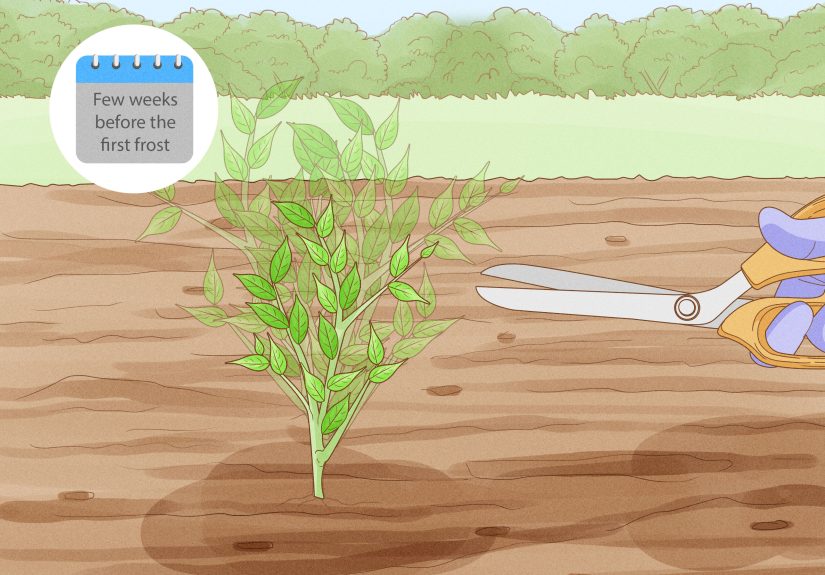
At the end of the growing season, harvest the remaining mature peppers first. Then prune the plant back by roughly one-third to one-half, focusing on keeping a solid framework of healthy main stems. Remove dead, weak, diseased, or excessively lanky growth. If the plant is in a container, this is fairly straightforward. If it is in the ground, many gardeners will only bother digging and saving the healthiest, most productive plants.
After pruning, move the plant to a protected indoor area with cool temperatures and light. Reduce watering sharply. The point is not to keep the plant producing like it is still July. The point is to keep it alive without pushing soft, weak growth. Think of it as pepper plant hibernation, only with less fluff and fewer cartoons.
Why gardeners bother
Overwintered peppers can get a head start the next year because they already have a mature root system. That can mean earlier flowering and earlier harvest compared with brand-new seedlings. This approach is especially appealing if you have a favorite hot pepper variety, a rare plant, or a pepper that performed so well you are not emotionally prepared to say goodbye.
When this is not worth the trouble
Do not overwinter a diseased plant. Do not bother with a weak plant you never liked in the first place. And do not cut back a pepper just because the calendar says so if you have no indoor space to keep it alive. Not every plant needs a heroic rescue mission.
Quick Rules for Successful Pepper Plant Pruning
Whatever method you use, a few basic rules make pepper plant pruning safer and more effective. First, use clean, sharp tools. Second, prune healthy plants, not stressed ones. Third, avoid removing huge amounts of foliage all at once. Fourth, remember that common outdoor peppers usually need only modest pruning. If you are reading about complex stem training systems, those are often meant for greenhouse or high-tunnel production, not the average backyard raised bed.
Also, do not forget that regular harvesting is its own kind of productivity hack. Picking ripe peppers encourages the plant to keep going. So while you may be focused on how to prune pepper plants, do not underestimate the power of simply harvesting often and handling stems gently.
Common Questions About Pruning Pepper Plants
Does pruning always increase yield?
No. Sometimes pruning improves plant structure, airflow, and harvest quality more than raw yield. In some gardens, topping early can increase branching and fruit sites. In others, minimal pruning works just as well. The result depends on variety, climate, plant health, and timing.
Should I remove the first flowers?
If the plant is small and newly transplanted, removing early flowers or tiny fruits can help it establish better before fruiting heavily. If the plant is already vigorous and well-rooted, there is less need to intervene.
Can I prune bell peppers and hot peppers the same way?
Generally, yes. The same principles apply to bell peppers, jalapeños, serranos, and many other garden peppers. Smaller ornamental or naturally compact varieties may need less pruning overall.
Should I remove every sucker?
No. Peppers are not grown the same way as tomatoes. You do not need to chase every side shoot around the plant like it owes you money. Focus on shaping, sanitation, and timing instead.
Conclusion
If you want the simplest answer to how to prune pepper plants, here it is: prune lightly, prune intentionally, and prune for a reason. Top young plants if you want a bushier shape and stronger framework. Thin lower leaves and damaged growth to improve airflow and reduce disease issues. Cut plants back at the end of the season only if you plan to overwinter them or reset them for another round.
The best pepper plant pruning approach is not the most aggressive one. It is the one that matches the season, the plant’s health, and your goal. A few smart snips can help a pepper plant grow sturdier, stay cleaner, and produce better. A pruning frenzy, on the other hand, just leaves everybody stressed. Including the gardener.
Extra Notes from Real-World Pepper-Growing Experience
One of the most useful lessons gardeners learn about pruning pepper plants is that peppers reward patience more than panic. The first time many people grow peppers, they either do nothing at all or they prune like they are trying to win a speed competition. Usually, the best results happen somewhere in the middle. A young bell pepper that gets topped at the right moment often comes back with thicker branching and better balance, while another plant left alone may shoot upward, lean sideways, and demand support later. Neither plant is doomed, but the topped one often feels easier to manage.
Another common experience is realizing that lower leaves can become trouble surprisingly fast. A pepper plant may look perfectly healthy one week, then after a stretch of rain, mulch splash, and heavy humidity, the bottom leaves start looking tired, spotted, or yellow. Gardeners who gently clean up that lower growth often notice the plant looks better almost immediately. It is not magic. It is just better airflow, less mess near the soil line, and fewer places for disease to get established. It also becomes much easier to water at the base and actually see what is happening around the stem.
There is also a funny emotional side to pepper plant pruning. Removing early flowers feels wrong the first time you do it. After all, flowers are future peppers, and future peppers are the entire point. But experienced growers often notice that tiny transplants trying to set fruit too early end up stalling. Once those early buds are pinched off, the plant often seems to take a deep breath, build stronger roots, and return later with more confidence and more flowers. It is a bit like telling a teenager they are not ready to buy a yacht. Disappointing in the moment, probably wise in the long run.
Then there is the lesson almost everyone learns the hard way: too much pruning in hot weather is a bad idea. Pepper fruits love warmth, but they do not love being stripped of leaf cover and left to roast. A plant can go from tidy and open to overexposed very quickly. Gardeners who get enthusiastic with the pruners in midsummer sometimes end up with peppers that look sunburned and annoyed. That is why the best experience-based advice is to prune, then stop, then look again. The plant should still have enough canopy to shade developing fruit.
Finally, overwintering peppers teaches people whether they enjoy gardening for the harvest, the experiment, or both. Some gardeners love cutting back a favorite jalapeño or hot pepper, carrying it indoors, and coaxing it through winter like a botanical houseguest. Others try it once, discover that indoor pepper babysitting is not their passion, and happily start fresh from seed next year. Both outcomes are perfectly valid. The real takeaway is that pruning pepper plants works best when it supports the way you actually garden, not the way a perfectionist internet fantasy says you should.