Table of Contents >> Show >> Hide
- Why a Bee Ends Up Indoors in the First Place
- Before You Do Anything: The Golden Rules
- Way #1: Open One Clear Exit and Let the Bee Follow the Light
- Way #2: Use the “One Light, One Exit” Method After Dark
- Way #3: Trap and Release with a Glass and Stiff Paper
- What Not to Do
- When It Is Not Just One Bee
- What to Do If Someone Gets Stung
- How to Prevent Bees from Getting Inside Again
- Why Gentle Bee Removal Matters
- Final Thoughts
- Real-Life Experiences: What Actually Happens When a Bee Gets Inside
- SEO Metadata
A bee in the house can turn an ordinary afternoon into a tiny indoor action movie. One minute you are folding laundry, the next minute a fuzzy pilot is ricocheting off a window while everyone in the room suddenly develops strong opinions about who should “handle it.” The good news is that getting a bee out of the house is usually simple, safe, and far less dramatic than your uncle with the broom might suggest.
If it is just one stray bee, the goal is not to wage war. The goal is to give it a clear exit, keep people calm, and avoid the kind of chaos that turns one confused insect into a full family event. In most cases, bees indoors are not looking for trouble. They are looking for light, air, flowers, or a way back outside. That means a smart, gentle approach usually works better than swatting, spraying, or trying to reenact a tennis match in your kitchen.
This guide breaks down three practical ways to get a bee out of the house, when to leave it alone, when to use a container-and-card trick, and when the problem is not “a bee” but something bigger, like a nest in the wall. We will also cover what to do if someone gets stung, how to prevent another surprise visit, and a few real-world experiences that prove calm beats panic every time.
Why a Bee Ends Up Indoors in the First Place
Most indoor bee encounters happen for very ordinary reasons. A door stays open too long. A window screen has a gap. Fresh flowers, indoor plants, or bright daylight near a window catch the bee’s attention. Sometimes a bee simply follows the breeze in and then becomes confused because glass looks an awful lot like freedom until it very rudely refuses to cooperate.
It also helps to remember that not every buzzing visitor is a honey bee. Some people call every flying striped insect a bee, when the guest may actually be a wasp, yellowjacket, or hornet. That matters because behavior differs. A single honey bee or other solitary pollinator is often manageable with gentle removal. A social wasp near a nest is a different story entirely. If you are seeing repeated insect activity near a vent, soffit, wall void, chimney, or attic opening, you may be dealing with a colony rather than one lost traveler.
Before You Do Anything: The Golden Rules
Stay calm
Fast movements make people clumsy and insects nervous. A calm room is safer for everyone, including the bee.
Do not swat
Swatting is how simple situations become spicy. A threatened bee is more likely to sting, and a smashed bee solves nothing if the goal is safe removal.
Keep children and pets out of the room
Kids and pets are wonderful, but they are not known for their commitment to staying still around buzzing things. Give yourself space to work.
Avoid insect sprays
For one stray bee, sprays are unnecessary and messy. They are also a poor choice around indoor air, food prep spaces, and beneficial pollinators.
Know when not to DIY
If anyone in the home has a known bee sting allergy, or if you suspect a swarm or a nest inside the structure, skip the heroics and call a beekeeper, licensed pest professional, or building expert as appropriate.
Way #1: Open One Clear Exit and Let the Bee Follow the Light
This is the easiest method and often the best one. Bees naturally orient toward light, especially daylight. If a bee is buzzing at a closed window, it is already telling you what it wants: outside, immediately, preferably with less glass involved.
How to do it
- Close interior doors so the bee stays in one room.
- Open a window or exterior door in that room as wide as possible.
- Turn off indoor lights and close curtains in darker parts of the room.
- Step back and give the bee a minute or two.
The trick here is contrast. You want one obvious bright exit and fewer visual distractions. If the room has multiple windows, open the one nearest the bee and make that side of the room the brightest path out. Do not stand in the opening waving your arms like an airport ground crew member. The bee does not need motivational speaking. It needs a simple route.
This method works best during the day. If the bee is trapped behind blinds or curtains, gently move the fabric aside without pinching the insect. Many bees leave on their own once the path is clear and the room is quiet.
Best for
One active bee in a sunny room, especially when it is hovering near a window.
Way #2: Use the “One Light, One Exit” Method After Dark
Nighttime bee removal is a little trickier because natural daylight is gone and indoor lighting can confuse the situation. Still, you can create an escape route by making the exit area the only bright target.
How to do it
- Turn off most lights in the house or at least in the nearby rooms.
- Open an exterior door or window in the room where the bee is trapped.
- Leave one light on near the opening, or use outdoor light spilling in from that exit.
- Wait quietly and avoid cornering the bee.
If the bee is sluggish, it may not leave quickly at night. That does not necessarily mean it plans to move in and start paying rent. Bees are less active in darkness and cooler temperatures. If it settles on a curtain, wall, or windowsill, that is often your cue to switch to the container-and-card method instead of trying to herd it through the air.
This approach is useful because it avoids frantic chasing. Think of it as interior design for insects: fewer lights, one obvious door, no drama.
Best for
A bee that entered after dusk or one that is circling indoor lamps instead of the window.
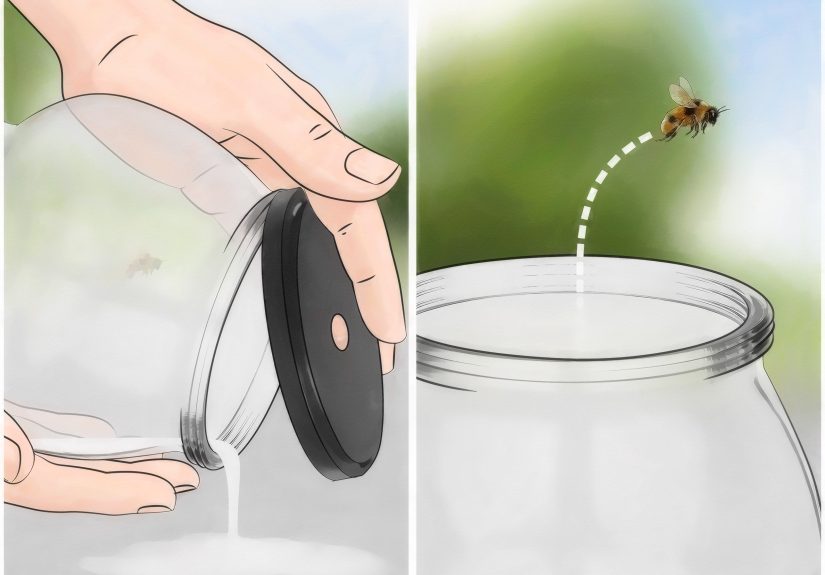
Way #3: Trap and Release with a Glass and Stiff Paper
When the bee will not leave on its own, the most reliable low-stress method is the classic glass-and-paper rescue. It is simple, cheap, and effective, which is a delightful combination in any household emergency involving wings.
What you need
- A clear glass, jar, or plastic container
- A stiff piece of paper, cardstock, thin cardboard, or a postcard
- Steady hands and an indoor voice
How to do it
- Wait until the bee lands on a flat surface like a window, wall, or lampshade.
- Slowly place the container over the bee.
- Slide the paper between the surface and the rim of the container.
- Keep the paper snug against the opening.
- Carry the bee outside and release it away from the doorway.
If the bee is on a curtain or other awkward surface, patience matters. Let it move to a better spot rather than forcing a clumsy capture attempt. A clear container works best because you can actually see what is happening, which reduces the odds of accidental squishing. Nobody wants to be remembered as the person who turned a rescue mission into a tragedy.
Best for
One bee that has landed and is not responding to the open-window approach.
What Not to Do
- Do not swat with towels, magazines, or bare hands. That raises sting risk.
- Do not spray household chemicals. It is overkill for a single bee and a bad move indoors.
- Do not vacuum a lone bee unless it is an absolute last resort. Physical removal is gentler and cleaner.
- Do not assume multiple bees mean “just a few more strays.” Repeated sightings can signal a hidden colony.
When It Is Not Just One Bee
If you see a cluster of bees outside on a branch, fence, mailbox, or wall, that may be a swarm. Swarms are often temporary, and many move on by themselves. Still, they should be left undisturbed, especially if they are in a high-traffic area. A local beekeeper may be able to collect and relocate them.
If bees seem to be entering and exiting the same crack, vent, soffit, or wall space, that may be an established colony. This is not a DIY project. Honey bees inside structures can leave behind wax, brood, and honey. Improper removal can create lingering odor, stains, leaks, or future pest issues. In that case, contact an experienced beekeeper or licensed professional with bee-removal experience. Translation: this is no longer a “grab a glass and be brave” situation.
What to Do If Someone Gets Stung
Even careful removal can occasionally end with a sting. If that happens, deal with it promptly and calmly.
Basic first aid for a mild sting
- Move away from the area.
- If a stinger is present, remove it promptly.
- Wash the area with soap and water.
- Apply a cold compress for pain and swelling.
- Use hydrocortisone cream or calamine if itching develops, if appropriate for the person.
Get emergency help right away if there are signs of a severe allergic reaction
- Trouble breathing
- Swelling of the lips, tongue, or throat
- Widespread hives
- Dizziness, fainting, or vomiting
- Rapid worsening of symptoms
If the person has a prescribed epinephrine auto-injector, follow their emergency plan and seek urgent medical care. Severe sting reactions are not the moment to “wait and see.”
How to Prevent Bees from Getting Inside Again
Prevention is much easier than chasing another surprise guest around the breakfast nook.
Check screens and seals
Repair torn window screens, gaps around doors, and openings near vents, eaves, or utility lines.
Be careful with flowers and food
Fresh-cut flowers, sugary drinks, and ripe fruit near open windows can be surprisingly attractive.
Use doors strategically
If kids, pets, or summer foot traffic turn your back door into a revolving invitation, consider a screen door or automatic closer.
Watch for repeat traffic
One bee is an accident. A steady parade is a clue. If you keep noticing bees in the same room, inspect the exterior for possible entry points or professional evaluation needs.
Why Gentle Bee Removal Matters
Bees are not just random buzzing inconveniences. Many are important pollinators that help support gardens, crops, and ecosystems. That does not mean you should let one set up camp over your stove. It does mean that when a single bee gets trapped indoors, the best response is usually calm relocation rather than instant destruction.
In other words, the bee is not your enemy. It is a lost delivery driver with wings and very poor indoor navigation.
Final Thoughts
If you need the short version, here it is: open one bright exit, darken the rest of the room, and let the bee leave. If that fails, use a container and stiff paper for a quick trap-and-release. And if you are seeing multiple bees or activity coming from the structure itself, call a pro instead of improvising with household chaos and questionable confidence.
Most of the time, the safest way to get a bee out of the house is also the simplest. Be calm. Be gentle. Be smarter than the guy reaching for hairspray. The bee will appreciate it, and so will everyone else in the room.
Real-Life Experiences: What Actually Happens When a Bee Gets Inside
In real homes, bee removal usually looks much less like a nature documentary and much more like a tiny lesson in patience. One of the most common scenarios happens on a bright afternoon when a bee slips in through a back door and heads straight to the nearest window. Homeowners often assume the bee is attacking the glass or “trying to get in deeper,” when the opposite is true. It has already chosen the right direction. In these cases, the fastest fix is usually to open that same window, remove the screen if needed, and back away. The moment there is a true opening instead of transparent betrayal, the bee often leaves in seconds.
Another very common experience happens at night. A porch light is on, the front door opens, and a bee or bee-like insect follows the brightness indoors. Then everybody makes the classic mistake: all the lights stay on. The insect circles the ceiling fixture, the dog loses its mind, and someone suggests a broom like this is medieval pest control. What works better is almost boring in comparison. Turn off the extra lights, leave one nearby exit as the brightest area, and give the insect a calm, obvious path. People are often surprised by how quickly the room settles down once they stop trying to manage the bee like air traffic control with panic.
The container-and-card method also earns its reputation in everyday use. Many people try it for the first time with very little confidence, usually while narrating their own fear. Yet once the bee lands, the process feels surprisingly controlled. A clear drinking glass over the insect, a postcard slipped underneath, a slow walk outside, and done. The biggest lesson most people report is that waiting for the bee to land is half the job. Chasing a flying bee rarely works. Letting it pause turns the rescue from chaotic to simple.
There are also the cautionary experiences. Some homeowners think they have one random bee every few days, only to realize the sightings always happen near the same window trim or fireplace wall. That pattern matters. Repeated appearances in one area can point to bees entering from a structural gap or nesting nearby. People often say they wished they had noticed the pattern sooner, because a professional inspection would have saved time and stress. A single bee is an event. A recurring bee in the same place is information.
Then there is the emotional side, which is honestly half the story. Adults who are completely calm around power tools can become deeply philosophical when a bee enters the living room. Kids swing between fascination and full-speed retreat. Pets either hide or volunteer to make everything worse. The households that handle it best are usually the ones that slow the moment down. One person clears the room, one person opens the exit, and nobody tries to be a legend. That calm approach works so consistently that it becomes its own kind of experience: the more gently people respond, the less dramatic the problem becomes.
The most practical takeaway from real-life encounters is simple. Bees indoors are usually confused, not aggressive. When people stop escalating the situation, the solution gets easier almost immediately. A little light management, a little patience, and a glass plus stiff paper will solve most single-bee situations without injury, chemicals, or household theater. And frankly, avoiding household theater is a public service.