Table of Contents >> Show >> Hide
- How to Build Beautiful Perennial Plant Combinations
- 24 Perennial Plant Combinations That Look Stunning Together
- 1. Lavender + Catmint + Lamb’s Ear
- 2. Coneflower + Black-Eyed Susan + Little Bluestem
- 3. Hosta + Ferns + Heuchera
- 4. Russian Sage + Coreopsis + Ornamental Grass
- 5. Salvia + Peony + Lady’s Mantle
- 6. Daylily + Shasta Daisy + Garden Phlox
- 7. Bleeding Heart + Brunnera + Hellebore
- 8. Bee Balm + Echinacea + Agastache
- 9. Iris + Allium + Nepeta
- 10. Astilbe + Japanese Painted Fern + Hosta
- 11. Sedum + Switchgrass + Aster
- 12. Coral Bells + Foamflower + Woodland Phlox
- 13. Yarrow + Salvia + Lavender
- 14. Geranium ‘Rozanne’ + Roses + Nepeta
- 15. Baptisia + Amsonia + Prairie Dropseed
- 16. Ligularia + Astilbe + Ferns
- 17. Delphinium + Foxglove + Lady’s Mantle
- 18. Helenium + Purple Coneflower + Blue Grama Grass
- 19. Hellebore + Epimedium + Hardy Cyclamen
- 20. Tulips + Brunnera + Bleeding Heart
- 21. Daffodils + Daylilies + Catmint
- 22. Garden Phlox + Monarda + Veronica
- 23. Creeping Phlox + Dianthus + Blue Fescue
- 24. Joe-Pye Weed + New England Aster + Goldenrod
- Design Tips for Making These Combinations Look Professional
- Real-Garden Experience Notes: What Actually Works Over Time
- Conclusion
Some gardens look effortless, as if the plants woke up one morning, held a neighborhood meeting, and agreed to be gorgeous together. The truth is less magical but more useful: beautiful perennial plant combinations are built on smart pairings of color, height, texture, bloom time, foliage, and growing conditions.
Perennials are the dependable friends of the garden world. They return year after year, often getting better with age, as long as you put them in the right spot and resist the urge to treat every sunny flower like it belongs in shade. A strong perennial combination does more than look pretty for two weeks. It creates rhythm in spring, fullness in summer, drama in fall, and sometimes even winter structure when seed heads and ornamental grasses catch frost like tiny garden chandeliers.
Below are 24 perennial plant combinations that look stunning together in real gardens. Some are classic cottage pairings, some are pollinator-friendly native-inspired mixes, and a few are low-maintenance combinations for gardeners who love flowers but do not want their weekends held hostage by a trowel.
How to Build Beautiful Perennial Plant Combinations
Match the Plants to the Same Conditions
The first rule of perennial garden design is simple: plants that live together should actually enjoy living together. Pair sun lovers with sun lovers, shade plants with shade plants, and moisture-loving plants with other moisture-loving plants. Lavender and ligularia may both be beautiful, but one wants dry, sunny conditions while the other prefers cool, moist soil. Put them together and somebody is going to file a complaint.
Think in Layers, Not Lonely Plants
A polished perennial bed usually has a front, middle, and back layer. Tall plants such as Joe-Pye weed, ornamental grasses, delphinium, and garden phlox create height. Medium plants such as coneflower, salvia, bee balm, and daylily provide the main color. Low growers like creeping phlox, sedum, lamb’s ear, and lady’s mantle soften the edges.
Use Contrast Like a Designer
The best perennial pairings often combine opposites: spiky with round, airy with bold, silver with deep green, purple with gold, and soft foliage with strong vertical flowers. Color matters, of course, but texture is what keeps the garden interesting after the first bloom fades.
24 Perennial Plant Combinations That Look Stunning Together
1. Lavender + Catmint + Lamb’s Ear
This sun-loving trio is a dream for dry borders and cottage gardens. Lavender brings fragrant purple spikes, catmint adds clouds of blue-violet flowers, and lamb’s ear softens the whole scene with fuzzy silver foliage. The result feels romantic, relaxed, and just a little bit French without requiring you to own a stone farmhouse.
2. Coneflower + Black-Eyed Susan + Little Bluestem
For a prairie-style perennial combination, pair purple coneflower with golden black-eyed Susan and little bluestem grass. Coneflowers and Rudbeckia provide long-lasting summer color, while little bluestem adds fine texture, movement, and warm fall tones. Leave the seed heads standing into winter for birds and seasonal interest.
3. Hosta + Ferns + Heuchera
Shade gardens do not have to be boring green corners where flowers go to retire. Hostas offer broad, bold leaves; ferns bring feathery movement; and heuchera adds colorful foliage in shades of burgundy, caramel, lime, or silver. Together, they create a layered shade planting that looks elegant even when nothing is blooming.
4. Russian Sage + Coreopsis + Ornamental Grass
Russian sage is airy, silver, and lavender-blue, making it a perfect partner for sunny yellow coreopsis. Add ornamental grass for structure and movement, and you have a drought-tolerant border that glows from midsummer into fall. This combination works especially well in hot, sunny yards where delicate plants tend to faint dramatically.
5. Salvia + Peony + Lady’s Mantle
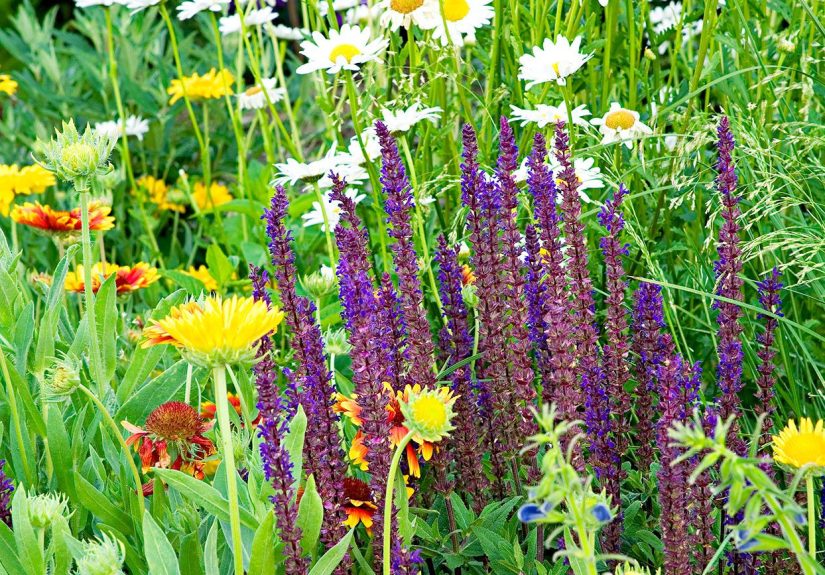
Peonies are the divas of late spring, and honestly, they have earned it. Pair their full, lush blooms with vertical salvia spikes and the chartreuse froth of lady’s mantle. The salvia keeps the planting upright and modern, while lady’s mantle hides bare stems and catches raindrops beautifully on its scalloped leaves.
6. Daylily + Shasta Daisy + Garden Phlox
This cheerful combination gives you a long season of classic summer flowers. Daylilies bloom first in warm yellows, oranges, reds, or pinks. Shasta daisies add crisp white petals and sunny centers. Garden phlox follows with fragrant clusters in pink, lavender, white, or coral. It is bright, friendly, and almost impossible to dislike.
7. Bleeding Heart + Brunnera + Hellebore
For early-season shade, this combination is hard to beat. Hellebores bloom when the garden is barely awake, bleeding heart brings dangling pink or white flowers, and brunnera contributes forget-me-not-like blue blooms plus handsome heart-shaped foliage. After spring flowers fade, the foliage still carries the planting.
8. Bee Balm + Echinacea + Agastache
This pollinator-friendly perennial combination is practically a buffet with petals. Bee balm attracts hummingbirds and bees, coneflower brings butterflies, and agastache adds fragrant spikes that thrive in sunny, well-drained soil. Choose colors in the same family, such as pink, purple, and lavender, for a coordinated look.
9. Iris + Allium + Nepeta
Bearded iris offers sculptural flowers and sword-like leaves. Alliums add purple globes that look like garden fireworks frozen mid-burst. Nepeta, or catmint, softens the base with blue flowers and gray-green foliage. This combination is especially good along pathways where the forms can be admired up close.
10. Astilbe + Japanese Painted Fern + Hosta
Moist shade becomes a showpiece with astilbe, Japanese painted fern, and hosta. Astilbe provides feathery plumes in white, pink, red, or lavender. Japanese painted fern adds silver and burgundy tones. Hosta fills the ground plane with bold leaves. The textures are so good that flowers almost become a bonus.
11. Sedum + Switchgrass + Aster
For late-season beauty, combine upright sedum, switchgrass, and fall-blooming asters. Sedum flowers age from pink to russet, switchgrass adds vertical movement, and asters provide a final burst of blue, purple, or pink when many summer perennials are done. This is a great choice for sunny borders with lean soil.
12. Coral Bells + Foamflower + Woodland Phlox
This gentle shade combination shines in woodland gardens. Coral bells provide colorful foliage, foamflower adds delicate spring blooms, and woodland phlox brings soft blue, lavender, or white flowers. Use it under deciduous trees where spring light is available before the canopy fills in.
13. Yarrow + Salvia + Lavender
For a low-water, pollinator-friendly planting, yarrow, salvia, and lavender make a handsome team. Yarrow’s flat flower clusters contrast with salvia and lavender spikes. The palette can be soft and elegant with white, blue, and pale yellow, or bold with magenta, violet, and gold.
14. Geranium ‘Rozanne’ + Roses + Nepeta
Hardy geraniums, roses, and catmint create a soft, romantic border with very little stiffness. Geranium ‘Rozanne’ weaves through the front with violet-blue flowers, roses provide the main show, and nepeta gives a hazy blue frame. This mix is perfect for cottage gardens and sunny foundation beds.
15. Baptisia + Amsonia + Prairie Dropseed
This native-inspired combination is refined, resilient, and quietly stunning. Baptisia offers pea-like spring flowers and handsome blue-green foliage. Amsonia adds starry blue blooms and golden fall color. Prairie dropseed contributes fine texture and a graceful fountain shape. It is excellent for gardeners who like beauty with backbone.
16. Ligularia + Astilbe + Ferns
If you have moist soil and part shade, ligularia can be spectacular. Its bold leaves and yellow-orange flowers pair beautifully with astilbe plumes and fern texture. This is not a dry-garden combination, but in the right spot it looks lush, dramatic, and slightly tropical.
17. Delphinium + Foxglove + Lady’s Mantle
For vertical cottage-garden drama, combine delphinium, foxglove, and lady’s mantle. Blue delphiniums and pink or white foxgloves create height, while lady’s mantle softens the front with chartreuse flowers. This combination works best in rich, well-drained soil with consistent moisture.
18. Helenium + Purple Coneflower + Blue Grama Grass
Helenium brings fiery orange, red, and gold tones in late summer. Purple coneflower cools the palette, and blue grama grass adds fine texture and distinctive seed heads. It is a strong combination for sunny, naturalistic plantings where you want heat, movement, and pollinator activity.
19. Hellebore + Epimedium + Hardy Cyclamen
This shade combination is subtle but sophisticated. Hellebores bloom early, epimedium forms a graceful groundcover with delicate spring flowers, and hardy cyclamen adds patterned leaves and charming blooms. It is ideal beneath shrubs, along shaded paths, or in woodland-style beds.
20. Tulips + Brunnera + Bleeding Heart
Spring bulbs look better when they have perennial partners. Tulips rise through brunnera and bleeding heart for a layered spring display. As tulip foliage begins to yellow, brunnera leaves expand and help hide the awkward “please do not look at me” stage of bulb dormancy.
21. Daffodils + Daylilies + Catmint
Daffodils bring early spring color, daylilies disguise fading bulb foliage, and catmint fills the border with soft blue flowers in early summer. The strappy leaves of daffodils and daylilies visually blend, making this one of the easiest perennial combinations for beginners.
22. Garden Phlox + Monarda + Veronica
This combination is bright, vertical, and excellent for summer color. Garden phlox provides fragrant flower clusters, bee balm adds shaggy blooms beloved by pollinators, and veronica contributes neat spikes in blue, purple, pink, or white. Give the plants good air circulation to help keep foliage healthy.
23. Creeping Phlox + Dianthus + Blue Fescue
For the front of a sunny border, combine creeping phlox, dianthus, and blue fescue. Creeping phlox carpets the ground in spring, dianthus adds clove-scented flowers, and blue fescue provides cool-toned evergreen or semi-evergreen texture. This combination is tidy, colorful, and excellent near walkways.
24. Joe-Pye Weed + New England Aster + Goldenrod
For a bold late-season pollinator planting, mix Joe-Pye weed, New England aster, and goldenrod. Joe-Pye weed provides height and mauve flower clusters, asters offer purple or pink daisy-like blooms, and goldenrod adds golden plumes. Together they create a fall garden that looks alive with bees, butterflies, and movement.
Design Tips for Making These Combinations Look Professional
Plant in Groups Instead of Onesies
A single plant here and a single plant there can look choppy. Planting in groups of three, five, or seven creates stronger visual impact. Repeating those groups through a border makes the design feel intentional rather than accidental.
Plan for Bloom Gaps
A great perennial garden does not rely on one glorious week. Mix early, midseason, and late bloomers. Pair bulbs and hellebores for spring, salvia and peonies for early summer, coneflowers and phlox for midsummer, and asters, sedum, grasses, and goldenrod for fall.
Do Not Ignore Foliage
Flowers get the applause, but foliage does most of the work. Hostas, ferns, heuchera, lamb’s ear, ornamental grasses, sedum, amsonia, and baptisia all provide structure after blooms fade. When in doubt, choose at least one plant in every combination for its leaves, not just its flowers.
Check Mature Size Before Planting
Small nursery pots are adorable little liars. A plant that looks polite in April may be three feet wide by August. Always check mature height and spread, then give your perennials enough room to grow. Crowding leads to mildew, weak growth, and a garden that looks like rush-hour traffic.
Real-Garden Experience Notes: What Actually Works Over Time
The most beautiful perennial plant combinations are not always the ones that look best on planting day. In fact, planting day can be wildly misleading. Everything is small, evenly spaced, freshly watered, and behaving with nursery-pot manners. The real test comes after one full growing season, when the enthusiastic plants have stretched, the shy plants have revealed whether they intend to participate, and the gardener has learned which corner of the bed secretly becomes dry as toast by July.
One practical lesson from working with perennial combinations is that foliage saves the garden more often than flowers do. A border made only of bloom color can look fantastic for a short window, then collapse into a sea of green confusion. But when you mix bold hosta leaves with fine fern texture, or silver lamb’s ear with upright lavender, the planting keeps its shape even between bloom cycles. This is why combinations like hosta, fern, and heuchera feel so reliable. They are not waiting for flowers to become interesting.
Another experience-based tip: repeat your best performers. If catmint thrives along one sunny path, use it again in another sunny bed. If coneflowers and ornamental grasses handle your summer heat without drama, repeat that rhythm elsewhere. Repetition makes a garden look designed, and it also saves money because you stop experimenting with plants that clearly hate your yard and are only staying out of politeness.
It also helps to combine plants with different personalities. Some perennials are architectural, like iris, allium, switchgrass, and baptisia. Others are soft and billowy, like nepeta, hardy geranium, and Russian sage. Some are seasonal stars, such as peony or delphinium, while others are dependable supporting actors, like lady’s mantle, sedum, and heuchera. The strongest combinations usually include at least one star, one texture plant, and one long-season filler.
Water needs are where many pretty plant combinations succeed or fail. Lavender, yarrow, salvia, and catmint are happiest in sunny, well-drained soil. Astilbe, ligularia, and many ferns prefer more moisture. Mixing those groups in one bed usually means one side of the relationship suffers. The garden may forgive a small design mistake, but it rarely forgives ignoring soil moisture. Right plant, right place is not a boring rule; it is the difference between a thriving border and a slow-motion plant soap opera.
Finally, the best perennial combinations improve when you stop cleaning too aggressively. Leaving some coneflower seed heads, ornamental grass plumes, sedum stems, and black-eyed Susan seed heads into winter gives the garden structure and supports wildlife. The border may not look like a glossy spring catalog in January, but it will have life, texture, and purpose. That is the real beauty of perennial planting: it is not a one-week performance. It is a living composition that changes, settles, surprises you, and occasionally reminds you that plants have opinions too.
Conclusion
Stunning perennial plant combinations come from more than matching pretty flowers. The secret is pairing plants that enjoy the same conditions while offering contrast in height, shape, texture, bloom time, and foliage. Lavender and catmint create soft movement in sunny borders. Hostas and ferns turn shade into a design feature. Coneflowers, black-eyed Susans, asters, goldenrod, and grasses keep pollinators busy and extend beauty into fall.
Start with a few combinations that match your garden’s light and soil, plant them in generous groups, and repeat your favorites. Over time, your perennial garden will look less like a collection of impulse buys and more like a beautiful, layered landscape that returns every year with better stories.
Note: Plant hardiness, bloom time, mature size, and performance can vary by cultivar, region, soil, rainfall, and local climate. Always check your USDA hardiness zone and choose non-invasive plants suited to your area before planting.