Table of Contents >> Show >> Hide
- Why Road Trip Games Matter on Family Vacation
- Quick Safety Note Before the Fun Begins
- 21 Best Road Trip Games for Kids and Families
- 1. The License Plate Game
- 2. I Spy
- 3. The Alphabet Sign Game
- 4. Road Trip Bingo
- 5. 20 Questions
- 6. Would You Rather?
- 7. The Memory Suitcase Game
- 8. Name That Tune
- 9. Road Trip Scavenger Hunt
- 10. Fortunately, Unfortunately
- 11. Categories ABC
- 12. Car Color Count
- 13. The Grocery Store Game
- 14. Story Chain
- 15. Road Trip Trivia
- 16. The Quiet Game
- 17. Guess the Animal
- 18. Movie and Character Connections
- 19. Two Truths and a Fib
- 20. The Counting Challenge
- 21. Build-a-Silly-Sentence
- How to Choose the Right Road Trip Game for Your Kids
- Low-Prep Supplies That Make Car Games Easier
- Tips for Keeping Road Trip Games Fun Instead of Frustrating
- Road-Tested Family Vacation Experience: What Actually Works After Mile 200
- Conclusion
Family road trips are magical in theory: open highways, snack bags, playlists, scenic exits, and the promise of memories that will someday sound charming. In reality, by mile 47, someone has dropped a cheese cracker into the seat crack, someone else needs the bathroom “right now,” and a tiny voice from the back asks the ancient question: “Are we there yet?”
That is where road trip games save the day. The best car games for kids do not require batteries, Wi-Fi, complicated rules, or a parent with the energy of a cruise director. They simply turn passing cars, signs, songs, license plates, clouds, and imagination into entertainment. Better yet, many of these games help kids practice observation, memory, spelling, storytelling, patience, turn-taking, and teamworksneaky learning in a vacation hat.
Below are 21 fun, easy, family-tested road trip games to play on your next vacation. Some are perfect for preschoolers, some are great for tweens, and a few are hilarious enough to make grown-ups forget they have been sitting near a suspiciously warm juice box for three hours.
Why Road Trip Games Matter on Family Vacation
Road trip games do more than fill time. They help kids feel involved in the journey instead of trapped inside it. A good game gives them something to watch for, think about, laugh over, or create. That matters because long drives can be physically still but mentally tiring, especially for younger children who are used to moving, touching, exploring, and asking 900 questions before lunch.
The best family car games are also flexible. You can play for two minutes or 40. You can simplify the rules for little kids or add challenges for older ones. You can use them between screen time sessions, during traffic, after rest stops, or whenever the back seat starts developing its own weather system.
Quick Safety Note Before the Fun Begins
Before launching into games, make sure every child is buckled in the right car seat, booster, or seat belt for their age, height, and weight. Keep games simple enough that the driver does not need to turn around, referee every detail, or hunt for lost markers while moving. The driver can enjoy the laughter, but the passengers should run the game. Safety first, silliness second. It is a powerful combination.
21 Best Road Trip Games for Kids and Families
1. The License Plate Game
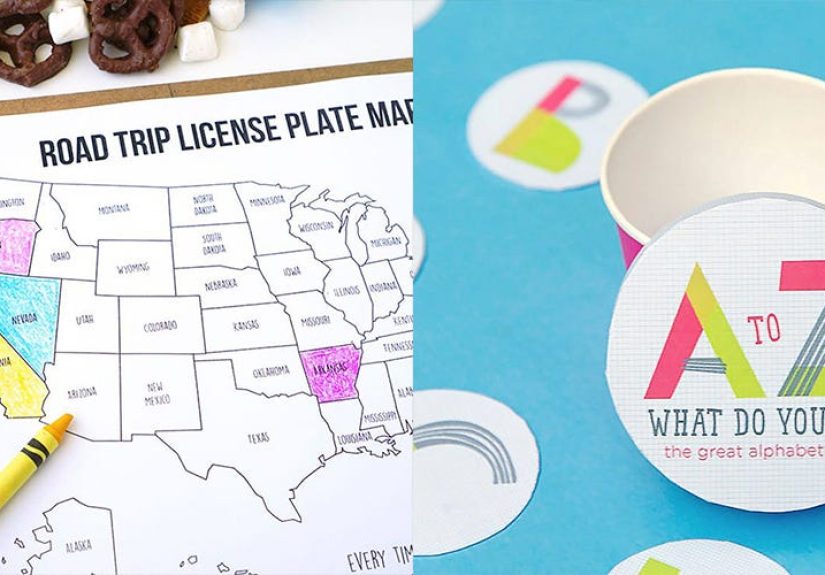
This classic road trip game never really gets old. The goal is to spot license plates from as many states as possible. Younger kids can call out colors or letters, while older kids can keep a checklist of states. For a fun twist, give bonus points for faraway states, unusual plates, or plates that include funny letter combinations.
Best for: Ages 6 and up. Why it works: It turns traffic into a treasure hunt and keeps kids looking outside instead of asking how many miles are left.
2. I Spy
One player says, “I spy with my little eye something…” and gives a clue, usually a color. Everyone else guesses what the object is. In the car, choose things that stay visible long enough to guesslike a backpack, a red truck, a water bottle, or a billboard. Avoid choosing “that bird we passed 12 seconds ago,” unless you enjoy chaos.
Best for: Ages 3 and up. Why it works: It is simple, portable, and perfect for younger kids learning colors and observation skills.
3. The Alphabet Sign Game
Players search signs, billboards, store names, exit markers, and license plates for each letter of the alphabet in order. Everyone starts with A, then moves to B, C, and so on. The tricky lettersQ, X, and Zwill suddenly feel like rare jungle animals.
Best for: Ages 6 and up. Pro tip: Decide before starting whether license plates count. This prevents a courtroom-level argument later.
4. Road Trip Bingo
Create or print bingo cards with common road trip sights: gas station, bridge, dog in a car, police car, camper, red truck, farm, airplane, rest area, or fast-food sign. Kids mark each square when they spot the item. First to complete a row wins.
Best for: Ages 4 and up. Why it works: It gives visual kids a clear goal and can be customized for city drives, beach trips, mountain roads, or national park vacations.
5. 20 Questions
One person thinks of an object, animal, food, place, or famous character. Everyone else gets up to 20 yes-or-no questions to figure it out. “Is it alive?” “Can you eat it?” “Would Grandma scream if it was in the kitchen?” All fair, as long as the answers are yes or no.
Best for: Ages 6 and up. Skill bonus: Kids practice logic, categorizing, and asking better questions.
6. Would You Rather?
Ask silly choice questions: Would you rather ride a dinosaur to school or fly on a giant sandwich? Would you rather eat only pancakes for a week or only spaghetti? Keep it funny, friendly, and age-appropriate. The best part is hearing the explanations, because kids will defend “giant sandwich flight” with shocking confidence.
Best for: Ages 5 and up. Why it works: It sparks conversation and lets kids be creative without needing supplies.
7. The Memory Suitcase Game
Start with the sentence, “I’m going on vacation, and I packed…” The first person adds one item: “a toothbrush.” The next person repeats it and adds another: “a toothbrush and a purple hat.” The list grows until someone forgets an item.
Best for: Ages 5 and up. Variation: Use only silly items, such as “a dancing taco,” “a pet penguin,” or “Dad’s emergency backup flip-flops.”
8. Name That Tune
One person hums, whistles, or plays the first few seconds of a song, and everyone guesses the title or artist. You can use family favorites, movie songs, clean pop hits, cartoon themes, or oldies that parents insist are “real music.”
Best for: Ages 6 and up. Road rule: Keep the volume safe and comfortable so the driver can concentrate.
9. Road Trip Scavenger Hunt
Make a list of things to find along the way: a motorcycle, a blue sign, a tunnel, a cow, a yellow car, a flag, a school bus, a hotel, a river, or a car with a bike rack. Players can compete individually or work as a team.
Best for: Ages 4 and up. Why it works: It rewards attention and can last for an entire travel day.
10. Fortunately, Unfortunately
This storytelling game is wonderfully ridiculous. One person begins with a sentence: “Fortunately, we found a shortcut.” The next person adds: “Unfortunately, the shortcut was through a dragon’s garage.” Keep alternating fortunately and unfortunately until the story collapses into laughter.
Best for: Ages 7 and up. Skill bonus: It builds creative thinking and narrative structure without feeling like homework.
11. Categories ABC
Choose a category, such as animals, foods, cities, sports, or movie characters. Players go through the alphabet naming one item for each letter: alligator, bear, cat, dog. For older kids, set a timer or require more specific categories, like “foods you would actually bring on a road trip.”
Best for: Ages 6 and up. Family warning: Someone will try “xylophone” as an animal. Stay strong.
12. Car Color Count
Each player chooses a car color, then counts how many vehicles of that color they see in five or ten minutes. Common colors like white, black, and silver are easier. Yellow, purple, or orange are bold choices for people who enjoy emotional suspense.
Best for: Ages 3 and up. Why it works: Younger children can play without reading, spelling, or long attention spans.
13. The Grocery Store Game
One player thinks of a grocery item and gives the first letter: “I’m thinking of something in the grocery store that starts with B.” Others guess until someone gets it. Banana? Bread? Broccoli? The answer might be “brownie mix,” because optimism is important.
Best for: Ages 5 and up. Variation: Try different places: zoo, beach bag, camping kit, school backpack, or grandma’s kitchen.
14. Story Chain
One person starts a story with one sentence. Each player adds another sentence. The story might begin with a lost puppy and end with a pizza-delivering astronaut. That is not a problem; that is the magic.
Best for: Ages 5 and up. Pro tip: Give the story a theme, such as “mystery,” “vacation disaster,” or “talking animals,” to help younger kids participate.
15. Road Trip Trivia
Prepare simple trivia questions before leaving, or make them up based on the trip. Ask about states, animals, landmarks, music, sports, family history, or the destination. For example: “What ocean are we driving toward?” or “Which family member once got lost in a gift shop?”
Best for: Ages 7 and up. Why it works: It mixes learning with family storytelling, which is much more fun than another lecture about geography.
16. The Quiet Game
The rules are beautifully simple: whoever stays quiet the longest wins. Parents have loved this game since the invention of wheels. To make it fair, use short rounds of one to three minutes for younger kids. The quiet game should be playful, not a punishment.
Best for: Ages 3 and up. Best timing: Right after a loud game, snack spill, or surprise chorus of “Baby Shark.”
17. Guess the Animal
One player chooses an animal and gives clues one at a time: “It has four legs,” “It lives in the forest,” “It has antlers.” Others guess after each clue. For toddlers, use animal sounds. For older kids, include habitats, diets, or weird facts.
Best for: Ages 3 and up. Skill bonus: It supports vocabulary, memory, and deduction.
18. Movie and Character Connections
One player names a movie, character, actor, or animated universe. The next player must name something connected to it. For example: “Toy Story” connects to “Buzz Lightyear,” which connects to “space,” which connects to “Star Wars.” Keep going until someone gets stuck.
Best for: Ages 8 and up. Why it works: It is great for pop-culture-loving kids and adults who pretend they are not competitive.
19. Two Truths and a Fib
Each person says three statements: two true and one false. The others guess the fib. Keep statements simple for kids: “I have eaten squid,” “I once fell asleep in a restaurant,” “I can juggle five oranges.” Family trips are perfect for this because everyone learns funny things about each other.
Best for: Ages 7 and up. Variation: Use vacation-themed statements only.
20. The Counting Challenge
Pick something to count for a set time: pickup trucks, bridges, dogs, flags, barns, tunnels, or cars with roof boxes. Make teams if you have multiple kids. The object should be common enough to spot, but not so common that everyone loses count after 30 seconds.
Best for: Ages 4 and up. Why it works: It is simple, visual, and perfect when kids are tired but not ready to nap.
21. Build-a-Silly-Sentence
Each player contributes one word to build a sentence. Player one says “The,” player two says “banana,” player three says “drove,” and player four says “backward.” Continue until the sentence feels complete. Then read it aloud dramatically. Bonus points for using a narrator voice that belongs in a nature documentary.
Best for: Ages 5 and up. Skill bonus: It helps kids understand sentence structure while giggling over nonsense.
How to Choose the Right Road Trip Game for Your Kids
Not every game works for every child, every mood, or every mile. A preschooler may love I Spy but lose interest in 20 Questions. A tween may roll their eyes at car color counting but secretly dominate movie connections. The trick is to rotate games before boredom wins.
For younger kids, choose games with quick answers, visual clues, and simple rules. Try I Spy, car color count, animal guessing, bingo, or scavenger hunts. For elementary-age kids, use games that require memory, reading, and categories, such as the alphabet sign game, grocery store game, license plate game, and suitcase game. For tweens and older kids, lean into debate, humor, music, trivia, storytelling, and strategy.
It also helps to match games to the driving environment. On highways, license plates and car colors work well. In cities, signs and alphabet games are easier. In rural areas, scavenger hunts can include barns, cows, tractors, rivers, bridges, and mountains. In traffic, try games that do not depend on scenery, such as Would You Rather, Story Chain, or Two Truths and a Fib.
Low-Prep Supplies That Make Car Games Easier
Many of the best road trip games need no supplies at all, which is wonderful because family packing already feels like preparing for a moon landing. Still, a few simple items can make games smoother. Consider bringing washable markers, dry-erase boards, printed bingo sheets, a clipboard, pencils, sticky notes, a small notebook, and a folder for activity pages.
For kids who get carsick, avoid games that require lots of reading or looking down. Window-based games are usually better. For kids who need quiet time, pack headphones, audiobooks, soft toys, or independent activity books. A good family road trip usually includes a mix of group games, quiet activities, music, snacks, rest stops, and peaceful staring out the window like a tiny philosopher.
Tips for Keeping Road Trip Games Fun Instead of Frustrating
First, keep the rules short. If explaining the game takes longer than playing it, the back seat may file a formal complaint. Second, avoid games where one child gets eliminated early and then has nothing to do except become a professional seat-kicker. Team games often work better for siblings.
Third, adjust difficulty by age. A four-year-old can find red cars while a ten-year-old searches for state plates. A younger child can answer animal sounds while an older child gives habitat clues. The goal is not perfect fairness; it is shared fun without anyone melting into the floor mat.
Finally, know when to stop. Even the best game can become annoying if it continues too long. End on a laugh, switch to music, take a snack break, or let everyone rest. A road trip is not a classroom, a tournament, or a test of parental endurancealthough it may occasionally feel like all three.
Road-Tested Family Vacation Experience: What Actually Works After Mile 200
Here is the honest truth about road trip games: the best ones are not always the cleverest. They are the ones your family will actually play when the car is full, the snacks are slightly crushed, and everyone has already heard the same playlist twice. After a few hours on the road, children do not need a perfect entertainment strategy. They need variety, attention, comfort, and something simple enough to enjoy while buckled in place.
One of the most useful experiences is starting with calm games, not wild ones. At the beginning of a trip, kids are excited. If you immediately launch into loud singing contests or competitive shouting games, the car may reach circus mode before the first gas stop. Start with I Spy, Road Trip Bingo, or the License Plate Game. These games invite kids to observe quietly and settle into the rhythm of travel.
Save the louder games for the slump. Most family trips have a difficult middle stretch: not close to home, not close to the destination, and not close enough to lunch for anyone’s comfort. This is when Would You Rather, Name That Tune, Fortunately Unfortunately, and silly storytelling games shine. They create laughter when the road feels endless. A good ridiculous question can rescue the mood faster than another lecture about patience.
Another lesson: snacks and games are best friends, but choose snacks wisely. Sticky fingers plus paper bingo cards can create modern art no one asked for. Dry snacks, resealable bags, napkins, and a small trash bag can preserve both the car and parental sanity. Use rest stops as game resets. After kids stretch, use the next 20 minutes for a fresh challenge, like “first person to spot a blue truck” or “team scavenger hunt until the next exit.”
For families with different ages, pair older kids with younger ones. Let the older child read bingo squares, give clues, or keep score. This gives them a role beyond “passenger who sighs dramatically.” Younger kids feel included, and older kids often enjoy being in charge if the job feels real. Just rotate roles so the same child is not always the referee, because power in the back seat can go to the head.
It also helps to create family traditions. Maybe every road trip starts with the alphabet game. Maybe the first person to see a yellow car gets to choose the next song. Maybe every vacation includes one dramatic group story about a raccoon who becomes mayor. These silly rituals become the memories kids repeat laternot the exact mileage, not the price of gas, not the exit number, but the funny little moments that made the trip feel like yours.
The biggest experience-based advice is to stay flexible. If a game works, keep it. If it flops, drop it without a speech. If everyone gets quiet, let quiet happen. If the kids invent their own game, celebrate it unless it involves throwing socks. Road trip games are not about forcing fun every minute. They are about giving the family small ways to connect between destinations.
By the time you arrive, you may still have crumbs in the seat, a mysterious missing marker, and a child who insists the purple car count was unfair. But you will also have shared jokes, odd stories, and maybe a new family favorite game. That is the real win. The destination matters, of coursebut the ride can become part of the vacation instead of the thing everyone survives before vacation begins.
Conclusion
The best road trip games for kids are simple, flexible, and fun enough to make the miles feel shorter. Whether your family loves classics like I Spy and the License Plate Game or creative picks like Story Chain and Fortunately Unfortunately, the right car games can turn a long drive into a shared adventure. Mix quiet games with silly ones, adapt rules for different ages, and keep safety at the center of every activity.
Family vacations do not begin when you reach the hotel, beach, cabin, campsite, or theme park. They begin when everyone piles into the car and the first person asks for a snack before leaving the driveway. With these 21 road trip games, you can make that journey happier, calmer, and a lot more memorable.