Table of Contents >> Show >> Hide
- Before You Add Water: A Quick Plan That Saves Money (and Sanity)
- 1) Birdbath (Upgraded with a Dripper or Gentle Bubbler)
- 2) Bubbling Boulder (or Bubbling Rock) Fountain
- 3) Urn or Pot Fountain (Self-Contained Container Fountain)
- 4) Wall Fountain or Water Wall
- 5) Tiered Garden Fountain (Classic Centerpiece Style)
- 6) Container Water Garden (Mini Pond in a Pot)
- 7) Reflecting Pool (Modern, Calm, and Architectural)
- 8) Backyard Pond (Wildlife-Friendly or Koi-Ready)
- 9) Pondless Waterfall (All the Sound, Less of the “Pond”)
- 10) Recirculating Stream or Rill (A “Path” for Water)
- 11) Stock Tank Pool or Plunge-Style Soaking Tub
- How to Choose the Right Water Feature for Your Yard
- Maintenance & Safety Tips (Short, Practical, and Worth It)
- Conclusion: Your Yard Doesn’t Need “More Stuff”It Needs One Great Feature
- Experiences You’ll Have After Adding a Water Feature (The Good, the Funny, and the Surprisingly Real)
There are two kinds of backyards: the kind where you step outside and immediately think, “Nice,” and the kind where you step outside and immediately think,
“I should probably mow… next weekend… definitely.” Water features have an unfair advantage: even a small one can make an outdoor space feel calmer, cooler,
and more intentionallike your yard went to finishing school and came back wearing linen.
The best part? “Water feature” doesn’t automatically mean “massive pond, expensive boulders, and a mysterious electrical bill that looks like it’s paying for a small aquarium.”
You can go tiny (a solar fountain in a container), medium (a bubbling rock), or big (a pondless waterfall that makes neighbors lean over the fence and suddenly act friendly).
Below are 11 types of water featuresplus practical tips, real-life pros and cons, and examples to help you pick the right fit for your space and maintenance tolerance.
Before You Add Water: A Quick Plan That Saves Money (and Sanity)
1) Decide what “refreshing” means to you
- Sound therapy: Choose a fountain, waterfall, or rill for that steady “ahhh” background noise.
- Wildlife magnet: Birdbaths, ponds, and water gardens invite birds, pollinators, and dragonflies.
- Visual wow: Reflecting pools and water walls create a clean, architectural focal point.
- Cooling off: Consider a stock tank pool or plunge-style setup (yes, it counts as a water feature and yes, it’s delightful).
2) Check your “three utilities”: power, water, and drainage
- Power: Pumps usually need a safe outdoor power source. Plan your layout so cords aren’t doing acrobatics.
- Water: Most features recirculate water, but you’ll still top off for evaporation and splash.
- Drainage: Avoid placing features where runoff will dump mulch into your basin like it’s trying to make soup.
3) Choose your maintenance personality
Be honest. Are you a “weekly wipe-down” person or a “I’ll deal with it when it evolves sentience” person?
Low-maintenance options exist (bubbling rocks, pondless waterfalls, simple fountains), but every water feature needs occasional cleaning,
seasonal prep, and a bit of common sense.
1) Birdbath (Upgraded with a Dripper or Gentle Bubbler)
A birdbath is the gateway water feature: affordable, charming, and instantly effective. Add a small dripper, wiggler, or bubbler and you’ll get more visits,
because many birds prefer the sound and sparkle of moving water. Plus, movement helps keep things fresher than a still puddle.
Best for
- Small yards, patios, or anyone who wants wildlife without a construction project
- Front yards (a birdbath can be a subtle, pretty focal point)
Smart example
Place a shallow birdbath near shrubs (for quick cover) but not directly under messy branches. Add a dripper and a couple of flat stones so smaller birds can stand comfortably.
Maintenance reality
Refill often, scrub regularly, and keep it shallow. Your future self will thank youand so will the birds.
2) Bubbling Boulder (or Bubbling Rock) Fountain
If you want “natural spa vibes” without “natural swamp responsibilities,” a bubbling boulder is a brilliant pick.
Water bubbles up through a drilled stone and disappears back into a hidden basin filled with gravel. It looks like it belongs in the landscape,
and it’s surprisingly compact.
Best for
- Low-maintenance homeowners who still want that soothing fountain sound
- Modern, rustic, and cottage-style landscapes (rocks are basically style-neutral)
Smart example
Use a single statement boulder near a seating areaclose enough to hear it, far enough that splash doesn’t decorate your outdoor cushions.
Pair with ornamental grasses or hostas to soften the edges.
Maintenance reality
Check water levels during hot weather and rinse the gravel occasionally. It’s mostly “set it and enjoy it.”
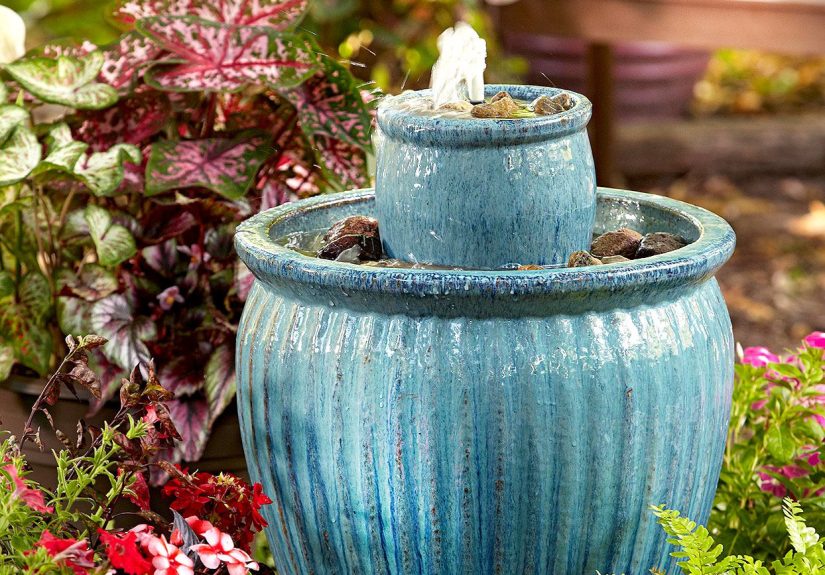
3) Urn or Pot Fountain (Self-Contained Container Fountain)
A pot fountain is the overachiever of small water features: it fits on patios, looks custom, and doesn’t require digging a crater in your yard.
Water flows over (or from) a ceramic, concrete, or resin vessel into a concealed reservoir. It’s the “cute but capable” option.
Best for
- Patios, courtyards, and entryways
- People who want a focal point without a major build
Smart example
Put a tall urn fountain near your front door for instant curb appeal. Add low lighting so it glows at night like a fancy outdoor candle… but wetter.
Maintenance reality
Keep an eye on algae in sunny spots and top off water more often if the vessel splashes.
4) Wall Fountain or Water Wall
Want maximum drama with minimum footprint? A wall fountain gives you vertical impactperfect for tight spaces.
Styles range from classic lion-head spouts to sleek modern water walls where a thin sheet of water travels down stone, glass, or metal.
Best for
- Small yards, patios, and privacy walls
- Anyone craving a “resort courtyard” vibe
Smart example
Install a water wall on a blank fence section near your dining area. The sound can soften neighborhood noise (and distract from the fact that your dog is barking at clouds).
Maintenance reality
Water walls can show mineral deposits more quickly, so occasional wipe-downs help keep the surface looking crisp.
5) Tiered Garden Fountain (Classic Centerpiece Style)
The tiered fountain is timeless for a reason: it looks intentional, it sounds pleasant, and it can anchor a garden bed like a sculptureonly more relaxing.
It works especially well in formal gardens, symmetrical layouts, or anywhere you want that “European courtyard” feeling.
Best for
- Traditional landscapes, cottage gardens, and formal patios
- People who want a strong focal point without building a pond
Smart example
Place a tiered fountain at the end of a pathway or in a circular planting bed. Surround it with lavender, boxwood, or seasonal color.
Maintenance reality
You’ll likely clean it a few times per season, especially if it’s under trees. Consider a recirculating pump with a simple filter.
6) Container Water Garden (Mini Pond in a Pot)
A container water garden is exactly what it sounds like: a small, contained ecosystemwater plants, maybe a floating bloom, possibly a tiny fountain attachment.
It’s perfect if you want the beauty of aquatic plants without committing to an in-ground pond.
Best for
- Patios, balconies, and renters (with permission)
- Gardeners who love plants as much as they love a good weekend project
Smart example
Use a half-barrel or large ceramic pot. Add aquatic plants (think floaters and marginal plants), tuck a small solar fountain in the middle,
and surround the container with potted ferns for a lush “micro-oasis.”
Maintenance reality
Top off water and remove decaying leaves. If you keep it in full sun, you may see more algaeshade helps.
7) Reflecting Pool (Modern, Calm, and Architectural)
Reflecting pools are the quiet luxury of backyard water features. The water is typically still or gently moving, creating mirror-like reflections
of nearby plants, sculpture, or your favorite tree. It’s less “splashy waterfall” and more “Zen museum courtyard.”
Best for
- Modern landscapes, minimalist patios, and formal garden designs
- Homeowners who care about clean lines and a polished look
Smart example
Build a rectangular basin near a seating area with one simple bubbler jet in the center to keep water from going stagnant.
Pair with large-format pavers and sculptural plantings.
Maintenance reality
Still water shows debris quickly, so plan for skimming and occasional cleaning. The payoff is worth it if you love a tidy aesthetic.
8) Backyard Pond (Wildlife-Friendly or Koi-Ready)
A backyard pond can be a miniature ecosystem: birds drink, dragonflies patrol, frogs sometimes move in like they own the place.
You can keep it wildlife-friendly (plants + circulation) or design it to support fish. The key is planning for water quality, circulation, and safe edges.
Best for
- Nature lovers who want a living landscape feature
- Yards with space for a defined pond zone and nearby plantings
Smart example
Create a small pond with a mix of aquatic plants and a pump that keeps water moving. Add flat stones around the edge for safe access and a natural look.
Consider adding marginal plants around the perimeter to blend the pond into the garden.
Maintenance reality
Ponds need seasonal care: remove debris, monitor algae, and keep the pump running properly. Circulation helps discourage mosquitoes and keeps the water clearer.
9) Pondless Waterfall (All the Sound, Less of the “Pond”)
A pondless waterfall is a crowd favorite because it gives you the drama of moving water without a visible pool of standing water.
Water cascades over rocks into an underground reservoir, then recirculates via pump. It’s a great solution for families with kids,
smaller yards, or anyone who wants the waterfall soundtrack without daily pond babysitting.
Best for
- People who want a waterfall but prefer fewer open-water concerns
- Sloped yards (gravity is your friend here)
Smart example
Use a two- or three-tier cascade near a patio. Add landscape lighting so the moving water catches highlights at night.
Bonus: it makes even a modest backyard feel like a destination.
Maintenance reality
You’ll still top off water and clear leaves from the reservoir area, but overall it tends to be simpler than a full pond.
10) Recirculating Stream or Rill (A “Path” for Water)
If a waterfall is the headline act, a stream is the full album. A recirculating stream (or a shallow rill) guides water along a channel
sometimes alongside stepping stonesbefore it returns to a basin. It looks natural, sounds incredible, and creates movement through the landscape.
Best for
- Yards where you want water to travel, not just sit in one spot
- Landscapes with winding paths, boulders, or naturalistic planting styles
Smart example
Run a narrow rill next to a walkway, then let it spill into a hidden basin. Plant moisture-loving perennials nearby for that “lush edge” effect.
Maintenance reality
Streams collect leaves and debris, so plan for easy access to clean. A simple intake screen on the pump helps.
11) Stock Tank Pool or Plunge-Style Soaking Tub
If your definition of “refreshing” involves actual refreshing, this one’s for you. Stock tank pools and plunge-style soaking tubs have become popular
because they deliver a compact “pool moment” without the cost and permanence of a full in-ground pool.
They can double as a design feature: crisp, modern, and unexpectedly charming.
Best for
- Hot climates, sunny yards, and people who like the idea of a quick dip
- Small spaces where a traditional pool is unrealistic
Smart example
Set a stock tank pool on a gravel pad or small deck. Add an outdoor shower nearby (even a simple hose attachment can feel fancy),
then frame the area with potted plants and a shade umbrella.
Maintenance reality
You’ll need a plan for filtration and cleanliness. Think of it as “pool-light”: still manageable, but not a zero-maintenance birdbath situation.
How to Choose the Right Water Feature for Your Yard
Match the feature to your time
- Low maintenance: Bubbling boulder, urn fountain, pondless waterfall
- Medium: Tiered fountain, wall fountain, container water garden
- High (but rewarding): Pond, stream/rill, reflecting pool
Think like a sound engineer
Water volume and drop height change the sound. A gentle bubbler is subtle. A taller fall is louder and can help mask road noise.
If you entertain outdoors, place the water sound near seating so you enjoy it without shouting, “WHAT?” across the table.
Plan for water quality (aka: keep it from getting weird)
- Circulation helps. Moving water is less inviting to mosquitoes and tends to stay fresher.
- Shade reduces algae. Full sun can turn a basin into a green smoothie.
- Simple cleaning wins. Easy-to-access basins and removable pump parts are a gift to your future self.
Maintenance & Safety Tips (Short, Practical, and Worth It)
Keep water moving when possible
Circulation is your best friend for clarity and comfort. If you’re using any feature with standing water, consider a pump, bubbler, or small waterfall return.
Be smart about electricity
Outdoor water features and electricity can coexist peacefullyas long as everything is installed safely and appropriately.
Use outdoor-rated equipment and keep cords and outlets protected from water. If you’re unsure, a licensed electrician is cheaper than a bad day.
Do a seasonal reset
- Spring: Clean basins, rinse pumps, check tubing and fittings, refresh water.
- Summer: Top off water, skim debris, remove algae early (before it becomes a lifestyle).
- Fall: Use netting if leaves are heavy; clear intakes frequently.
- Winter: In freezing climates, follow manufacturer guidance for draining/storing pumps or using winter-safe equipment.
Conclusion: Your Yard Doesn’t Need “More Stuff”It Needs One Great Feature
The right water feature doesn’t just add visual interest; it changes how a space feels. A small fountain can make a patio feel finished.
A pondless waterfall can turn a boring corner into a destination. A birdbath can transform your morning coffee routine into a tiny nature documentary.
Choose a style that matches your yard, your budget, and your willingness to do maintenance, and you’ll get the biggest benefit of all:
a backyard you actually want to use.
Experiences You’ll Have After Adding a Water Feature (The Good, the Funny, and the Surprisingly Real)
People often expect a water feature to be a “decor upgrade,” but the first experience is usually sensory. The sound changes everything.
Even a modest bubbler can soften sharp noisestraffic, neighbors, that one lawnmower that starts at the exact moment you sit down.
Many homeowners describe the water sound as a built-in “pause button”: you step outside, hear it, and your shoulders drop a little.
It’s not magic, but it’s close enough that your brain won’t complain.
The second experience is that you’ll start noticing your yard more. Water features pull your attention into the landscape: you’ll catch reflections in a basin,
watch ripples move, and (if you have a pond or birdbath) you’ll see wildlife patterns you never noticed before. Birds tend to become regulars, like tiny customers
with strong opinions about cleanliness. Dragonflies may show up and do patrol laps like they’re hired security. If you’ve ever wanted your garden to feel “alive,”
water is the shortcut.
Then comes the very practical experience: evaporation is real. On hot days, you’ll top off more often than you expectedespecially with small fountains and sunny basins.
The good news is that it’s easy, and most features recirculate water rather than constantly using fresh water. Still, you’ll quickly learn that “I’ll fill it later”
is how pumps end up running dry, and pumps are not fans of dry. (This is also when people suddenly become emotionally invested in a simple water-level routine.)
You’ll also discover that maintenance is less about “hard work” and more about “tiny habits.” Skimming leaves, wiping a surface, rinsing a filterthese take minutes,
but they prevent the bigger, grosser cleanups. Many homeowners end up scheduling quick checks the same way they water plants: a short loop around the yard with a purpose.
And once you do it a couple of times, it becomes oddly satisfyinglike the outdoor version of loading the dishwasher correctly.
Finally, there’s the social experience: people comment on water features. Guests gravitate toward them. Kids watch them. Even the neighbor who never talks suddenly asks,
“So… how’d you do that?” Water features make your yard feel intentional, and that changes how everyone treats the spaceincluding you. You stop seeing your backyard as
“the area behind the house” and start seeing it as a place. And honestly, that’s the most refreshing upgrade of all.