Table of Contents >> Show >> Hide
- 1. Use Your Vertical Space Like It Owes You Money
- 2. Add Pull-Out Storage Inside Cabinets
- 3. Put Drawer Organizers to Work
- 4. Turn Cabinet Doors Into Hidden Storage
- 5. Make Corner Cabinets Less Annoying
- 6. Get Small Appliances Off the Counter
- 7. Add Open Shelving Carefully, Not Recklessly
- 8. Use Overlooked Spaces: Toe Kicks, Above Cabinets, and Around the Fridge
- 9. Create Zones With Bins, Risers, and Turntables
- 10. Bring in Flexible Furniture
- Conclusion
- Bonus: Real-Life Experiences With Small-Kitchen Storage Ideas
If your kitchen is so small that opening the dishwasher requires diplomatic negotiations with a cabinet door, welcome. You are among friends. A tiny kitchen can feel like a daily puzzle: Where do the pans go? Why are there six coffee mugs on the counter? And who invited that avalanche of reusable water bottles?
The good news is that you do not need a dream remodel, a celebrity designer, or a magical pantry that appears when the moon is full. You need smart small-kitchen storage ideas that make every inch work harder. The best tiny-kitchen solutions do three things at once: they free up counter space, make everyday items easier to grab, and reduce visual clutter so the room feels bigger than it is.
Below are 10 practical, stylish ways to maximize kitchen space without turning your home into a hardware store showroom. These ideas combine real-world function with small-space design tricks, so your kitchen can be more organized, more efficient, and a lot less chaotic.
1. Use Your Vertical Space Like It Owes You Money
When floor space is limited, your walls become prime real estate. One of the smartest small kitchen storage ideas is to think upward instead of outward. Floating shelves, narrow wall-mounted shelves, rails, pegboards, and hanging hooks can turn blank walls into hardworking storage zones.
This is especially useful for items you use all the time: mugs, measuring cups, cooking utensils, cutting boards, or a few attractive canisters. By moving these items off the counter and onto the wall, you instantly create breathing room where you need it most.
How to make it work
Keep the look clean by limiting wall storage to everyday essentials. If you hang everything you own, your kitchen will look less “organized chef’s nook” and more “yard sale with a stove.” Match hangers or containers when possible, and group similar items together so the arrangement feels intentional.
2. Add Pull-Out Storage Inside Cabinets
Traditional lower cabinets are basically dark caves with a door. You crouch down, reach into the void, and hope to find the olive oil before your knees file a complaint. Pull-out shelves and drawers fix that problem beautifully.
Installing pull-out storage inside base cabinets makes pots, pans, mixing bowls, dry goods, and small appliances easier to see and easier to reach. Instead of stacking items three layers deep and forgetting what you own, you can slide the storage out and access everything in seconds.
Best places for pull-outs
Base cabinets near the stove are ideal for cookware, oils, spices, and utensils. Pull-outs also work well in pantry cabinets, under the sink, and in those awkward narrow gaps beside appliances. If you have a sliver of space between the refrigerator and the wall, a slim rolling pantry can become a secret weapon for canned goods, spices, and snacks.
This is one of the most effective ways to maximize kitchen space because it uses the full depth of cabinets without making you crawl halfway inside them like a raccoon with a mission.
3. Put Drawer Organizers to Work
A junk drawer may be a universal human right, but the rest of your drawers should have goals. Deep drawers are fantastic in a small kitchen, but only if they are organized. Without dividers, utensils slide around, lids tangle together, and finding the garlic press becomes a scavenger hunt.
Use drawer inserts, dividers, and small bins to assign everything a home. Store utensils by category, line up spices in shallow drawers, and consider vertical dividers for baking sheets, cutting boards, and pot lids. Even plates and bowls can work in deep drawers if you add the right supports.
Why drawers often beat cabinets
Drawers bring items to you. Cabinets make you dig. In a tiny kitchen, that distinction matters. Organized drawers can hold more, waste less space, and make daily cooking feel smoother. It is one of those rare upgrades that feels fancy and sensible at the same time.
4. Turn Cabinet Doors Into Hidden Storage
The inside of a cabinet door is the overachiever of kitchen organization. It quietly sits there, doing nothing, when it could be holding measuring spoons, cleaning supplies, foil boxes, spice jars, or pantry odds and ends.
Adding shallow bins, hooks, or slim racks to cabinet doors is an easy way to create hidden storage without taking up extra room. This trick works especially well under the sink, where cleaning bottles and sponges tend to multiply when nobody is looking.
What to store on doors
Choose lightweight items and keep the setup low-profile so doors still close comfortably. Think food wrap, zip bags, gloves, dish tabs, scrub brushes, or small packets. If you try to mount a cast-iron skillet collection on the inside of a cabinet door, the cabinet may stop cooperating with your dreams.
5. Make Corner Cabinets Less Annoying
Corner cabinets are notorious for swallowing kitchen tools whole. Somewhere in America, a waffle maker has been missing since 2019 because it was shoved into a blind corner cabinet and never seen again.
Lazy Susans, turntables, and pull-out corner organizers solve this problem by making awkward areas accessible. Instead of stacking items in hard-to-reach piles, you can rotate or pull them forward. That means less wasted space and fewer duplicate purchases because you forgot you already owned paprika. Twice.
Smart uses for corner storage
Store oils, vinegars, sauces, baking supplies, or small pantry staples on a turntable. In deeper cabinets, a two-tier lazy Susan can double the usable space. This is a simple fix, but it has a huge effect on daily function, especially in compact kitchens where every cabinet matters.
6. Get Small Appliances Off the Counter
If your toaster, air fryer, coffee maker, blender, and stand mixer all live on the counter full-time, your workspace is basically gone. One of the best small kitchen hacks is to decide which appliances deserve permanent visibility and which ones should be stored nearby but out of sight.
An appliance garage, a dedicated cabinet shelf, a rolling cart, or a pantry zone can keep bulky items accessible without letting them dominate the room. The goal is not to hide everything you own. The goal is to stop your counters from looking like an electronics aisle with crumbs.
A practical rule
Keep only your most-used appliance on the counter. For many households, that is the coffee maker. Everything else should earn its spot. If you use the blender twice a week and the waffle maker once every presidential administration, they do not both need front-row seating.
7. Add Open Shelving Carefully, Not Recklessly
Open shelving can be a great small-kitchen storage solution because it keeps a room feeling lighter than bulky upper cabinets. It also gives you quick access to plates, bowls, glasses, and other daily essentials. But there is a catch: open shelves only look charming when they are edited well.
If you treat them like a storage free-for-all, they become visual noise. The trick is to store attractive, frequently used items there and keep the color palette simple. Everyday dishes, glassware, a few jars, and maybe one or two decorative pieces are enough.
When open shelving works best
Use open shelves when you want to reduce heaviness at eye level or when your kitchen feels boxed in by upper cabinets. If you prefer a quieter look, combine one small section of open shelving with mostly closed storage. That balance gives you airiness without requiring museum-level styling every Tuesday.
8. Use Overlooked Spaces: Toe Kicks, Above Cabinets, and Around the Fridge
Small kitchens reward creativity. Some of the best storage opportunities are hiding in places people usually ignore: the toe-kick under cabinets, the area above upper cabinets, and the skinny gaps beside or above the refrigerator.
Toe-kick drawers are brilliant for flat items like sheet pans, cooling racks, placemats, or table linens. The space above cabinets can hold bins for seasonal or rarely used items. And a narrow gap beside the fridge can become a slim pull-out pantry that stores more than you would think.
The key to using “bonus” spaces well
Store less-used items there, not your daily essentials. You do not want to climb for cumin every evening or crawl for parchment paper three times a day. Think holiday platters, backup paper towels, lunch bags, or specialty bakeware.
9. Create Zones With Bins, Risers, and Turntables
A small kitchen feels bigger when it is easier to navigate. That is where zones come in. Instead of tossing pantry items, snacks, spices, or baking supplies into a cabinet and hoping for the best, group them by use.
Use clear bins for snacks, risers for canned goods, turntables for sauces and condiments, and narrow containers for baking ingredients. Zoning helps you see what you have, use it before it expires, and avoid buying your fourth jar of cinnamon because the other three vanished behind a bag of rice.
Zones that work in real life
Try a breakfast zone, coffee zone, lunch-packing zone, baking zone, and cooking zone. This approach saves time because everything you need for a task is stored together. It also helps other people in the house find things without shouting, “Where do we keep the strainers?” from three feet away.
10. Bring in Flexible Furniture
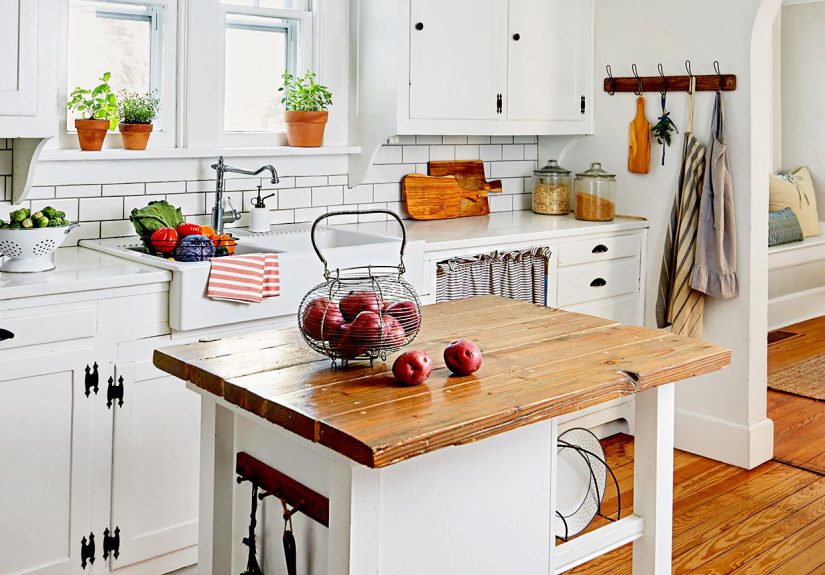
Not every small kitchen has room for an island, but many can benefit from a mobile piece that adds storage and function. A slim rolling cart, narrow utility trolley, bar cart, or bench with hidden storage can do a surprising amount of work in a tight footprint.
A rolling cart can become a coffee station, produce shelf, baking center, or overflow pantry. Because it moves, it adapts to the way you cook. You can tuck it into a corner when not in use, then roll it beside your prep area when dinner gets serious.
Why flexible furniture matters
In a compact kitchen, fixed storage is not your only option. Portable pieces let you add capacity without committing to a renovation. They are especially helpful for renters, apartment dwellers, or anyone who wants better kitchen organization without drilling into every available surface.
Conclusion
The best small-kitchen storage ideas are not about cramming more stuff into the room. They are about making your kitchen easier to use. When you go vertical, install pull-outs, organize drawers, use cabinet doors, reclaim corners, hide bulky appliances, and create clear zones, even a tiny kitchen can feel efficient and calm.
Start with the biggest pain point. If your counters are crowded, tackle appliances first. If you cannot find anything in your cabinets, add pull-outs or bins. If your kitchen feels tight and heavy, lighten the visual load with edited open shelving and better wall storage. You do not need to do everything at once. A few strategic changes can make your kitchen feel dramatically larger, smarter, and more pleasant to cook in.
In other words, your small kitchen may never become a sprawling chef’s paradise, but it can absolutely stop behaving like a game of storage Tetris.
Bonus: Real-Life Experiences With Small-Kitchen Storage Ideas
Living with a small kitchen teaches you things very quickly. First, every flat surface becomes a magnet for clutter. Second, the item you use most is always somehow behind the item you never use. Third, good storage is not just about aesthetics. It changes how a kitchen feels when you cook, clean, shop, and move through the room.
One of the biggest lessons people learn is that visual clutter feels heavier in a small kitchen than in any other room. A blender on the counter, a bag of potatoes in the corner, three oils by the stove, and a stack of mail by the fruit bowl can make a perfectly decent kitchen feel cramped in about six seconds. But once those same items are assigned homes, the room suddenly feels more open, even though the square footage has not changed at all. That shift is surprisingly emotional. You stop feeling like the kitchen is working against you.
Another common experience is that vertical storage feels awkward at first and brilliant later. Many people hesitate to hang things on walls because they worry it will look busy. But when done in a tidy, limited way, wall storage often makes a small kitchen feel more functional, not more crowded. A simple rail for utensils or hooks under a shelf for mugs can free up a drawer and a cabinet at the same time. That is the kind of tiny win that makes you weirdly proud while making toast.
Pull-out storage also tends to become an instant favorite. Before adding it, people often assume their cabinets are simply too small. After adding it, they realize the real problem was access. Deep cabinets waste space when you cannot reach the back easily. Once shelves slide out, everything becomes visible, and you stop buying duplicates because you can finally see the chickpeas, the paper towels, and the spare vanilla extract hiding in the shadows.
Open shelving creates a different kind of experience. It can feel airy and helpful, but it also demands honesty. If you are not willing to keep it edited, it can become a stage for mismatched mugs and pantry chaos. People who love open shelving usually store a small number of attractive, everyday pieces there and let closed cabinets do the heavy lifting. That balance tends to work best in real homes.
Perhaps the most useful lesson is that small kitchens reward systems, not perfection. A snack bin, a coffee zone, a lid organizer, or a narrow cart may seem minor on its own. Together, those changes create flow. You cook faster. You clean up faster. You know what you have before shopping. And the kitchen feels less like a storage problem and more like a room you actually enjoy using. That is the real goal: not a picture-perfect kitchen, but one that supports real life with a little less stress and a lot more elbow room.