Table of Contents >> Show >> Hide
- Why These Dreamlike Places Feel So Unreal
- 1. Salar de Uyuni, Bolivia
- 2. Antelope Canyon, Arizona, USA
- 3. Cappadocia, Türkiye
- 4. Waitomo Glowworm Caves, New Zealand
- 5. Pamukkale, Türkiye
- 6. Zhangjiajie National Forest Park, China
- 7. Plitvice Lakes National Park, Croatia
- 8. Moraine Lake, Banff National Park, Canada
- 9. Giant’s Causeway, Northern Ireland
- 10. Zhangye Danxia National Geopark, China
- What Visiting Dreamlike Places Actually Feels Like
- Final Thoughts
- SEO Tags
Some places on Earth are so visually outrageous they make your brain do a double take. You know the feeling: you look at a photo, squint suspiciously, and assume someone got a little too enthusiastic with the saturation slider. Then reality taps you on the shoulder and says, “Nope, that’s real. Pack a bag.”
From mirror-like salt flats and glowing caves to striped mountains and blue-white terraces, the planet is wildly committed to showing off. These are the kinds of dream travel destinations that seem invented by a fantasy novelist with a geology obsession. But they exist. You can visit them. And yes, they are every bit as surreal as the photos suggest.
Below are 10 incredible real places straight out of a dream, chosen for their strange beauty, unforgettable atmosphere, and genuine bucket-list appeal. Some are natural wonders sculpted over millions of years. Others feel magical because of the way light, color, weather, and landscape collide in one ridiculous, glorious moment. All of them prove the world is much weirder, lovelier, and more cinematic than we give it credit for.
Why These Dreamlike Places Feel So Unreal
The most surreal places on Earth usually have one thing in common: they mess with your expectations. Water looks solid. Rock looks liquid. Mountains appear painted. Caves sparkle like galaxies. A coastline looks as if a giant carefully stacked hexagons for fun. These places don’t just look beautiful; they challenge your sense of what a landscape is supposed to do.
That’s what makes them so memorable. You are not simply sightseeing. You are standing inside a scene that feels borrowed from a dream, a fantasy film, or the world’s most overachieving screensaver.
1. Salar de Uyuni, Bolivia
The world’s most famous mirror, and for good reason
Salar de Uyuni is the kind of place that makes horizons disappear. In the dry season, it stretches out as a vast white expanse of salt patterned into geometric tiles. After seasonal rains, a thin layer of water transforms the flats into an enormous natural mirror, reflecting the sky so perfectly that clouds seem to float under your feet. It is less “nice view” and more “did I just walk into the wallpaper on a meditation app?”
What makes it unforgettable is the scale. This is not a cute little reflective puddle for influencers. It is a giant, hypnotic, otherworldly landscape where distance becomes hard to judge and photographs start looking like visual pranks. If you’ve ever wanted to feel tiny, awestruck, and oddly poetic all at once, this is your place.
2. Antelope Canyon, Arizona, USA
A sandstone wave frozen in motion
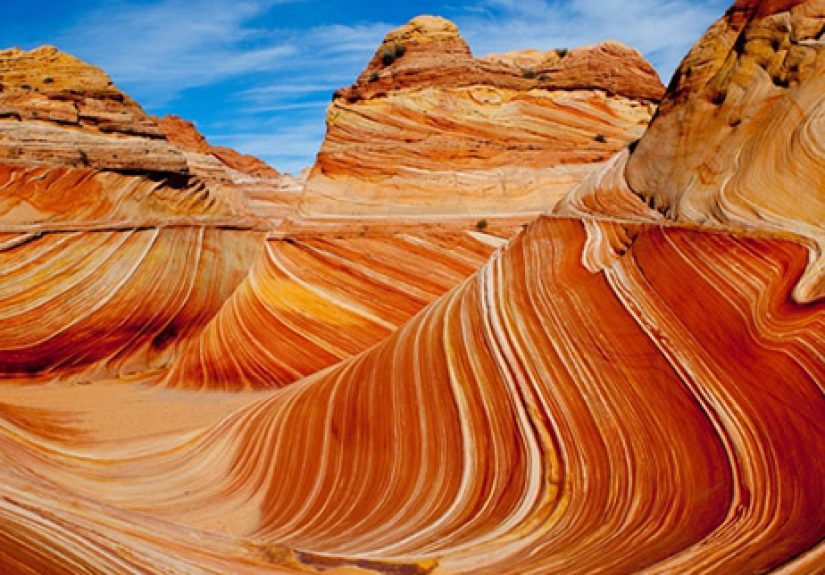
Antelope Canyon looks like nature took a ribbon, twisted it through fire-colored stone, and then decided to add dramatic lighting for flair. This slot canyon is famous for its curving walls, narrow passageways, and the way sunlight filters through the openings above. The result is a glowing swirl of reds, oranges, pinks, and golds that feels almost too elegant to be geological.
It is one of the most photographed dreamlike places in the American Southwest, and once you see it, that makes perfect sense. The walls seem to move even when they are still. Every bend reveals a new shape, a new shadow, or a shaft of light that looks suspiciously like it was arranged by a very talented stage director. It is proof that erosion has impeccable taste.
3. Cappadocia, Türkiye
Fairy chimneys, cave dwellings, and a sky full of balloons
Cappadocia already sounds fictional, which honestly feels on-brand. This region is famous for its “fairy chimneys,” those tall, whimsical rock formations shaped by volcanic deposits, wind, and water over time. Add cave churches, underground cities, and sunrise hot-air balloons drifting over the valleys, and the whole place starts to feel less like a destination and more like a beautifully unhinged bedtime story.
The magic here is layered. At ground level, the landscape feels sculptural and ancient. From above, it looks like a fantasy kingdom with soft folds of rock and secret hideaways tucked into the hills. If a dragon flew by in the distance, most visitors would probably just nod and say, “Yes, that tracks.”
4. Waitomo Glowworm Caves, New Zealand
An underground night sky made by living creatures
The Waitomo Glowworm Caves turn darkness into spectacle. Inside, thousands of glowworms illuminate the cave ceiling with tiny blue points of light, creating the eerie illusion of a star-filled sky underground. Floating through the grotto by boat feels quiet, intimate, and just slightly unreal, as though the universe accidentally spilled into a cave and nobody wanted to clean it up.
Part of the wonder is the contrast. Above ground, New Zealand offers rolling green scenery. Below ground, Waitomo becomes moody, hushed, and celestial. It’s one of those rare places that does not need hype. The visual itself is the story, and that story is basically, “Surprise, the cave has its own galaxy.”
5. Pamukkale, Türkiye
Terraces that look like snow, clouds, and marble all at once
Pamukkale means “cotton castle,” which is both a charming nickname and a pretty fair description. Mineral-rich thermal waters have slowly created white travertine terraces that cascade down the hillside in shallow pools. The bright white formations paired with pale blue water make the whole scene look like winter and summer accidentally scheduled the same shift.
What makes Pamukkale so striking is the softness of its appearance. It looks fluffy from a distance, yet it is entirely stone. It feels delicate, but it was built by geology with patient, microscopic persistence. The dreamlike effect comes from that contradiction: it seems airy and unreal, even though it is a natural formation shaped over a very long time.
6. Zhangjiajie National Forest Park, China
The mountain world that seems to float in the clouds
Zhangjiajie is famous for its towering stone pillars that rise dramatically from forested ravines and often vanish into mist. This is the landscape that helped popularize the phrase “Avatar mountains,” but honestly, the real place deserves top billing. When fog moves through the peaks, the pillars appear suspended in midair, as though gravity has become more of a suggestion than a rule.
The sheer verticality of the scenery is what makes it so surreal. These are not gentle hills asking politely to be admired. They are sharp, narrow stone towers thrusting upward with full cinematic confidence. It is one of the best examples on Earth of a landscape that seems to belong in fantasy concept art yet stubbornly exists in real life.
7. Plitvice Lakes National Park, Croatia
A waterfall maze in impossible shades of blue and green
Plitvice Lakes National Park feels like a watercolor painting that someone forgot to dilute. The park’s terraced lakes shift through emerald, turquoise, blue, and green, connected by waterfalls and crossed by wooden boardwalks that seem designed for maximum enchantment. It’s lush, layered, and so picturesque it risks making ordinary lakes feel personally inadequate.
The beauty of Plitvice is not just in one iconic viewpoint. It keeps unfolding. Around one corner there is a cascade spilling into a clear pool; around the next there is a quiet boardwalk suspended over water so transparent it looks lit from within. It’s the kind of place where your camera roll multiplies alarmingly and your sense of time politely resigns.
8. Moraine Lake, Banff National Park, Canada
The turquoise lake that barely looks real
Moraine Lake has the sort of blue water that makes people suspicious. Nestled beneath the Valley of the Ten Peaks, the lake glows with a vivid turquoise color caused by fine rock particles suspended in the water. Translation: geology is out here producing luxury-level color palettes for free.
What elevates Moraine Lake from beautiful to dreamlike is the full composition. Jagged mountains. Dense evergreen forest. Mirror-still water. Summer light that makes everything look freshly unwrapped. It is not merely scenic; it is almost theatrical in how perfectly each element is arranged. If landscapes had award shows, Moraine Lake would arrive overdressed and still somehow win.
9. Giant’s Causeway, Northern Ireland
A coastline built from stone columns and giant-sized legend
The Giant’s Causeway looks man-made in the best possible way. Its coast is lined with thousands of interlocking basalt columns, many of them hexagonal, formed by volcanic activity millions of years ago. The geometry is so neat that first-time visitors often assume there must be some trick involved. There isn’t. Nature just occasionally gets weirdly precise.
This is one of those unbelievable real places where science and folklore coexist beautifully. Geology explains the basalt. Legend credits a giant. Standing on the stones, you understand why the myth survived. The formations are orderly but wild, mathematical but dramatic, and the surrounding sea gives the whole place a moody, elemental atmosphere that feels straight out of epic fantasy.
10. Zhangye Danxia National Geopark, China
Rainbow mountains that look painted by hand
Zhangye Danxia is what happens when sedimentary rock spends millions of years becoming an abstract painting. Bands of red, orange, yellow, cream, and brown ripple across the hills in layered stripes, creating one of the most colorful natural landscapes on Earth. It looks digitally enhanced even when it isn’t, which is a rude amount of beauty for one mountain range to possess.
The appeal here is pure visual astonishment. Unlike forests, canyons, or beaches that slowly draw you in, Zhangye Danxia hits you all at once. The colors seem too bold, the contours too dramatic, the whole composition too theatrical. And yet it is all natural, shaped by tectonic movement, weathering, and time. Mother Nature really said, “Let’s try color theory.”
What Visiting Dreamlike Places Actually Feels Like
Photos can prepare you for the look of these places, but not for the feeling of being there. That is the real twist. Dreamlike destinations are not just visually impressive; they alter your mood in strange and memorable ways. At Salar de Uyuni, the silence and endless reflection can make you feel suspended between sky and earth, as if the planet briefly forgot to separate the two. In Antelope Canyon, light slips across the stone in a way that makes time feel slower, softer, and almost ceremonial.
In Cappadocia, the experience begins before sunrise, when the air is cold, the valleys are quiet, and then suddenly the sky fills with balloons like someone opened a secret door above the horizon. At Waitomo, you instinctively lower your voice, because glowing cave ceilings somehow demand reverence. Pamukkale feels bright and airy, almost weightless, while Zhangjiajie and Giant’s Causeway make you feel deliciously small in the face of landscapes that seem bigger than logic.
These places also have a way of sharpening your senses. You notice sound differently: the rush of water at Plitvice, the wind across Moraine Lake, the echo inside a cave, the faint shuffle of feet on stone steps in a canyon. You notice color differently too. After seeing the impossible blues of Moraine Lake or the mineral whites of Pamukkale, ordinary scenery can feel like it needs a stronger espresso.
And then there is the emotional side. Dreamlike travel is exciting, yes, but it is also oddly grounding. It reminds you that the world is still capable of surprise. In an age when so much feels pre-seen through screens, these landscapes can still produce genuine astonishment. Not curated awe. Not algorithm-approved amazement. Real, immediate, slightly goofy human wonder. The kind where you laugh, stare, forget what you were saying, and then take five nearly identical photos because your brain refuses to believe the first one.
That may be the biggest reason these destinations matter. They interrupt routine. They pull you out of your to-do list, your inbox, your commuter brain, and drop you into a setting so visually extraordinary that you have no choice but to pay attention. For a few minutes, maybe a few hours, you stop rushing and simply look. And honestly, in modern life, that might be the closest thing to magic.
Final Thoughts
If you are searching for incredible real places that look straight out of a dream, these 10 destinations make a strong case that reality has a flair for drama. Some glow. Some shimmer. Some tower. Some look painted, carved, stacked, or photoshopped by the planet itself. But they all share one rare quality: they make travel feel wondrous again.
You do not need fiction to find fantasy. Sometimes all you need is a passport, good timing, sturdy shoes, and a willingness to stand in front of something absurdly beautiful and whisper, “Okay, wow.”