Table of Contents >> Show >> Hide
- What Were Human Zoos?
- 10 Facts About History's Shameful And Horrible Human Zoos
- 1. Human zoos were mainstream entertainment, not hidden scandals
- 2. They used “science” to dress up racism
- 3. World’s fairs turned empire into family entertainment
- 4. Ota Benga was displayed at the Bronx Zoo
- 5. Sarah Baartman’s body was exploited in life and after death
- 6. The 1904 St. Louis World’s Fair also produced tragedy
- 7. Indigenous people were displayed inside the United States
- 8. “Anthropology Days” turned racist theory into sport
- 9. European entrepreneurs helped industrialize the spectacle
- 10. Human zoos continued later than many people realize
- Why Human Zoos Still Matter Today
- Experiences and Reflections Related to This Topic
- Conclusion
- SEO Tags
There are historical facts that make you pause, blink twice, and wonder whether humanity accidentally left its moral compass in a Victorian coat pocket. Human zoos belong in that category. Also called ethnological exhibitions, colonial villages, or “living exhibits,” these spectacles placed real people on display for paying crowds, often inside fairs, circuses, museums, and even zoological gardens.
The idea sounds so grotesque that many readers assume it must be exaggerated. Sadly, it is not. From nineteenth-century Europe to early twentieth-century America, human zoos were promoted as education, science, entertainment, and imperial propaganda. They helped sell a racist fantasy: that colonized and Indigenous peoples were “primitive,” while Western audiences were the proud owners of civilization, progress, and apparently very poor manners.
This article explores 10 facts about history’s shameful and horrible human zoos, including specific examples such as Ota Benga at the Bronx Zoo, Sarah Baartman in Europe, the 1904 St. Louis World’s Fair, and Belgium’s colonial exhibitions. The goal is not to stare at the past like another exhibit behind glass. The goal is to understand how ordinary institutions normalized crueltyand why remembering that matters today.
What Were Human Zoos?
Human zoos were public displays of people, usually from colonized, Indigenous, African, Asian, Pacific Islander, or other marginalized communities. Organizers often staged them in reconstructed “villages,” surrounded them with props, dressed them according to stereotypes, and pressured them to perform rituals or daily activities for crowds. In many cases, the people on display were described in dehumanizing language, treated as curiosities, and placed near animals or “exotic” collections.
The shows were not merely weird sideshow trivia. They were deeply connected to colonialism, scientific racism, eugenics, and popular entertainment. They taught audiences to see living people as specimens. That is the awful magic trick: turn exploitation into a ticketed attraction, call it “education,” and suddenly everyone pretends the cage is a classroom.
10 Facts About History’s Shameful And Horrible Human Zoos
1. Human zoos were mainstream entertainment, not hidden scandals
Human zoos were not secret events tucked away in dark alleys. They appeared at world’s fairs, colonial exhibitions, zoological gardens, theaters, and amusement parks. Crowds attended in huge numbers. Families came. Newspapers advertised them. Officials praised them. Scientists sometimes hovered nearby with measuring tools and very serious expressions, as if prejudice became respectable once it owned a clipboard.
During the late nineteenth and early twentieth centuries, Western empires used public exhibitions to present themselves as modern, orderly, and superior. Human zoos fit perfectly into that message. Visitors could stroll through displays of machines, architecture, imperial products, and then staged villages of colonized people. The arrangement suggested a racial ladder of “progress,” with Western industrial society conveniently placing itself on the top rung.
That mainstream acceptance is one of the most disturbing facts about human zoos. Their horror was not that a few extremists believed racist myths. It was that cities, museums, fair organizers, politicians, and ticket-buying crowds helped make those myths feel normal.
2. They used “science” to dress up racism
Human zoos often borrowed the language of anthropology, evolution, and ethnology. Organizers claimed that audiences were learning about human diversity. In reality, the exhibits frequently relied on false racial hierarchies. People were measured, photographed, categorized, and compared in ways designed to prove conclusions that racist societies already wanted to believe.
This was the age when scientific racism and Social Darwinist thinking influenced public culture. Exhibitions often presented non-Western peoples as living examples of an earlier stage of humanity. The message was blunt: “They are the past; we are the future.” It was a lie, but it was a useful lie for empires that needed moral cover for conquest, forced labor, land theft, and cultural destruction.
The damage went beyond the fairgrounds. Human zoos helped create stereotypes that traveled through newspapers, postcards, schoolbooks, museum collections, and popular imagination. Once a crowd was taught to laugh at someone as “primitive,” it became easier for politicians and colonizers to deny that person full rights.
3. World’s fairs turned empire into family entertainment
World’s fairs were the blockbuster events of their day. They showcased electricity, new machines, architecture, food, transportation, and imperial ambition. Unfortunately, they also showcased human beings. The same fairgoer who admired a technological marvel could walk a short distance and see colonized people staged as proof of Western superiority.
The 1904 St. Louis World’s Fair is one of the most notorious examples in the United States. It featured the Philippine Reservation, a massive display built after the U.S. had taken control of the Philippines. More than 1,000 Filipinos were brought to the fair, including Indigenous people from different communities. The exhibit attempted to present Filipino peoples along a scale from “savage” to “civilized,” which was less science than imperial marketing with a parade route.
These displays helped justify American expansion overseas. The argument was simple and poisonous: if colonized people were portrayed as incapable of self-government, then U.S. rule could be sold as guidance rather than domination. Human zoos were therefore not harmless curiosities. They were public relations campaigns for empire.
4. Ota Benga was displayed at the Bronx Zoo
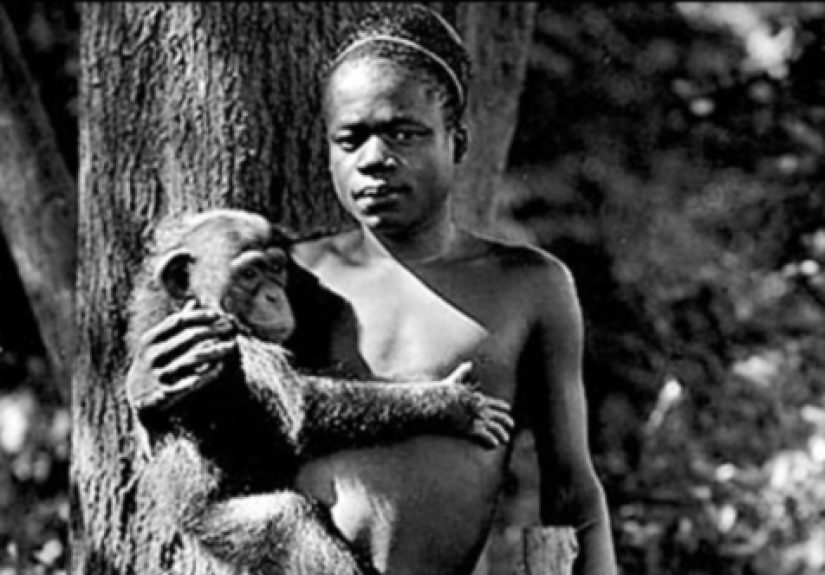
One of the most infamous human zoo cases involved Ota Benga, a Mbuti man from Central Africa. He was brought to the United States for the 1904 St. Louis World’s Fair and later taken to New York. In 1906, he was displayed at the Bronx Zoo’s Monkey House, where he was associated with apes in a degrading spectacle that shocked some observers even at the time.
The exhibit was defended by zoo officials as educational, but Black ministers in New York protested fiercely. They understood exactly what was happening: a human being was being placed in a racist display that denied his dignity. The protests helped end the exhibit after only a short period, but the harm to Benga’s life did not vanish when the crowds went home.
Ota Benga later lived in Virginia, where he died by suicide in 1916. In 2020, the Wildlife Conservation Society, which operates the Bronx Zoo, publicly apologized for the treatment of Benga and acknowledged the racism tied to past zoo leadership. His story remains a chilling reminder that respected institutions can commit shameful acts while wearing the costume of education.
5. Sarah Baartman’s body was exploited in life and after death
Sarah Baartman, often called Saartjie Baartman, was a Khoekhoe woman from southern Africa who was taken to Europe in the early nineteenth century and exhibited for paying audiences. Promoters displayed her body under the degrading name “Hottentot Venus,” turning her into an object of racialized and sexualized curiosity.
Her exploitation did not end with her death in 1815. Parts of her body, along with a body cast and skeleton, were preserved and displayed in France for many years. Her remains were finally returned to South Africa in 2002 after a long campaign for repatriation and dignity.
Baartman’s story is often discussed in relation to human zoos because it shows how racial spectacle, gendered exploitation, pseudo-science, and museum display could overlap. She was not treated as a person with interior life, grief, humor, fear, or choice. She was treated as evidence for other people’s theories. That is one of the ugliest patterns in this history: the powerful turned human beings into “proof” while refusing to hear their voices.
6. The 1904 St. Louis World’s Fair also produced tragedy
The St. Louis World’s Fair did not merely display people; it exposed them to dangerous conditions, cultural humiliation, and intense public scrutiny. One tragic example is Maura, a young Kankanaey woman from the Philippines who came to St. Louis before the fair opened. She died of pneumonia in 1904 after enduring travel, cold weather, and unfamiliar conditions.
Her story later became part of a broader investigation into the Smithsonian’s historical brain collection. Evidence indicated that a Smithsonian anthropologist took the cerebellum of a Suyoc Igorot person, likely Maura, without meaningful consent by modern ethical standards. The case reveals how human zoos and racial science were linked not only through public display but also through the collection of human remains.
This is where the story moves from offensive spectacle to bodily violation. Human zoos did not always end when the ticket booth closed. Some people who died in these systems became objects in scientific collections, their remains separated from families, homelands, and proper mourning.
7. Indigenous people were displayed inside the United States
Human zoos were not only a European colonial practice. The United States had its own versions, especially involving Native American and Indigenous peoples. In 1896, the Cincinnati Zoo displayed Sicangu Sioux people, who set up a village on zoo grounds and performed for visitors. At world’s fairs, Native American people were frequently photographed, staged, and interpreted through the lens of white expectations.
These displays worked alongside federal policies that attempted to assimilate Native communities, seize land, and suppress Indigenous cultures. The public was often encouraged to view Native people as either “vanishing” relics or colorful performers. Both stereotypes were convenient. If Native people were imagined as belonging only to the past, then the nation did not have to deal honestly with Native sovereignty in the present.
The irony is sharp enough to cut glass: many Indigenous cultures were portrayed as disappearing by the same societies actively working to destroy them. Human zoos helped transform that violence into a scenic attraction.
8. “Anthropology Days” turned racist theory into sport
At the 1904 St. Louis events connected to the Olympic Games and World’s Fair, organizers staged what became known as “Anthropology Days.” Indigenous men from fair exhibits were recruited to compete in athletic contests such as running, jumping, throwing, and other events. The supposed goal was to compare the physical abilities of “primitive” peoples with those of “civilized” men.
The setup was absurd and unfair. Many participants were unfamiliar with the events, given little preparation, and observed by officials who already believed in racial hierarchy. The results were then interpreted through racist assumptions. In other words, it was not a fair test. It was prejudice wearing gym shorts.
Anthropology Days shows how deeply the logic of human zoos penetrated public life. The same people displayed as cultural curiosities could be moved into sports competitions and used as data points in flawed racial theories. It was entertainment, pseudo-science, and propaganda all running on the same dusty track.
9. European entrepreneurs helped industrialize the spectacle
In Europe, entrepreneurs such as Carl Hagenbeck became associated with large-scale ethnological shows. Hagenbeck is famous in zoo history for promoting more naturalistic animal enclosures, but before and alongside that work, his business also presented Indigenous peoples in staged “exotic” settings. These exhibitions combined people, animals, props, costumes, and performance into traveling spectacles.
Paris became another major center of human display. The Jardin d’Acclimatation hosted ethnological exhibitions in which people from Africa, Asia, the Americas, and the Pacific were presented to crowds. Colonial exhibitions in France and elsewhere turned the “other” into a recurring attraction. Posters, postcards, and photographs helped spread the imagery far beyond the exhibition grounds.
The business model was disturbingly simple: take people from places Western audiences imagined as exotic, stage them as living scenery, and sell tickets. The shows pretended to educate, but their real lesson was hierarchy. Visitors were taught where to stand: outside the enclosure, looking in.
10. Human zoos continued later than many people realize
Many assume human zoos disappeared with top hats, handlebar mustaches, and other evidence that the nineteenth century had too much free time. But these exhibitions continued well into the twentieth century. Belgium offers some of the most painful examples.
In 1897, at Tervuren, Belgium displayed Congolese people as part of a colonial exhibition connected to King Leopold II’s Congo project. The AfricaMuseum states that 267 Congolese people were taken by force to Belgium and exhibited to the public, and seven died there. Decades later, at Expo 58 in Brussels, a Congolese village was again displayed for visitors. This was not ancient history. It happened in the age of television, jet aircraft, and postwar promises about human rights.
The long survival of human zoos teaches an uncomfortable lesson: cruelty does not disappear automatically when societies become more modern. Modernity can build hospitals, highways, and space programsand still preserve old prejudices if people do not challenge them.
Why Human Zoos Still Matter Today
Human zoos matter because they reveal how racism becomes ordinary. Most visitors probably did not think of themselves as monsters. They bought tickets, followed signs, read labels, took photos, and repeated what authorities told them. That is exactly why this history is so important. Great harm often survives not because everyone is unusually cruel, but because enough people agree not to question the setup.
The legacy also lives in museums and archives. Many institutions are still examining collections built during colonial periods, including photographs, artifacts, and human remains gathered without consent. Repatriation efforts, public apologies, revised exhibitions, and community-led interpretation are part of a long overdue correction. They cannot undo the original harm, but they can stop institutions from pretending the harm was just a footnote.
For readers, the lesson is practical. Whenever a culture is reduced to costume, spectacle, or “exotic flavor,” warning lights should flash. People are not props. Communities are not theme parks. History is not improved by turning suffering into a souvenir.
Experiences and Reflections Related to This Topic
Encountering the history of human zoos can be a strange experience because it often begins with disbelief. Many people first hear the phrase and assume it is metaphorical. Then they see a photograph from a world’s fair, a zoo poster, a colonial village, or a museum label, and the room gets very quiet. The shock is not only that these events happened. The shock is that they happened in places that presented themselves as civilized: museums, international exhibitions, schools, zoos, and fairs.
A meaningful way to experience this topic today is through museum visits that openly address colonial history. Some modern exhibitions now ask visitors to look at old photographs critically instead of passively consuming them. That shift matters. In the past, the camera often served the exhibitor’s power. It framed the displayed person as strange, silent, and available to be judged. A better museum experience asks: Who took this picture? Who profited from it? What was hidden outside the frame? What would the person in the image have said if the label had belonged to them?
Another powerful experience is reading personal names instead of only studying categories. “Human zoos” can sound like a broad historical topic, but names such as Ota Benga, Sarah Baartman, and Maura pull the subject back into human scale. They remind us that this was not merely a system. It was a series of lives interrupted, redirected, mocked, measured, and sometimes ended. History becomes harder to dismiss when it stops being a diagram and becomes a person.
Teachers, students, and writers often struggle with how to discuss this topic without repeating the harm. The key is tone. Human zoos should not be described with sensational excitement, as if they were spooky carnival trivia. They should be analyzed with moral clarity. It is possible to explain the disturbing details while keeping the dignity of the victims at the center. That means avoiding slurs except when absolutely necessary for historical context, refusing to treat old racist labels as neutral, and making clear that the “science” behind these displays was shaped by prejudice.
There is also a modern media lesson here. Human zoos depended on spectatorshipthe act of turning other people into things to be watched. Today, the technology has changed, but the temptation has not fully vanished. Viral videos, poverty tourism, exploitative documentaries, and shallow cultural content can still turn real communities into scenery for outsiders. Remembering human zoos helps us ask better questions before we click, share, photograph, or publish. Are we learning from people, or staring at them? Are they speaking, or are they being spoken over? Are they partners in the story, or merely material?
The most important experience this history offers is discomfort, and discomfort is not useless. It can be a moral alarm clock. Human zoos show what happens when curiosity loses empathy, when education loses ethics, and when powerful societies decide that some people exist mainly to explain a theory. The proper response is not guilt for its own sake. The proper response is attention, humility, and a refusal to let dehumanization wear respectable clothing again.
Conclusion
The history of human zoos is shameful because it exposes the machinery of dehumanization in public view. These were not isolated mistakes made by a few cruel showmen. They were organized, advertised, defended, and attended by societies that claimed to value progress. From Ota Benga in New York to Sarah Baartman in Europe, from St. Louis to Paris to Belgium, human zoos turned living people into lessons that taught the wrong thing: that some lives were less human than others.
Remembering this history is not about dragging the past around like a heavy suitcase with a broken wheel. It is about recognizing patterns before they repeat. Whenever people are reduced to stereotypes, whenever institutions hide exploitation behind “education,” whenever crowds are invited to laugh at someone else’s humanity, the ghost of the human zoo is nearby. The best answer is to look clearly, name the harm honestly, and choose dignity over spectacle.