Table of Contents >> Show >> Hide
- 1) Jessica Cox: The Pilot Who Flies With Her Feet
- 2) Stephen Wiltshire: The Human Camera Who Draws Cities From Memory
- 3) The Last Repair Shop: Four Craftspeople Who Keep 80,000 Instruments Singing
- 4) Wim Hof: The Iceman Who Rewrote His Cold-Weather Limits
- 5) Derek Amato: The Man Who Became a Musical Savant Overnight
- 6) Mr. Happy Man: The Greeter Who Turned a Traffic Circle Into a Temple of Joy
- 7) Dan Mancina: The Blind Skateboarder Redesigning the Park
- 8) Temple Grandin: The Scientist Who Thinks in Pictures
- 9) Flo Fox: The Nearly Blind Photographer of New York’s Streets
- 10) Richard Turner: The Blind Card Mechanic Who Can Fool Anyone
- How to Watch These Videos Like a Pro (and Not Just Cry/Clap)
- SEO-Friendly FAQs (because, yes, you asked)
- Conclusion
- of Real-World Experience: What Binge-Watching These 10 Lives Taught Me
From an armless pilot to a blind card mechanic, these true-story videos don’t just inspirethey recalibrate what you think is possible.
1) Jessica Cox: The Pilot Who Flies With Her Feet
Jessica Cox was born without armsand still became a licensed pilot. In the video profile that made her story world-famous, you watch her taxi, take off, and land using her feet on the yoke and pedals with the confidence of a seasoned aviator. She’s also a taekwondo black belt and a motivational speaker who treats “impossible” like just another checklist item before wheels-up.
Why this video matters
It’s a masterclass in adaptive problem-solving. The cockpit view shows how beautifully aviation designrudder pedals, trim, throttlecan be re-interpreted by a determined mind. For students, athletes, entrepreneurs, and anyone staring at a “can’t,” Cox’s flight is proof that constraints can become a craft.
Watch for
- Foot-controlled pre-flight and taxi procedures
- Her calm radio calls under pressure
- Deadpan humor about fear and first solo flights
2) Stephen Wiltshire: The Human Camera Who Draws Cities From Memory
After a brief helicopter ride over New York City, artist Stephen Wiltshire sat down with a blank canvas andwithout referencesdrew a giant, astonishingly accurate panorama. The video captures his process in real time: skyline silhouettes emerge first, then window grids, bridges, waterlines, and the chaotic geometry of a living city.
Why this video matters
It reframes how we think about memory, perception, and autism. Wiltshire’s recall makes you question the limits of visual working memory and the ways neurodivergent minds catalog the world.
Watch for
- Rapid, confident line work with minimal erasing
- Building-by-building accuracydown to window counts
- A quiet, almost meditative focus that lasts for hours
3) The Last Repair Shop: Four Craftspeople Who Keep 80,000 Instruments Singing
This Oscar-winning short documentary takes you inside a nondescript Los Angeles warehouse where a small team repairs public-school instrumentsfor free. The video introduces four technicians whose own life stories are as carefully mended as the violins, horns, and clarinets they restore.
Why this video matters
It’s a love letter to public education and the invisible labor that makes creativity possible. Watching dented brass regained, cracked wood braced, and sticky keys freed is unreasonably satisfyingand a reminder that access is an engine for talent.
Watch for
- Bench-top surgery on battered instruments
- Students performing on instruments they once thought were “trash”
- Technicians explaining the craft through their own histories
4) Wim Hof: The Iceman Who Rewrote His Cold-Weather Limits
In a now-classic documentary segment, Wim Hof trains two skeptical journalists in breathwork and cold exposure, then marches them up a snowy mountainwearing only shorts. The camera follows the discomfort, the doubt, and the surprising physiological composure his trainees discover along the way.
Why this video matters
It’s a rare look at stress adaptation in action. Whether or not you ever touch an ice bath, the controlled exposure approachgradual, measurable, mindset-driventranslates to public speaking, endurance sport, and high-stakes work.
Watch for
- Breathing cadence and retention cues
- The exact point where shivering gives way to steadiness
- Hof’s coaching style: minimalist but relentless
Note: Cold exposure carries risks. Always consult a medical professional and use proper supervision.
5) Derek Amato: The Man Who Became a Musical Savant Overnight
After a head injury, Derek Amato sat at a piano and discovered he could suddenly playcomplex, flowing compositions he’d never learned. The video profile shows both the awe and the ambiguity: extraordinary ability together with lingering effects from the concussion that precipitated it.
Why this video matters
It challenges how we think about “talent.” Neural plasticity isn’t just a buzzword; it’s visible here in an unsettling form, where loss and gift are intertwined.
Watch for
- His description of “black and white blocks” of music in his mind
- First-time performance clips captured soon after his injury
- Honest talk about daily trade-offs
6) Mr. Happy Man: The Greeter Who Turned a Traffic Circle Into a Temple of Joy
Every morning for decades, Johnny Barnes stood at a Bermuda roundabout and wished commuters “I love you!” The short film is simple: a man, a smile, a ritual. Yet it’s also a study in micro-civicshow one person’s predictable kindness reshapes a city’s mood.
Why this video matters
It’s radical hospitality captured in a few minutes. The film makes a strong case that the “small” things we repeat are, in fact, big systems we runaffecting thousands of strangers we’ll never meet again.
Watch for
- Hand-lettered signs and call-and-response with drivers
- The town’s generational affection for him
- How rituals become community infrastructure
7) Dan Mancina: The Blind Skateboarder Redesigning the Park
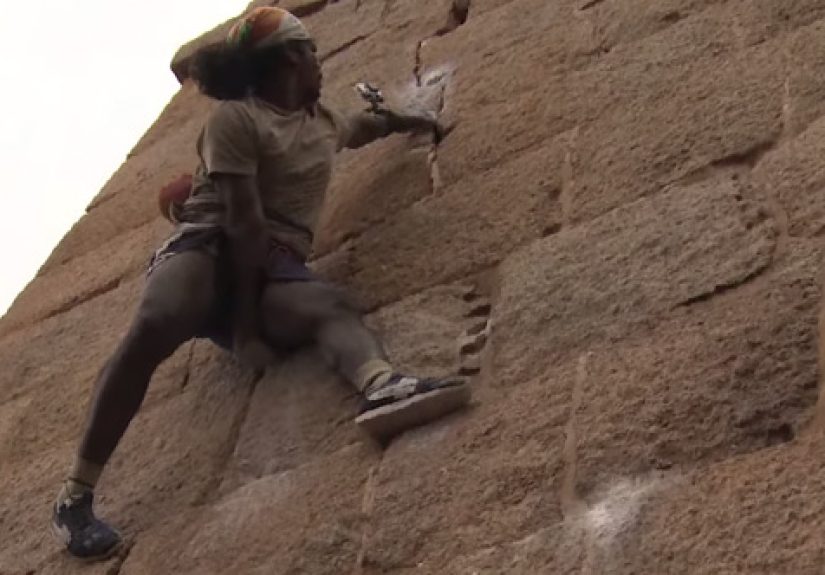
Diagnosed with retinitis pigmentosa, Dan Mancina refused to quit skating. In his videos, you’ll see him “map” handrails and ledges with a cane, track distances by sound and touch, and still lock in on grinds most sighted skaters fear. Recently, he helped build what’s described as the world’s first adaptive skatepark designed with blind skaters in mind.
Why this video matters
It’s inclusive design at street level. You’ll come away seeing rail height, coping, and run-up textures as accessibility variablesnot just style choices.
Watch for
- Three-point contact technique for approaching features
- Auditory “beacons” in the park to orient lines
- Coaching tips for adaptive sports
8) Temple Grandin: The Scientist Who Thinks in Pictures
Temple Grandin’s talk and documentary segments illuminate what she calls “visual thinking.” Watching her describe cattle-handling systems, or the sensory realities of autistic perception, is like downloading a new internal interface for problem-solving.
Why this video matters
It’s a user’s manual for neurodiversity. Grandin shows how visual, verbal, and pattern thinkers all contribute differentlyand why education, parenting, and management work better when you design for that mix.
Watch for
- Her sketches of curved chutes and low-stress design
- Stories about hands-on learning and shop class
- Practical advice for nurturing “different kinds of minds”
9) Flo Fox: The Nearly Blind Photographer of New York’s Streets
In this short, Flo Foxlegally blind and living with MScontinues to shoot New York with help from a rotating cast of friends and passersby. The camera becomes communal: she composes; someone else presses the shutter. The images still carry her eyeplayful, gritty, fiercely alive.
Why this video matters
It gently explodes the myth of the solitary genius. Art can be collaborative without diluting authorship, especially when access needs are met with creativity.
Watch for
- Improvised rigs on wheelchairs and sidewalks
- Flo’s banter with strangersher superpower for candid shots
- Proof that “seeing” is much bigger than eyesight
10) Richard Turner: The Blind Card Mechanic Who Can Fool Anyone
Richard Turner doesn’t call himself a magician; he’s a card mechanic. In performance clips and a feature documentary, you watch him deal perfect seconds, bottoms, and centerswhile blind. The close-ups are jaw-dropping; the life story behind them even more so.
Why this video matters
It’s a parable about obsession, mastery, and the costs that often accompany them. Turner’s discipline is rigorous, his charm disarming, and his sleight of hand… well, prepare to rewind.
Watch for
- Slow-motion breakdowns of cheating techniques (no exposure of secrets!)
- Family candor about ambition and balance
- Audiencesfamous and ordinaryleft speechless
How to Watch These Videos Like a Pro (and Not Just Cry/Clap)
- Look for systems, not just heroes. Whether it’s a repair shop, a skatepark, or a cockpit, the environment often enables the miracle.
- Track skills, not labels. “Autistic,” “blind,” or “disabled” is not the plot; the skill built around reality is.
- Pause the timeline. Most “overnight” breakthroughs took years. Scan for the practice you don’t see on camera.
- Respect risks. Cold exposure, aviation, street skating, and sleight of hand all have hazards. Expertise is safety gear.
SEO-Friendly FAQs (because, yes, you asked)
What makes a “unique individual” story worth watching?
Clear, verifiable feats; a process you can actually observe; and a narrative that shows trade-offs, not just triumphs.
Are these inspiring videos good for kids?
Most are family-friendly, but preview for safety content (ice baths, street skating) and discuss the “how,” not only the “wow.”
Where can I find more documentaries like these?
Check reputable outlets known for short-form docs: public-interest newsrooms, major newspapers’ film units, and respected magazine documentary strands.
Conclusion
From feet on a yoke to fingers on a deck, these ten videos reveal a simple truth: unusual lives aren’t “superhuman”they’re super attentive to craft, environment, and iteration. Watch them not to borrow the headline, but to reverse-engineer the habits. Then pick your instrumentliteral or metaphoricaland get to work.
On-page SEO Goodies
sapo: Want a playlist that restores your faith in human possibility? From an armless pilot who flies with her feet to an Oscar-winning repair shop, these ten true-story videos reveal the training, tools, and tiny choices behind giant feats. We highlight what to watch for, why it matters, and how to apply the lessons to your work, studies, or side-quests. Bring tissues if you must, but also bring a notebookthese lives double as blueprints.
of Real-World Experience: What Binge-Watching These 10 Lives Taught Me
Here’s what happens when you stop treating these profiles as “feel-good” content and start using them as field manuals.
1) Constraints are design spec, not destiny. Watching Jessica Cox fly reframed the idea of “limitations.” She didn’t conquer the cockpit; she re-designed her interaction with it. That’s a transferable mindset. In business, a slim budget or a tiny team isn’t a handicapit’s a sandbox that forces elegance. The question becomes: How do I adapt my tools to me?
2) Talent ≠ mystery; talent = repetition you can stand. Every frame of Stephen Wiltshire drawing is a wager that attention will outrun distraction. His “gift” looks like many hours of tracing, counting, checking negative space, and building a library of forms. Try it: next time you study something, sketch it from memory five minutes later. You’ll teach your eyes to notice the right things.
3) Fixing is a form of teaching. The Last Repair Shop turns repair into pedagogy. A valvespring lesson becomes a life lesson: things break, and then we fix them. In teams, leaders are the repair techsquietly removing dents so others can play. You don’t need a title to do this. Start by “tuning” one clogged process this week.
4) Stress adaptation is a skill, not a personality trait. The Wim Hof segment works because you see the trainees’ stress curves flatten with practice. Swap ice for whatever spikes your cortisolsales calls, code reviews, deadliftsand build a progression with tiny, logged exposures. Your “nerves” are trainable.
5) Stories contain trade-offsrespect them. Derek Amato’s video is inspiring and sobering. Extraordinary ability arrived wrapped in real costs. The internet often edits out the second half. Keep it in frame when you set your own goals; pursue excellence, but price the toll honestly and choose it.
6) Rituals scale kindness. Johnny Barnes didn’t hope people felt loved; he scheduled it. That’s a leadership tactic. Pick a ritual you can sustain (Friday kudos emails, monthly “office hours,” daily check-ins) and let consistency do the relational heavy lifting.
7) Accessibility unlocks performance. Dan Mancina’s adaptive park is a thesis statement: when you design for the edge case, everyone benefits. Tactile lines, clear run-ups, smart signagethese help sighted skaters, too. Apply that lens to your site, app, or classroom. Accessibility isn’t a compliance box; it’s a performance upgrade.
8) Neurodiversity is a strategy. Temple Grandin’s framework of visual, verbal, and pattern thinkers is the most practical hiring advice you’ll watch this year. Build mixed teams on purpose. Put a visual thinker in charge of interface, a pattern thinker on forecasting, and a verbal thinker on partnerships. Then let them cross-pollinate.
9) Authorship can be shared. Flo Fox’s methodshe composes; others pressproves that collaboration and accommodation can preserve a singular voice. Apply that to any creative workflow: you can delegate the mechanics without diluting the vision.
10) Mastery hides in plain sight. Richard Turner’s charm disarms you until you realize you’re watching a lifetime of micro-drills. The lesson is not “be a genius,” but “practice smarter than your competition for longer than they can bear.” Document your drills. Iterate. Smile while you do it.
Net result? You stop doomscrolling and start studyscrolling. These ten videos aren’t just motivational snacks; they’re frameworks. Pick one ideaadaptive design, ritualized kindness, stress progressionand implement it this week. The applause will come later. The practice starts now.